
Laser glass cutting has become a buzzword in the fabrication industry, promising intricate shapes, burr-free edges, and contact-free processing. Yet for many workshop owners, the reality does not match the marketing brochures. Before investing in a technology that may sit idle for weeks, decision-makers must understand what laser glass cutting actually requires and why, in many production environments, established mechanical cutting methods remain the more rational choice. This article examines the operational, economic, and material constraints that determine whether laser cutting truly fits your workshop—or whether it is an expensive solution looking for a problem.
The Promise vs. the Reality of Laser Glass Cutting
Laser systems use a focused beam to heat and fracture glass along a controlled path, creating a thermal stress zone that allows separation without mechanical contact. This process excels at producing complex contours, small radii, and internal cutouts that traditional score-and-break machines simply cannot achieve without significant tooling changes. For industries such as consumer electronics, медицинское оборудование, and decorative glass panels, the laser’s ability to cut tempered or coated glass is genuinely transformative.
Однако, a laser machine is not a drop-in replacement for a standard cutting table. It solves a specific set of problems—and if your production consists primarily of rectangular sheets, straight cuts, or high-volume standard sizes, the laser’s advantages are largely wasted.
The Niches Where Laser Genuinely Excels
- Freedom of shape: Arbitrary curves, notches, and holes without specialized tooling.
- Thin glass processing: Materials from 0.5 мм до 2 миллиметровый, where mechanical scoring causes cracking.
- Coated and laminated glass: Cutting without damaging functional coatings or interlayers.
The Cost Equation Changes Per Workshop
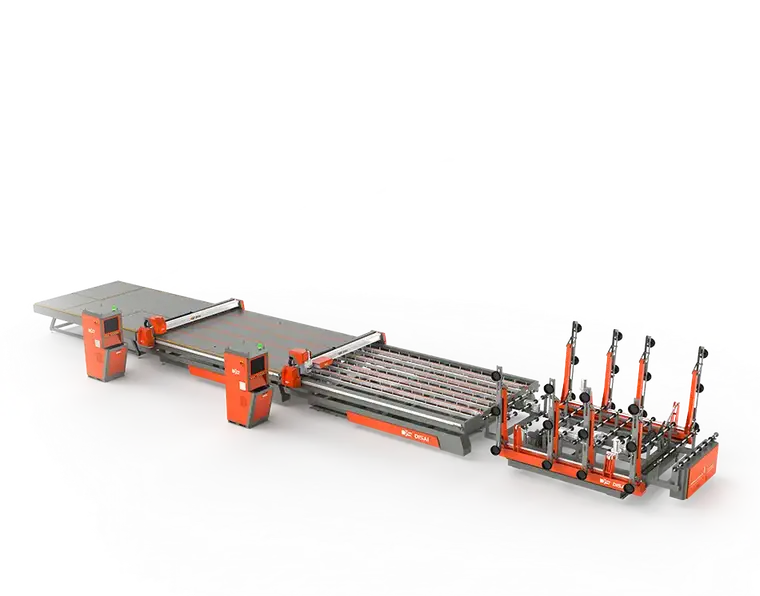
The most common misconception is that laser cutting lowers overall fabrication costs. In truth, the total cost of ownership is dramatically higher than a conventional CNC cutting machine. The capital expenditure alone is often three to five times that of an equivalent mechanical cutting table with the same working area. Then come the recurring costs that many buyers overlook during the purchasing decision.
…
For more details on why laser glass cutting is not suitable for every workshop, пожалуйста, нажмите здесь: https://www.disaiglass.com/industry-news/laser-cutting-guide/
