Сварочные вращатели are used in various industries to facilitate the welding of cylindrical or round objects, такие как трубы, танки, and other similar structures. They provide support and rotate the workpiece, allowing the welder to work on a stationary weld head, обеспечение равномерных и стабильных сварных швов.

Инструкция по эксплуатации сварочного вращателя

Welding rotators

1. Меры безопасности

Личное защитное оборудование (СИЗ): Всегда носите соответствующие СИЗ, в том числе защитные очки, welding helmet, перчатки, and protective clothing.

Work Area: Ensure the work area is clean, well-lit, and free from flammable materials.

Training: Only trained and authorized personnel should operate the welding rotator.

Инспекция: Regularly inspect the rotator for any signs of wear or damage before use.

2. Pre-Operation Checks

Условие машины: Inspect the welding rotator for any visible damage or wear. Check for loose bolts or connections.

Электрические соединения: Ensure all electrical connections are secure and the power supply matches the machine’s specifications.

Панель управления: Verify that all controls are functioning correctly and emergency stop buttons are operational.

Rollers and Bed: Check that the rollers are free from debris and are properly aligned. Ensure the bed is clean and free from obstructions.

3. Настраивать

Размещение заготовки:

Place the workpiece centrally on the rollers.

Adjust the distance between the rollers to fit the diameter of the workpiece.

Ensure the workpiece is balanced and stable on the rotator.

Aligning the Rotator: Align the rotator with the welding equipment to ensure smooth and consistent welding.

Закрепление заготовки: Depending on the weight and shape of the workpiece, secure it with straps or clamps if necessary.

Welding rotators

4. Operating the Welding Rotator

Включить: Turn on the power supply to the welding rotator.

Speed Adjustment: Adjust the rotation speed according to the welding requirements using the control panel.

Start Rotation: Begin rotating the workpiece at a low speed to check for balance and alignment. Gradually increase the speed as needed.

More detailed information about welding roller stand operation can be found at: https://www.bota-weld.com/en/a/news/welding-rotator-operating.html

Circumferential seam welding machine is an important automatic welding equipment, which is mainly used to complete the welding of various circular and annular seams.The circular seam welding machine is based on the principle of ordinary arc welding. It uses argon to protect the metal welding material. Through a large current, the welding material is melted into a liquid state on the welded substrate to form a molten pool, so that the welded metal and the welding material can achieve metallurgical bonding. Due to the continuous supply of argon during high-temperature melting welding, the welding material will not come into contact with oxygen in the air, thereby preventing the welding material from being oxidized. Поэтому, stainless steel and ferrous metals can be welded.

Circumferential seam welding machine operating procedures

Circumferential seam welding machine

The operating procedures of the girth welding machine are important guidelines for ensuring that the welding process is safe, efficient and high-quality. The following are the operating procedures of the girth welding machine compiled from multiple sources:

1. Preparation before operation

Be familiar with the equipment:

The operator should be familiar with the basic structure, working principle and operating procedures of the girth welding machine.

Understand the meaning of the various functions, control buttons and indicator lights of the equipment.

Inspect the equipment:

Check whether the power cord and switch are normal, and ensure that there is no debris on the machine body and around it.

Check whether the relevant grounding wires and grounding devices of the welding equipment are reliable.

Check whether the cables, welding guns and welding parts are intact and there is no leakage or short circuit.

Prepare materials:

Confirm whether the required welding materials, инструменты, оборудование, protective supplies, п. are prepared in sufficient quantities.

Check whether the welding materials meet the requirements, including material, specifications, размеры, п.

Clear welding requirements:

Confirm the material, толщина, specifications, process and other requirements of the welding workpiece.

Select appropriate welding parameters and welding methods according to welding requirements.

For more detailed information on the operating procedures of the circumferential seam welding machine, пожалуйста, нажмите здесь: https://www.bota-weld.com/en/a/news/circumferential-seam-welding-machine-operating-procedures.html

А Линия по сварке резервуаров для хранения специализированная установка, предназначенная для эффективного изготовления резервуаров для хранения, используемых в различных отраслях промышленности., такие как нефть и газ, химикаты, С развитием современной промышленности, и пищевая промышленность.

Ключевые компоненты линии сварки резервуаров для хранения

Storage Tank Welding Production Line

Подготовка сырья:

Листы стали или других материалов разрезаются по размеру и подготавливаются к сварке..

Сварочные станции:

Автоматические или полуавтоматические сварочные аппараты выполняют различные виды сварки. (например, ТИГ, МНЕ, или погруженная дуга) для соединения компонентов танка.

Сборочная линия:

Компоненты собираются последовательно, что упрощает производство..

Инспекционные станции:

Меры контроля качества, включая визуальный осмотр и неразрушающий контроль, обеспечить целостность сварного шва и общее качество.

Финишная зона:

Резервуары обрабатываются посредством таких процессов, как шлифовка., рисование, или покрытие для повышения долговечности и устойчивости к коррозии.

Хранение и логистика:

Готовые резервуары складируют или транспортируют для монтажа или дальнейшей переработки..

Производственный процесс сварочной линии для сварки резервуаров для хранения

Storage Tank Welding Production Line

Дизайн и планирование:

Подробные планы разрабатываются, часто использую программное обеспечение CAD, уточнить размеры и требования к материалам.

Более подробную информацию о технологической схеме линии сварки резервуаров см., пожалуйста, нажмите здесь: https://www.bota-weld.com/en/a/news/storage-tank-welding-production-line-process.html

А портальный ЧПУ (Компьютерное числовое управление) сварочный аппарат это тип автоматизированной сварочной системы, предназначенный для обеспечения высокой точности и эффективности сварочных операций.. Эти машины обычно используются в таких отраслях, как автомобилестроение., аэрокосмический, судостроение, и тяжелое машиностроение.

Компоненты портального сварочного аппарата с ЧПУ

Gantry CNC welding machine

Портальная рама:

Основной конструктивный элемент, перемещающий сварочную головку по осям X и Y..

Изготовлен из прочных материалов, способных выдерживать нагрузки и тепло, возникающие во время сварки..

Контроллер ЧПУ:

Мозг аппарата, контролирующий все движения и параметры сварки.

Можно запрограммировать определенные пути сварки и параметры для различных работ..

Источник сварочного тока:

Обеспечивает электроэнергию, необходимую для процесса сварки..

Возможность регулировки различных уровней мощности в зависимости от требований к сварке..

Сварочная головка/горелка:

Инструмент, выполняющий сварочную операцию.

Может быть оснащен различными типами сварочных горелок в зависимости от применения..

Система привода:

Включает двигатели, диски, и системы передачи, которые перемещают портал и сварочную головку.

Часто использует серводвигатели для точного управления..

Система охлаждения:

Охлаждает сварочную головку и другие компоненты, предотвращая перегрев..

Может включать системы водяного или воздушного охлаждения..

Более подробную информацию о составе портального сварочного аппарата с ЧПУ см., пожалуйста, нажмите здесь: https://www.bota-weld.com/en/a/news/gantry-cnc-welding-machine-composition.html

The roller skin of the но не обязательно is an important part of the briquetting machine. It is located outside the roller core of the briquetting machine. It is usually a cylindrical component with a ball socket on its surface. The shape and size of these ball sockets are designed according to the pressed material and the required product shape. The adjustment of the обшивка ролика брикетировочной машины is a key step to ensure the normal operation of the briquetting machine and improve the product quality.

Briquetting Machine Roller Adjustment

Briquetting Machine Roller

1. Adjustment method

Gap adjustment:

The gap of the roller skin determines the filling amount and molding pressure of the material. The appropriate gap can ensure that the material is evenly distributed between the roller skins and avoid molding problems caused by uneven pressure.

The gap between the roller skins is usually adjusted by adjusting the adjusting nut of the machine. The gap size needs to be adjusted according to the nature of the material and the molding requirements.

В общем, the smaller the gap, the denser the molded balls, but too small a gap may cause the equipment to jam or block the material; too large a gap will cause the molding accuracy to decrease.

Parallelism verification:

Use tools and measuring equipment to check the parallelism of the roller skins and make fine adjustments until the two roller skins are completely parallel over the entire length. The guarantee of parallelism helps the material to be evenly stressed between the roller skins and improve the molding quality.

Pressure adjustment:

The pressure of the briquetting machine is usually achieved by adjusting the hydraulic cylinder or mechanical transmission system. The size of the pressure should be adjusted according to the nature of the material and the molding effect. Too low pressure will result in poor spherical quality, while too high pressure may increase the equipment load and energy consumption, and even damage the machine.

More detailed information about briquetting machine roller skin adjustment can be found at: https://www.zymining.com/en/a/news/briquetting-machine-roller-adjustment.html

Ковшовый элеватор представляет собой конвейерную машину непрерывного действия, в которой используется ряд ковшей, равномерно закрепленных на бесконечной тяге, для вертикального подъема материалов.. Он широко используется во многих отраслях промышленности и обладает рядом уникальных преимуществ и характеристик..

Принцип работы ковшового элеватора в основном основан на цепной или ременной передаче., и материалы поднимаются с низкого уровня на высокий через ряд ковшей.. Ниже приводится подробное описание принципа работы.:

Принцип работы ковшового элеватора

Bucket elevator

Ковшовый элеватор — это устройство, в котором используются передаточные устройства, такие как цепи или ремни, для подъема материалов с низкого уровня на высокий.. Принцип его работы включает четыре основных этапа.: загрузка, подъем, транспортировка и разгрузка материалов.

Конкретные шаги

Загрузка:

Материал загружается в ковш ковшового элеватора через загрузочное отверстие.. Ковш является основным погрузочным компонентом ковшового элеватора., который отвечает за погрузку и временное хранение материалов.

Подъем:

Когда приводное устройство (обычно состоит из двигателя, редуктор, муфта, п.) запускается, он генерирует мощность и передает ее в ковш через передающее устройство (цепь или ремень).

Ковш поднимается вдоль корпуса с приводом от передаточного устройства., подъем материала от низкого уровня к высокому. В этом процессе, Цепная пластина или ремень играют роль в стабилизации передачи материалов и уменьшении износа материала..

Передача инфекции:

Когда ведро поднимается, материал стабильно передается на высокое место. Скорость вращения цепной пластины или ремня косвенно контролируется редуктором., чтобы материал можно было сохранять непрерывным, точный и стабильный во время процесса передачи.

Разгрузка:

Когда бункер достигает вершины, он встретит выпускной порт. В это время, бункер откроется или наклонится каким-либо образом, чтобы выгрузить материал из бункера, завершение процесса подъема и транспортировки.

Процесс разгрузки может осуществляться с помощью вспомогательных устройств, таких как отводные сопла, чтобы обеспечить транспортировку материала к месту назначения с одинаковой скоростью..

Структурная композиция

Bucket elevator

Ковшовый элеватор в основном состоит из следующих основных компонентов.:

Загрузочный бункер: контейнер для загрузки материалов.

Более подробную информацию о принципе работы ковшового элеватора см., пожалуйста, нажмите здесь: https://www.zymining.com/en/a/news/bucket-elevator-working-principle.html

High-pressure grinding rolls is mainly used in the ore industry and is also a type of crusher. As the main equipment for crushing in the ore industry, since it is the main equipment, it will be used very frequently. All machines are inseparable from daily maintenance and overhaul. Correct maintenance and overhaul can increase the service life of the machine, and early overhaul can detect problems early, so that small problems will not become bigger, affecting normal work and causing accidents.

Common fault inspection and repair of high-pressure grinding rolls

High-pressure grinding rolls

1. If the lubrication system finds that there is no grease overflow from the labyrinth seal of the bearing seat, the following reasons may be the case:

① lack of oil;

② pipeline failure;

③ grease pump is broken. If the color and properties of the oil flowing out of the oil drain port of the non-loaded bearing seat are found to have changed, it may be that cooling water or other foreign matter has been mixed into the lubricating grease.

2. The movable roller moves irregularly in the horizontal direction. Обычно, the nitrogen accumulator pressure is insufficient or damaged.

3. The hydraulic oil temperature is high. It may be: serious internal leakage in the system or the pump has been running for too long, and the hydraulic system needs to be checked.

4. The roller gap is too large. There may be the following reasons:

① Severe wear on the roller surface;

② No pressure;

③ There is material accumulation between the rollers. It needs to be handled as appropriate.

5. The roller gap is too small. It may be that there is a problem with the size of the gap block, or the position of the displacement sensor is set incorrectly.

6. The roller is stuck. It may be that there is foreign matter between the rollers, or there is too much material stored between the rollers when starting.

7. The roller does not rotate. The reasons include:

① Motor failure;

② Reducer failure.

8. The roller surface temperature is too high. It may be that the feed temperature is too high. Measures should be taken to control the upstream raw material temperature, otherwise it will affect the wear resistance of the roller surface and accelerate wear.

9. The bearing temperature is too high. The reasons include:

For more detailed information on the inspection and maintenance of high pressure grinding roller, пожалуйста, нажмите здесь:https://www.zymining.com/en/a/news/high-pressure-grinding-rolls-inspection.html

The power consumption of a high-pressure ball press machine can vary significantly depending on its size, емкость, and the specific application for which it is used. Однако, here are some general guidelines for the power requirements of high-pressure ball press machines.

High pressure ball press power

high-pressure ball press machine

Small to Medium-Sized Machines

Power Range: Обычно между 15 кВт до 55 кВт (20 HP to 75 HP)

Применение: Suitable for small to medium-scale production, such as in metallurgy, химическая индустрия, and small manufacturing plants.

Large-Sized Machines

Power Range: Обычно между 75 кВт до 200 кВт (100 HP to 270 HP)

Применение: Suitable for large-scale production, such as in large metallurgical plants, mining operations, and large manufacturing industries.

Factors Influencing Power Requirements

high-pressure ball press machine

Machine Capacity:

Higher capacity machines that can produce more output per hour generally require more power.

Свойства материала:

Harder or denser materials require more power to compress into balls.

Pressure Requirements:

Higher pressure settings require more power to generate the necessary force.

Operational Duty Cycle:

Machines that operate continuously or under heavy-duty conditions will have higher power requirements compared to those used intermittently.

For more detailed information about the power of high pressure ball press, пожалуйста, нажмите здесь: https://www.zymining.com/en/a/news/high-pressure-ball-press-power.html

Both роликовые подшипники and ball bearings are rolling bearings used to reduce friction and support radial and axial loads in rotating applications. They differ significantly in several ways.

Difference Between Roller Bearings and Ball Bearings

roller bearings

1. Basic Definition and Structure

Roller bearing: It is a kind of rolling bearing and one of the widely used components in modern machinery. It relies on rolling contact between the main components to support the rotating parts. The rolling element of the roller bearing is usually cylindrical or conical, with different structural types, such as spherical roller bearings, thrust spherical roller bearings, tapered rollers and cylindrical roller bearings.

Ball bearing: It is also a kind of rolling bearing, and its rolling element is spherical, это, the steel ball is installed between the inner and outer steel rings. The design of ball bearings enables it to withstand large loads and is widely used in various mechanical equipment.

2. Contact Mode and Load-bearing Capacity

Contact mode: The rolling element and raceway of the roller bearing are in line contact. As the load increases, the contact line will become a rectangle, and the contact area is relatively large. The rolling element and raceway of the ball bearing are in point contact. As the load increases, the contact point will become an elliptical area, and the contact area is small.

Load-bearing capacity: Due to the different contact areas, roller bearings usually have higher load-bearing capacity. Compared with ball bearings of the same size, roller bearings can withstand heavier loads, but the speed may be relatively low. Ball bearings are more suitable for low torque and high speed applications.

3. Application Characteristics

roller bearings

Roller bearings:

Applicable to occasions that need to withstand high radial and axial forces.

The starting torque is small, the rotation accuracy is high, and it is easy to select.

For more detailed information about the difference between roller bearings and ball bearings, пожалуйста, нажмите здесь: https://www.boyingbearing.com/en/a/news/difference-between-roller-bearings-and-ball-bearings.html

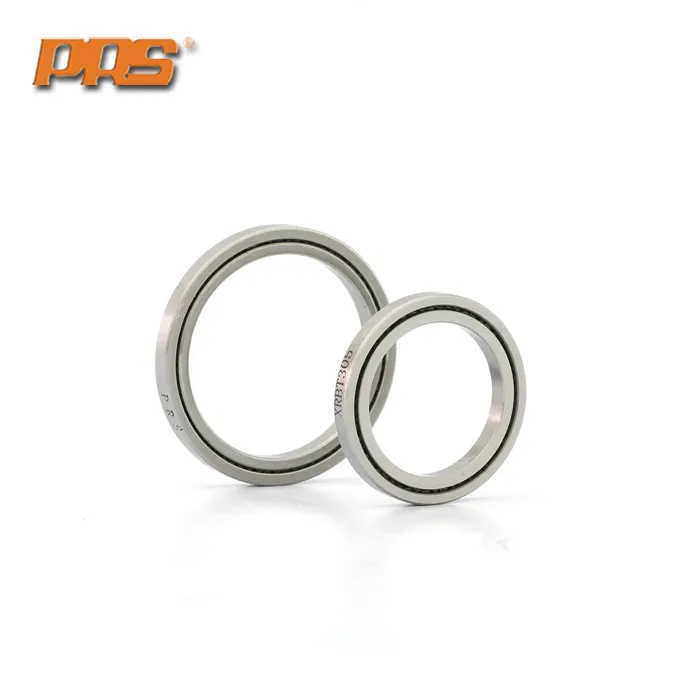
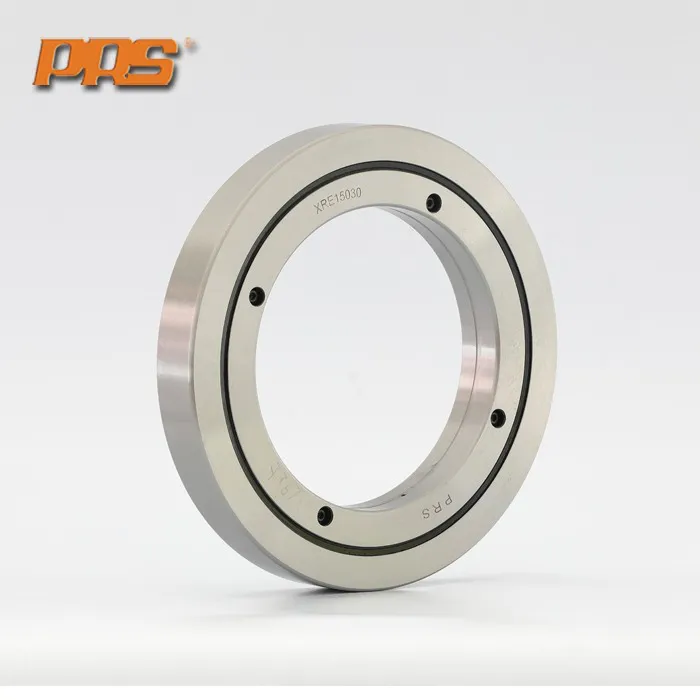
The design and assembly of скрещенные роликовые подшипники are key links to ensure their performance, life and stable operation of the entire mechanical system, and are also key links to ensure their normal operation and service life.

Design and Assembly of Crossed Roller Bearings

crossed roller bearings

1. Design of Crossed Roller Bearings

Structural Design

The structural design of crossed roller bearings is the basis of their performance. The bearing’s load capacity, running accuracy, friction and wear, and lubrication and sealing factors must be fully considered during design.

The cross arrangement of rollers, raceway shape, cage structure, п. all need to be carefully calculated and optimized to ensure that the bearings can perform well under various working conditions.

Common types of crossed roller bearings include RB type (inner ring as a whole, outer ring split), RE type (inner ring split, outer ring as a whole), RU type (inner and outer ring as a whole, with mounting holes), RA type (inner ring as a whole, outer ring split, ultra-thin), п. Each type has its specific application scenarios and advantages.

Выбор материала

Material is one of the key factors that determine bearing performance. When selecting materials, it is necessary to consider its strength, твердость, износостойкость, устойчивость к коррозии, and thermal stability.

Common materials include high carbon chromium bearing steel, нержавеющая сталь, керамика, п. Different materials have different performance characteristics and need to be selected according to the specific use environment and requirements of the bearing.

More detailed information on cross roller bearing design and assembly considerations can be found at: https://www.boyingbearing.com/en/a/news/design-and-assembly-of-crossed-roller-bearings.html