
Office clutter rarely announces itself. It accumulates quietly — a stack of folders on a desk, a box of cables under a table, three years of archived invoices nobody wants to discard. By the time the workspace feels cramped, the problem has outgrown a single shelf. Steel storage cabinets are the most dependable answer to that slow accumulation, because they combine load capacity, seguridad, and a footprint that respects tight floor plans. This guide explains what separates a genuinely durable cabinet from a flimsy one, which configurations suit different clutter profiles, and how to choose a unit that still serves your office years from now.
Why Steel Outperforms Wood, Laminado, and Plastic in an Office Setting
The case for steel is not aesthetic preference; it is structural reality. Wood and laminate cabinets look warm in a showroom, but their particleboard cores swell when humidity rises, sag under sustained load, and lose their edges after a few knocks from a delivery trolley. Steel does not absorb moisture, does not harbour pests, and holds its shape when shelves are loaded to capacity and left that way for a decade.
Steel also wins on maintenance and fire behaviour. A powder-coated surface wipes clean with a damp cloth, whereas laminate seams trap dust and coffee rings. Steel will not contribute fuel to a spreading fire the way timber does, although it is worth being precise here: a steel cabinet is not a fireproof safe, and no office storage unit should be marketed as one.
Finalmente, steel is recyclable at end of life, which matters to facilities teams measuring their environmental footprint. A well-built steel cabinet is one of the few office purchases that can be refurbished, repainted, and redeployed rather than replaced.
The Features That Separate a Durable Cabinet from a Disposable One
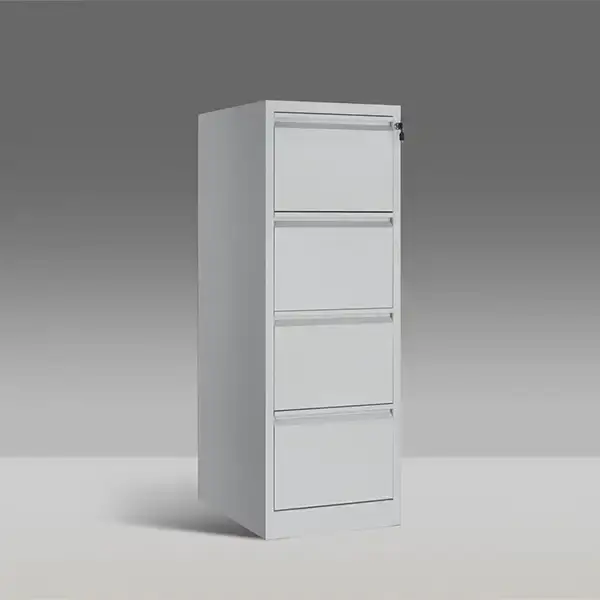
Two cabinets can look identical in a catalogue photograph and behave completely differently after eighteen months of daily use. These four attributes determine which one you are actually buying.
Steel Gauge and Weld Quality
Gauge refers to sheet thickness, and thinner sheets flex. A door that bows inward when pushed allows dust and, más importante, lets a determined hand reach the locking bar. Examine the welds at the corners and along the shelf supports. Continuous spot welds and reinforced corner gussets hold rigidity; tack welds that look decorative will fail under load. Ask suppliers such as LAKSHYO for the gauge specification per model rather than relying on overall weight claims.
…
For more details on steel storage lockers best suited for office clutter, por favor haga clic aquí: https://www.lakshyofurniture.com/news-center/steel-cabinets/

