
Crossed roller bearings are indispensable in industrial robots, Herramientas de máquina, and precision rotary tables because of their high rigidity and rotational accuracy. Yet even a bearing that performs well under heavy loads is not immune to failure. When a crossed roller bearing fails prematurely, the consequences extend beyond replacing a component—they include unplanned downtime, lost production, and potential damage to adjacent parts. For maintenance engineers and OEM designers alike, understanding the root causes is essential. This article examines the most common failure causes of crossed roller bearings, from lubrication breakdown to installation errors, and offers practical guidance to extend service life and reduce costly downtime.
Causas comunes de falla de los rodamientos de rodillos cruzados
Crossed roller bearings are designed with cylindrical rollers arranged at 90-degree intervals in a V-shaped raceway. This configuration provides high stiffness and the ability to carry radial, axial, y cargas de momento simultáneamente. Sin embargo, this precision also makes them sensitive to operating conditions. Most failures can be traced to a handful of categories:
- Inadequate or incorrect lubrication
- Improper installation or handling
- Contamination and seal failure
- Overloading or fatigue
Each category has a distinct set of symptoms and root causes. Recognizing these signs is the first step toward correcting the underlying issue and preventing repeat failures.
Lubrication-Related Failure Causes
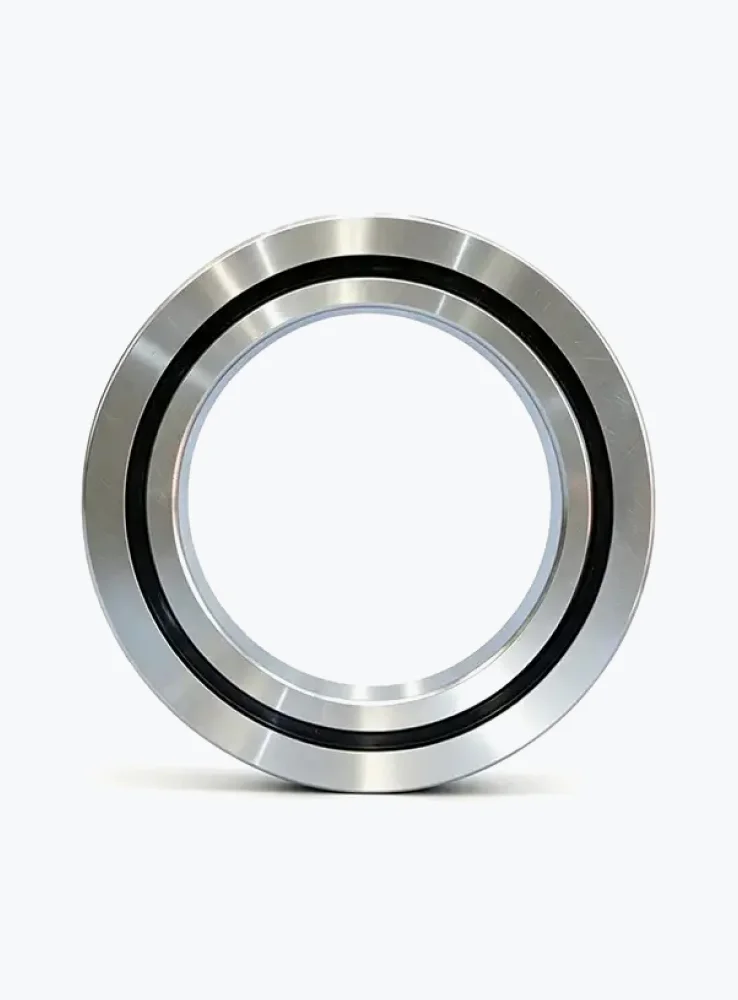
Lubrication problems account for a significant share of all bearing failures, Y los rodamientos de rodillos cruzados no son una excepción.. The lubricant’s role is to separate rolling elements from raceway surfaces, reducir la fricción, disipar el calor, and protect against corrosion. When lubrication is insufficient, metal-to-metal contact accelerates wear and leads to premature spalling.
Insufficient Lubrication or Lubricant Starvation
Starvation occurs when the initial lubricant charge is too low, re lubrication intervals are too long, or the lubricant is lost or degraded over time through high temperatures or extended operation. Las pistas de rodamiento de rodillos cruzadas pueden desarrollar pequeños puntos de contacto de metal con metal que provocan desgaste adhesivo., mayor rugosidad de la superficie, y eventualmente picaduras o desconchados.
…
Para obtener información más detallada sobre las causas comunes de fallo de los rodamientos de rodillos cruzados, por favor haga clic aquí: https://www.bobibearing.com/a/bearing-knowledge/bearing-failure.html

