
Cuando los ingenieros evalúan soluciones de rodamientos para equipos de alta precisión, La rigidez se convierte en un factor decisivo en lugar de simplemente una métrica de rendimiento.. Si la aplicación involucra máquinas herramienta CNC, robots industriales, dispositivos médicos, o equipos semiconductores, Una rigidez insuficiente provoca a menudo vibraciones., errores de posicionamiento, y desgaste prematuro. Este artículo explica las diferencias reales entre rodamientos de rodillos cruzados y rodamientos de bolas de contacto angular, con un fuerte enfoque en la rigidez, ayudarle a tomar una decisión técnicamente sólida y comercialmente práctica.
Comprensión de la rigidez en aplicaciones de rodamientos
La rigidez se refiere a la capacidad de un rodamiento para resistir la deformación bajo carga.. En términos prácticos, Determina cuánto desplazamiento ocurre cuando las fuerzas actúan sobre el sistema.. Un rodamiento con alta rigidez mantiene la precisión posicional, reduce la deflexión, y mejora la calidad del mecanizado o la estabilidad del movimiento..
La rigidez depende de varios factores.:
Geometría de contacto entre elementos rodantes y pistas de rodadura.
Juego interno o precarga
Propiedades de los materiales y tratamiento térmico.
Dirección y distribución de la carga.
Tanto los rodamientos de rodillos cruzados como los rodamientos de bolas de contacto angular están diseñados para aplicaciones de precisión., pero sus estructuras internas conducen a características de rigidez muy diferentes.
¿Qué es un rodamiento de rodillos cruzados??
Un rodamiento de rodillos cruzados presenta rodillos cilíndricos dispuestos ortogonalmente. (a 90 grados) entre los anillos interior y exterior. Cada rodillo alterna en orientación, permitiendo que el rodamiento maneje radial, axial, y cargas de momento simultáneamente.
Ventaja estructural clave
Porque los rodillos tienen contacto lineal con las pistas de rodadura., la carga se distribuye sobre un área de contacto más grande en comparación con el contacto puntual en los rodamientos de bolas. Este diseño aumenta significativamente la rigidez..
Rendimiento de rigidez
Los rodamientos de rodillos cruzados suelen ofrecer:
Rigidez extremadamente alta bajo cargas multidireccionales
Deformación elástica mínima
Resistencia superior a los momentos de inclinación
Esto los hace ideales para aplicaciones donde incluso la deflexión a nivel de micras es inaceptable..
¿Qué es un rodamiento de bolas de contacto angular??
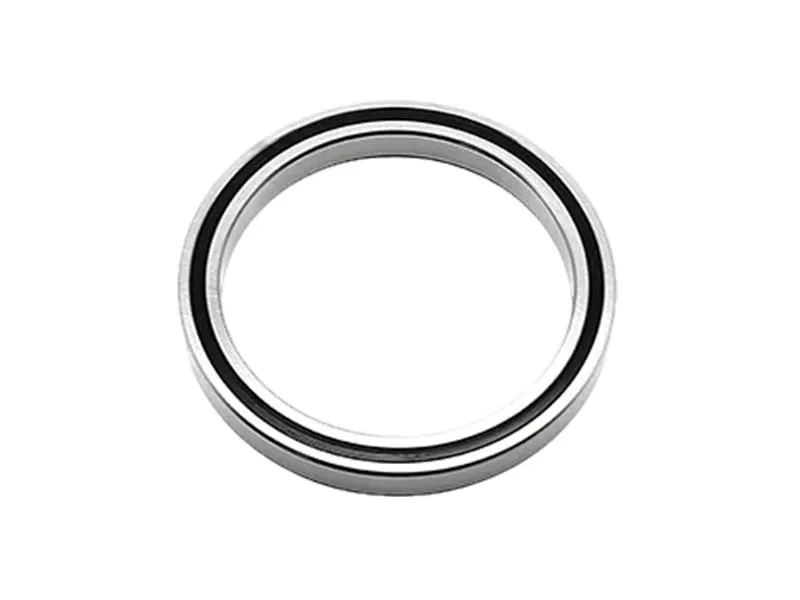
Un rodamiento de bolas de contacto angular utiliza bolas como elementos rodantes., con pistas de rodadura diseñadas para soportar cargas en un ángulo de contacto específico. Estos rodamientos suelen instalarse en pares o juegos para soportar cargas combinadas..
Ventaja estructural clave
El punto de contacto entre las bolas y las pistas de rodadura reduce la fricción y permite velocidades de rotación más altas.. Los ingenieros suelen utilizar configuraciones de precarga para mejorar la rigidez..
Rendimiento de rigidez
Los rodamientos de bolas de contacto angular proporcionan:
Rigidez de moderada a alta dependiendo de la precarga
Buen soporte de carga axial en una dirección. (o ambos cuando están emparejados)
Flexibilidad en la configuración (espalda con espalda, cara a cara, tándem)
Sin embargo, debido al punto de contacto, su rigidez inherente es menor que la de los diseños basados en rodillos.
…
Para obtener información más detallada sobre rodamientos de rodillos cruzados y rodamientos de bolas de contacto angular, por favor haga clic para visitar: https://www.prsbearings.com/a/news/difference-between-crossed-roller-bearings-and-angular-contact-ball-bearings.html

