
En las operaciones modernas de producción y refinación de petróleo., La deshidratación del petróleo crudo juega un papel decisivo para garantizar la calidad del producto., seguridad en el transporte, y estabilidad del procesamiento posterior. Entre las diversas tecnologías de separación disponibles en la actualidad, coalescentes electrostáticos se han convertido en una de las soluciones más efectivas y ampliamente adoptadas para mejorar la eficiencia de la deshidratación.. Su capacidad para acelerar la coalescencia de las gotas de agua dentro de las emulsiones de petróleo crudo mejora significativamente el rendimiento de la separación y reduce los costos operativos.. Comprender cómo los coalescentes electrostáticos mejoran la eficiencia de la deshidratación del petróleo crudo es esencial para los operadores que buscan optimizar la producción y cumplir con estándares de calidad cada vez más estrictos..
El desafío del agua en el procesamiento del petróleo crudo
El petróleo crudo extraído de los yacimientos rara vez se encuentra en forma pura. Normalmente contiene una mezcla de agua., sales, sólidos finos, e hidrocarburos que forman emulsiones estables.. Estas emulsiones suelen ser difíciles de romper utilizando únicamente la separación por gravedad porque las pequeñas gotas de agua se estabilizan mediante tensioactivos naturales como asfaltenos y resinas..
Cuando el agua no se elimina eficientemente del petróleo crudo, Se producen varios problemas operativos.. La presencia de agua incrementa los costos de transporte por mayor volumen y peso, acelera la corrosión de las tuberías, y afecta negativamente a los procesos de refinación posteriores. Las refinerías también enfrentan un mayor consumo de energía y riesgos de envenenamiento de los catalizadores cuando el exceso de agua y sales permanece en la materia prima.. Como resultado, Mejorar la eficiencia de la deshidratación del petróleo crudo se ha convertido en un objetivo crítico en las operaciones upstream y midstream..
Principio de funcionamiento de los coalescentes electrostáticos
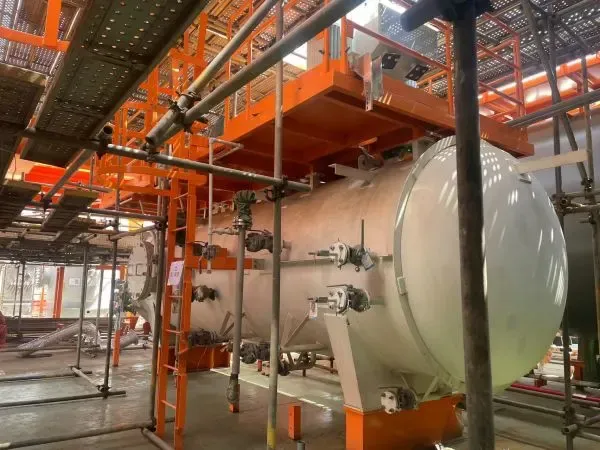
Los coalescentes electrostáticos están diseñados para mejorar el proceso de separación natural mediante la aplicación de un campo eléctrico de alto voltaje a las emulsiones de petróleo crudo y agua.. Cuando la emulsión pasa a través del recipiente coalescente., El campo eléctrico induce polarización en gotas de agua dispersas.. Esto hace que las gotas se alineen, atraerse unos a otros, y fusionarse en gotas más grandes.
A medida que aumenta el tamaño de la gota, la fuerza gravitacional que actúa sobre ellos se vuelve más fuerte que las fuerzas estabilizadoras que los mantienen suspendidos en el petróleo.. Esto permite que las gotas de agua agrandadas se depositen más rápidamente en el fondo del recipiente separador., donde se pueden eliminar eficientemente.
A diferencia de los métodos de separación puramente mecánicos, Los coalescentes electrostáticos modifican activamente el comportamiento de la emulsión a nivel microscópico.. Esta diferencia fundamental es lo que los hace altamente efectivos para mejorar la eficiencia de deshidratación del petróleo crudo., especialmente en emulsiones desafiantes con dispersión fina de agua.
Formas clave en que los coalescentes electrostáticos mejoran la eficiencia de la deshidratación
Los coalescentes electrostáticos mejoran la eficiencia de la deshidratación del petróleo crudo a través de varios mecanismos interconectados que trabajan juntos para mejorar el rendimiento de la separación..
Aceleración de la coalescencia de gotas
Una de las principales ventajas del tratamiento electrostático es la rápida coalescencia de finas gotas de agua.. En emulsiones no tratadas, Estas gotas permanecen estables durante largos períodos debido a la tensión interfacial y los agentes estabilizadores.. El campo eléctrico altera esta estabilidad y obliga a las gotas a fusionarse.. Esto reduce significativamente el tiempo necesario para la separación de fases., permitiendo a los operadores lograr un mayor rendimiento en los recipientes de separación.
…
Para obtener información más detallada sobre cómo los coalescentes electrostáticos pueden mejorar la eficiencia de deshidratación del petróleo crudo, por favor haga clic para visitar: https://www.zy-petrochemical.com/a/news/electrostatic-coalescers-improve-crude-oil-dehydration-efficiency.html

