
Изготовление морских ветряных башен требует точности, сила, и надежность на каждом этапе. Сварка секций башни большого диаметра, часто весом 50 тонн или более — требуется оборудование, которое может плавно вращать тяжелые грузы, сохраняя при этом точность позиционирования для стабильного качества сварки.. Сверхмощный 50-тонный ротатор – это не просто удобство.; это важнейший компонент производственной линии. В этой статье рассматриваются конкретные требования к сварке морских ветряных башен и объясняется, почему 50-тонный ротатор BOTA стал предпочтительным выбором для производителей, которым требуется максимальное время безотказной работы и исключительная целостность сварного шва..
Почему 50-тонный ротатор необходим для сварки морских ветряных башен
Морские ветряные башни обычно состоят из нескольких цилиндрических секций, соединенных кольцевыми сварными швами.. Каждая секция может весить от 20 и 80 тонны, с самым тяжелым в основании. Ротатор грузоподъемностью 50 тонн обрабатывает секции среднего и большого размера, обычно встречающиеся в современных турбинах мощностью 8–12 МВт.. Ротатор должен обеспечить:
Непрерывное вращение на переменных скоростях (0.1–2 об/мин) для соответствия параметрам сварки.
Нулевой люфт для предотвращения смещения суставов во время корневых проходов.
Высокий крутящий момент для преодоления инерции при запуске/остановке тяжелых грузов.
Без специального ротатора, вращение вручную или с помощью крана приводит к несогласованности, замедляет производство, и увеличивает риски безопасности. Ротатор BOTA решает эти проблемы, объединяя надежную механическую конструкцию с передовыми системами управления..
БОТА 50-тонный ротатор: Основные преимущества технологии и дизайна
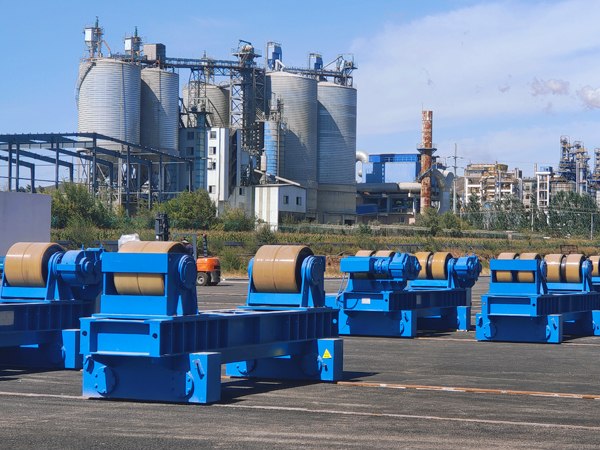
Ролики с высоким крутящим моментом и самоблокирующимся механизмом
В ротаторе БОТА грузоподъемностью 50 тонн используются четыре приводных ролика., каждый приводится в действие независимым гидравлическим двигателем. Крутящий момент передается через шестерни из закаленной легированной стали., создавая комбинированный вращательный момент, превышающий 18,000 Нм. Самоблокирующаяся червячная передача предотвращает проскальзывание нагрузки во время остановки сварки., сохранение положения без дополнительного торможения.
Точный контроль скорости и дистанционное управление
Скорость регулируется частотно-регулируемым приводом, управляемым ПЛК. (ЧРП) с обратной связью по замкнутому контуру от энкодера на главном валу. Оператор может установить скорость вращения с шагом 0.01 об/мин через портативный пульт или центральную консоль. Такой уровень контроля обеспечивает постоянный подвод тепла и равномерное размещение шариков., снижение риска деформации тонкостенных секций башни.
…
Для получения более подробной информации о сверхмощном 50-тонном ротаторе, используемом для сварки башен морских ветряных турбин., пожалуйста, нажмите здесь: https://www.bota-weld.com/en/a/news/50-ton-wind-rotator.html

