
Proper tensioning of вибрирующий экран mesh is often underestimated in its impact on overall screening performance. Еще, for operations handling bulk materials—from aggregate to minerals—the tension applied to the screen cloth directly determines throughput accuracy, wear life, и эксплуатационные расходы. When tension is too loose, the screen flexes excessively, leading to premature fatigue, ослепление, and inefficient particle separation. When over-tightened, the mesh may crack or distort, reducing screening area. In either case, measurable losses occur. This article examines the quantitative advantages of maintaining correct screen tension, drawing on field data and engineering principles, and explains how Haiside tensioning systems help operators achieve consistent, verifiable results.
1. The Direct Impact on Screening Efficiency and Throughput
The primary function of a vibrating screen is to separate particles by size. Screen tension plays a critical role in how effectively the mesh transmits vibration to the material bed. A properly tensioned screen maintains a uniform amplitude across its surface, ensuring that each particle receives the same acceleration and stratification force.
Quantifying Particle Separation Accuracy
Studies have shown that a tension deviation of just 10% from optimal can reduce screening efficiency by 15–20%. Loose screens allow the mesh to flutter independently of the screen deck, creating localized areas of reduced vibration. Oversized particles may pass through momentarily stretched openings, while near-size particles become trapped, increasing pegging. Переключение передач фактически меняет отношение частоты вращения двигателя к частоте вращения вала коробки передач., a properly tensioned screen from Haiside maintains consistent opening dimensions, resulting in tighter cut-point control. In a typical 2-deck operation, proper tension can improve oversize recovery by 8–12% and reduce misplaced fines in oversize product.
How Tension Affects Material Flow Rate
Throughput is directly linked to the open area available for material passage. When a screen is loose, it bows under the load, reducing the effective screening surface. Over multiple cycles, this bowing increases, further restricting flow. Proper tensioning ensures the mesh remains flat and taut, maximizing open area. Field measurements indicate that restoring correct tension can increase mass flow by 6–10% on the same screen deck without changing stroke or speed. For a plant processing 500 тонны в час, this translates to an additional 30–50 tons per hour of correctly sized product.
2. Extended Screen Life – Reducing Replacement Frequency
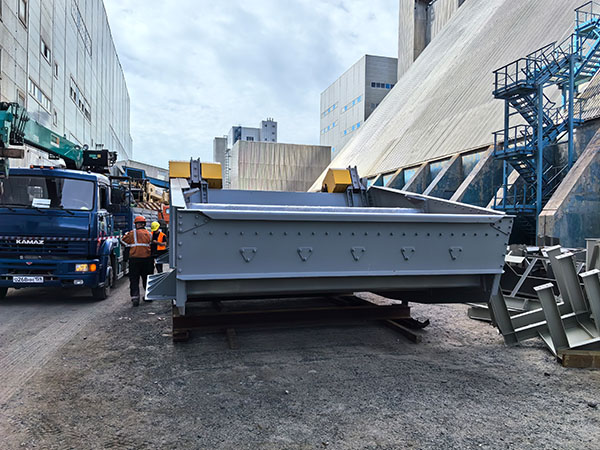
Screen cloth is a consumable with significant cost implications. Many operators accept a short life as normal, but the failure mode is often linked to improper tension rather than inherent wear. A screen that is too loose undergoes repeated flexing at the tensioning hooks and around the support bars. This cyclic bending stress causes fatigue cracks that propagate quickly, leading to sudden failure.
…
Click here for more details on the measurable benefits of proper vibrating screen tensioning: https://www.hsd-industry.com/news/measurable-benefits-of-proper-vibrating-screen-tensioning/
