
En maquinaria de precisión y robótica, La capacidad de soportar cargas pesadas manteniendo la rigidez es a menudo el factor decisivo entre el éxito y el fracaso.. Los rodamientos de rodillos cruzados han surgido como una solución superior para aplicaciones que exigen una alta capacidad de carga y una rigidez excepcional.. A diferencia de los rodamientos de bolas convencionales que dependen de un punto de contacto, Los rodamientos de rodillos cruzados utilizan rodillos cilíndricos dispuestos en un patrón cruzado único entre los anillos interior y exterior.. Este diseño cambia fundamentalmente la forma en que se distribuyen las fuerzas., permitiendo que el rodamiento maneje radial, axial, y cargas de momento simultáneamente con una deflexión mínima. Para ingenieros que buscan confiabilidad en entornos exigentes como máquinas herramienta, equipo de imágenes médicas, y robots industriales, Es esencial comprender las ventajas técnicas de los rodamientos de rodillos cruzados.. Este artículo examina los principios estructurales y los beneficios de rendimiento que los convierten en la opción preferida para aplicaciones donde la precisión y la durabilidad no son negociables..
Principios de diseño estructural detrás de una capacidad de carga superior
La esencia de un rodamiento de rodillos cruzados reside en la disposición de sus rodillos.. Los rodillos cilíndricos están colocados en ángulos de 90 grados entre sí., separados por un retenedor que mantiene un espacio preciso. Este patrón cruzado permite que cada par de rodillos comparta cargas desde múltiples direcciones simultáneamente. Porque los rodillos hacen contacto de línea con las superficies de la pista de rodadura en lugar de un punto de contacto, el área de contacto es significativamente mayor que en los rodamientos de bolas. Para una carga determinada, esto reduce la concentración de estrés, permitiendo que el rodamiento soporte hasta varias veces la carga de un rodamiento de bolas de tamaño equivalente. Además, La orientación alterna de los rodillos garantiza que la dirección radial, axial, y los momentos de inclinación son absorbidos por el mismo juego de rodillos, Eliminando la necesidad de filas de rodamientos separadas en muchas aplicaciones..
Geometría de rodillos y optimización de materiales
PRS fabrica rodamientos de rodillos cruzados utilizando acero apto para rodamientos con una coronación de rodillos precisa para evitar la tensión en los bordes.. Los rodillos suelen estar completamente endurecidos para lograr una dureza y resistencia al desgaste óptimas.. La combinación de contacto lineal y geometría de rodillo controlada significa que La capacidad de carga aumenta casi linealmente con el diámetro y la longitud del rodillo., una ventaja fundamental cuando las limitaciones de espacio exigen soluciones compactas pero robustas.
Ventajas de rigidez sobre los tipos de rodamientos tradicionales
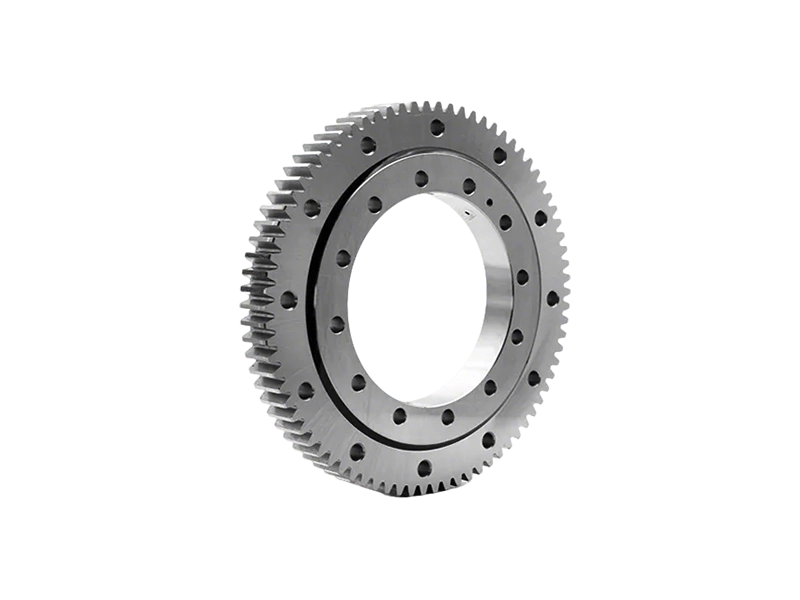
La rigidez (la capacidad de resistir la deformación bajo carga) es incluso más crítica que la capacidad de carga en muchas aplicaciones de precisión.. Los rodamientos de rodillos cruzados presentan una rigidez significativamente mayor en comparación con los rodamientos de bolas e incluso con algunos rodamientos de rodillos cilíndricos.. La interfaz de contacto de línea crea una zona de deformación elástica más grande., lo que paradójicamente reduce la deflexión total porque la carga se distribuye en un área más amplia. Además, La capacidad de precarga de los rodamientos de rodillos cruzados es excepcional.. Ajustando el juego radial durante la fabricación., Los ingenieros pueden lograr una holgura cercana a cero o incluso negativa., resultando en un rodamiento que exhibe Prácticamente no hay deflexión medible bajo cargas moderadas..
Desglose comparativo de la rigidez
- rodamientos de bolas: El contacto puntual conduce a una alta deflexión inicial; la rigidez es baja y no lineal, especialmente bajo cargas de momento.
- Rodamientos de rodillos cilíndricos: El contacto lineal proporciona una buena rigidez radial pero una rigidez axial y de momento deficiente porque los rodillos están orientados en una sola dirección..
…
Para obtener información más detallada sobre la capacidad de carga y la rigidez: las ventajas de los rodamientos de rodillos cruzados, por favor haga clic para visitar: https://www.prsbearings.com/a/news/crossed-roller-advantages.html
