
En las cadenas de suministro industriales modernas, almacenes logísticos de acero se han convertido en la columna vertebral del almacenamiento de gran volumen, manejo de, y operaciones de distribución. A medida que el comercio mundial se expande y el rendimiento de los almacenes sigue aumentando, el muelle de carga ya no es un detalle arquitectónico secundario. El sellado superior e inferior de esta bolsa con válvula de fondo cuadrado no requiere costura, Se ha convertido en una interfaz operativa crítica que influye directamente en la eficiencia., seguridad, consumo de energía, y el rendimiento logístico general.
Un muelle de carga bien diseñado para almacenes logísticos de acero de alta resistencia debe estar diseñado para soportar cargas de impacto continuas., acomodar diversos tipos de vehículos, y respaldar procesos rápidos de manipulación de materiales sin comprometer la integridad estructural. Este artículo explora los principios de diseño esenciales., consideraciones técnicas, y estrategias operativas a largo plazo que definen un sistema de muelle de carga eficiente.
1. El papel estratégico de los muelles de carga en los almacenes logísticos de acero
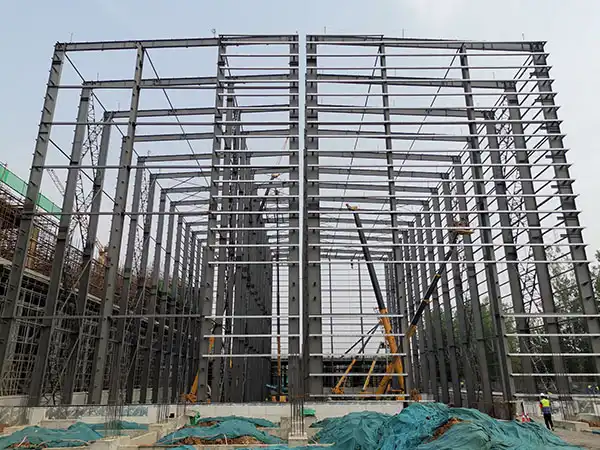
Un muelle de carga sirve como punto de transición entre los sistemas de transporte y las operaciones internas del almacén.. En entornos logísticos del acero, donde los productos suelen incluir bobinas pesadas, componentes estructurales, piezas de maquinaria, o productos metálicos a granel, Esta interfaz debe diseñarse para ofrecer durabilidad y precisión..
Un muelle de carga diseñado adecuadamente hace más que facilitar la carga y descarga.. Impacta directamente:
Tiempo de respuesta para camiones y remolques
Seguridad de los trabajadores y equipos.
Eficiencia energética en el interior de almacenes con temperatura controlada
Protección de los bienes almacenados contra la exposición ambiental.
Vida útil estructural de la envolvente del edificio.
Cuando los operadores de almacén subestiman el diseño del muelle, a menudo enfrentan obstáculos, daño al equipo, y costos de mantenimiento crecientes con el tiempo. Por lo tanto, Es esencial integrar la planificación del muelle de carga en las primeras etapas del diseño del almacén..
2. Consideraciones de diseño estructural para aplicaciones de servicio pesado
Los almacenes logísticos de acero suelen soportar cargas elevadas por eje y un tráfico frecuente de camiones.. Como resultado, Las estructuras de los muelles de carga deben reforzarse para absorber la tensión de impacto repetida..
Diseño de plataforma de muelle reforzada
La plataforma del muelle debe construirse con hormigón armado de alta resistencia o sistemas de estructuras de acero capaces de soportar cargas dinámicas.. Los ingenieros suelen calcular la capacidad de carga basándose en las operaciones de montacargas más pesadas previstas., camiones completamente cargados, y fuerzas de impacto ocasionales durante el atraque.
…
Para información más detallada sobre el diseño de plataformas de carga y descarga para almacenes logísticos de estructura metálica pesada, por favor haga clic para visitar: https://www.hcggsteel.com/a/news/loading-dock-design-for-heavy-duty-steel-logistics-warehouses.html

