
В точном машиностроении и робототехнике, каждый миллиметр лишнего материала может привести к конструктивным компромиссам — корпусу большего размера., более тяжелые сборки, или снижение динамической реакции. Инженеры неоднократно сталкиваются с проблемой сохранения грузоподъемности, жесткость, и точность вращения при одновременном сокращении общей занимаемой площади вращающихся компонентов.. Подшипники тонкого сечения напрямую устраняет это противоречие, предлагая значительно более тонкое поперечное сечение, чем у стандартных серий подшипников, без ущерба для основных показателей производительности.. В этой статье рассматривается, как подшипники тонкого сечения достигают такого баланса., сравнивает их с традиционными альтернативами, and provides actionable guidance for selecting the optimal solution for space-constrained applications—with insights drawn from BIBO Bearing’s extensive engineering experience.
Понимание подшипников тонкого сечения: Definition and Key Characteristics
Thin-section bearings are radial ball bearings designed with a relatively small cross-sectional height relative to the bore diameter. While a standard deep-groove ball bearing of, сказать, 50 mm bore might have a cross-section of 10 mm or more, a thin-section bearing of the same bore can have a cross-section as low as 4 mm. This drastic reduction in material is achieved through optimized raceway geometries, specialized heat treatments, and tight control of internal clearance.
What Makes a Bearing “Thin-Section”?
Industry standards such as ISO 281 and ABEC classes apply, но определяющей особенностью является ширина поперечного сечения подшипника. (В) и высота (Ч) составляет небольшую часть диаметра отверстия (д). Обычные серии тонких сечений включают 16000, 6800, 6900, и очень тонкий 6700 ряд, а также метрические и дюймовые варианты. BIBO Bearing предлагает эту серию с различными материалами сепараторов — прессованной сталью., обработанная латунь, и полиамид — для скорости, температура, и требования к шуму.
Основные конструктивные особенности для увеличения пространства и производительности
Для сохранения производительности, несмотря на уменьшенный объем дорожки качения., в подшипниках тонкого сечения используются:
- Оптимизированная геометрия дорожки качения: Более глубокие шариковые канавки, которые распределяют нагрузку по большей площади контакта., компенсация более тонкого кольца.
- Высокоточное производство: Процессы шлифования и хонингования, обеспечивающие округлость субмикрометра и шероховатость дорожек качения., обеспечение низкого трения и постоянного крутящего момента.
- Расширенный выбор материала: Подшипниковый класс 52100 хромированная сталь или нержавеющая сталь 440C для устойчивости к коррозии, с дополнительными керамическими шариками для электроизоляции и снижения веса.
Почему подшипники тонкого сечения превосходны в условиях ограниченного пространства
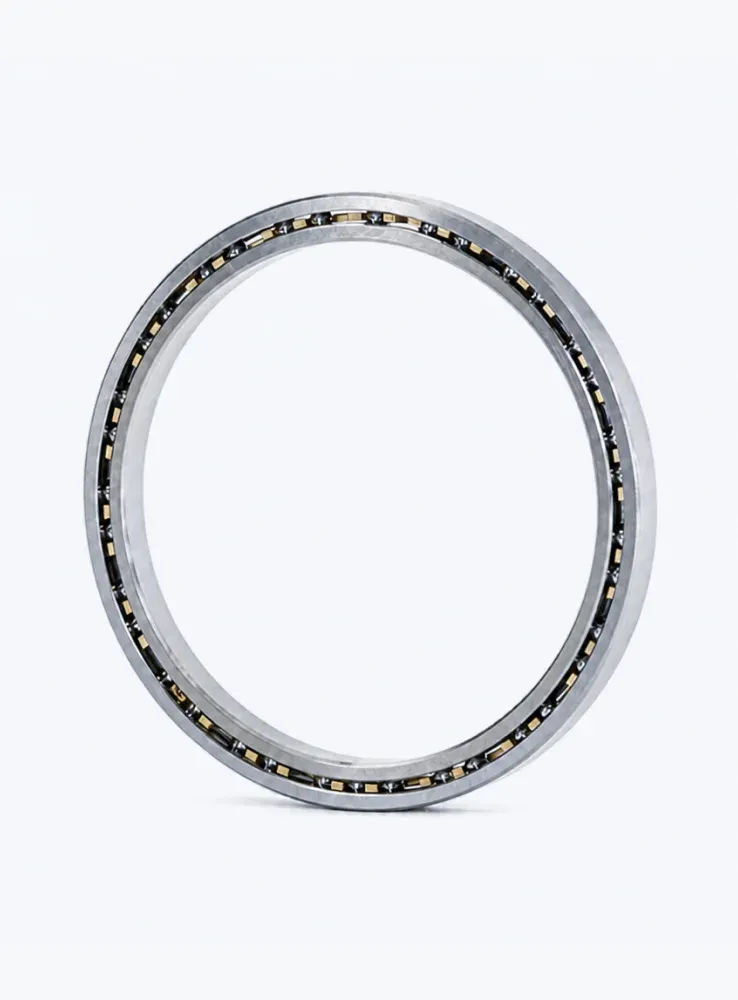
Когда инженеры-конструкторы сравнивают подшипники тонкого сечения со стандартными подшипниками, преимущества становятся очевидными. В таблице ниже приведены основные отличия.:
- Уменьшенные размеры конверта: Уменьшение высоты поперечного сечения до 60 % позволяет использовать корпуса меньшего размера и более легкие валы., непосредственно освобождая осевое и радиальное пространство.
- Меньший вес: Подшипник тонкого сечения может весить всего 30–50 % стандартного подшипника с таким же отверстием., критически важен для аэрокосмической и высокоскоростной техники, где каждый грамм влияет на производительность.
…
Для получения более подробной информации о максимальном использовании пространства без ущерба для производительности при использовании подшипников тонкого сечения., пожалуйста, нажмите, чтобы посетить: https://www.bobibearing.com/a/bearing-knowledge/thin-section-bearing-performance-guide.html

