
Rodamientos de rodillos cruzados Desempeñan un papel fundamental en la maquinaria de precisión moderna.. Los ingenieros seleccionan ampliamente este tipo de rodamiento para aplicaciones que exigen alta rigidez., estructura compacta, y precisión rotacional excepcional. Industrias como la robótica, máquinas herramienta cnc, equipo semiconductor, y las plataformas giratorias de alta resistencia dependen en gran medida de rodamientos de rodillos cruzados para garantizar un movimiento estable y preciso..
Sin embargo, Muchos operadores encuentran un problema frustrante durante el uso real.: desigual, espasmódico, o rotación inconsistente. Este problema no sólo afecta la precisión del equipo sino que también puede provocar vibraciones., ruido, desgaste prematuro, e incluso tiempos de inactividad inesperados. Para empresas que dependen de operaciones de alta precisión, dicha inestabilidad del rendimiento puede afectar directamente la productividad y los costos operativos..
Guía de solución de problemas por rotación desigual de rodamientos de rodillos cruzados
Este artículo proporciona un análisis completo y práctico de por qué los rodamientos de rodillos cruzados giran de manera desigual., junto con métodos prácticos de resolución de problemas y estrategias preventivas. Entendiendo estos factores en profundidad, Los equipos de mantenimiento y los ingenieros pueden mejorar significativamente la confiabilidad del equipo y extender la vida útil de los rodamientos..
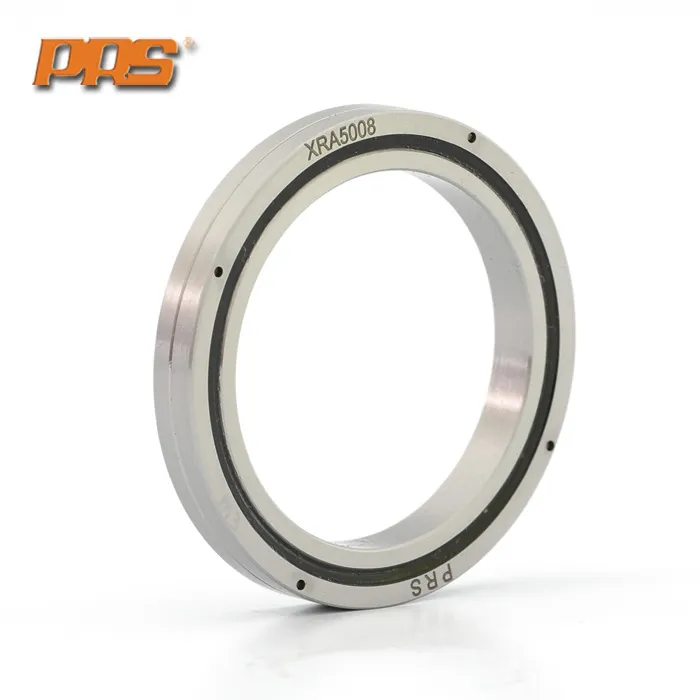
1. Cómo funcionan los rodamientos de rodillos cruzados y por qué es importante la precisión
Un rodamiento de rodillos cruzados presenta rodillos cilíndricos dispuestos alternativamente en ángulos de 90 grados entre los aros interior y exterior.. Esta estructura única permite que un solo rodamiento maneje simultáneamente cargas radiales., cargas axiales, y momentos de vuelco.
A diferencia de los rodamientos de bolas convencionales, Los rodamientos de rodillos cruzados dependen en gran medida de:
Alineación geométrica precisa
Configuración de precarga controlada
Distribución uniforme de la carga en todos los rodillos.
Debido a esta sensibilidad de diseño, Incluso pequeñas desviaciones durante la instalación o el funcionamiento pueden provocar un reparto desigual de la carga entre los rodillos.. Una vez que la distribución de la carga se desequilibra, el rodamiento ya no girará suavemente, y las concentraciones de estrés localizado comenzarán a desarrollarse.
Por lo tanto, cuando ocurre una rotación desigual, a menudo indica problemas más profundos relacionados con la precisión de la instalación, condición de lubricación, o entorno de trabajo en lugar de una simple falla a nivel de superficie.
2. Causas clave de la rotación desigual en rodamientos de rodillos cruzados
2.1 Desalineación de instalación
La alineación incorrecta durante la instalación sigue siendo una de las causas más comunes de rotación desigual. Cuando los técnicos no logran alinear con precisión los anillos interior y exterior, Algunos rodillos se ven obligados a transportar cargas excesivas mientras que otros permanecen infrautilizados..
…
Para obtener información más detallada sobre la resolución de problemas de rotación desigual de rodamientos de rodillos cruzados, por favor haga clic para visitar: https://www.prsbearings.com/a/news/troubleshooting-guide-for-uneven-rotation-of-crossed-roller-bearings.html

