
Backlash and clearance are often used interchangeably when engineers discuss crossed roller bearings, yet they describe different conditions. Clearance is the internal gap between the rolling elements and raceways before external load is applied. Backlash is the lost motion observed at the output when direction reverses, and it includes clearance plus deflection from supports, шестерни, and housings. For designers of rotary tables, робототехника, медицинское оборудование, и прецизионные ступени, confusing the two can lead to poor stiffness, ошибки позиционирования, or excessive torque. This article explains how clearance and backlash behave in crossed roller bearings, how they influence performance, and how to specify the right condition for a given application. BIBO Bearing provides crossed roller bearing solutions for engineers who need reliable motion control.
Understanding Clearance in a Crossed Roller Bearing
Clearance is a dimensional property of the bearing itself. В скрещенном роликоподшипнике, cylindrical rollers are arranged alternately at 90 degrees between two raceways. This design supports radial, осевой, и моментные нагрузки одновременно, which makes it popular for rotary tables, index tables, and robotic joints. The internal clearance is the total possible movement of one ring relative to the other in the unloaded state. It can be measured in the axial direction, radial direction, or as angular play depending on the bearing configuration and the manufacturer’s specification.
Clearance can be positive, zero, or negative. Positive clearance means there is a gap between rollers and raceways. Zero clearance means the surfaces are in contact with no measurable free play and no significant preload. Negative clearance, often called preload, means the rollers are pressed against the raceways before external load is applied. Preload removes internal free play but also increases friction and heat. The right choice depends on the balance between stiffness, крутящий момент, скорость, and life.
Measuring Internal Clearance
Internal clearance is usually verified before installation or in a controlled fixture. A dial indicator is placed against one ring while the other ring is held. A small reversing axial or radial force is applied, and the displacement is recorded. The measurement must be taken at a stable temperature because thermal expansion changes clearance. Для скрещенных роликоподшипников, axial clearance is often the most practical indicator because the bearing is frequently mounted with an axial clamping arrangement. If the bearing is preloaded, the measured value may be negative or may require a specified torque to rotate. Because clearance affects installation, it should be confirmed with the bearing supplier before final assembly.
What Backlash Means in a Bearing System
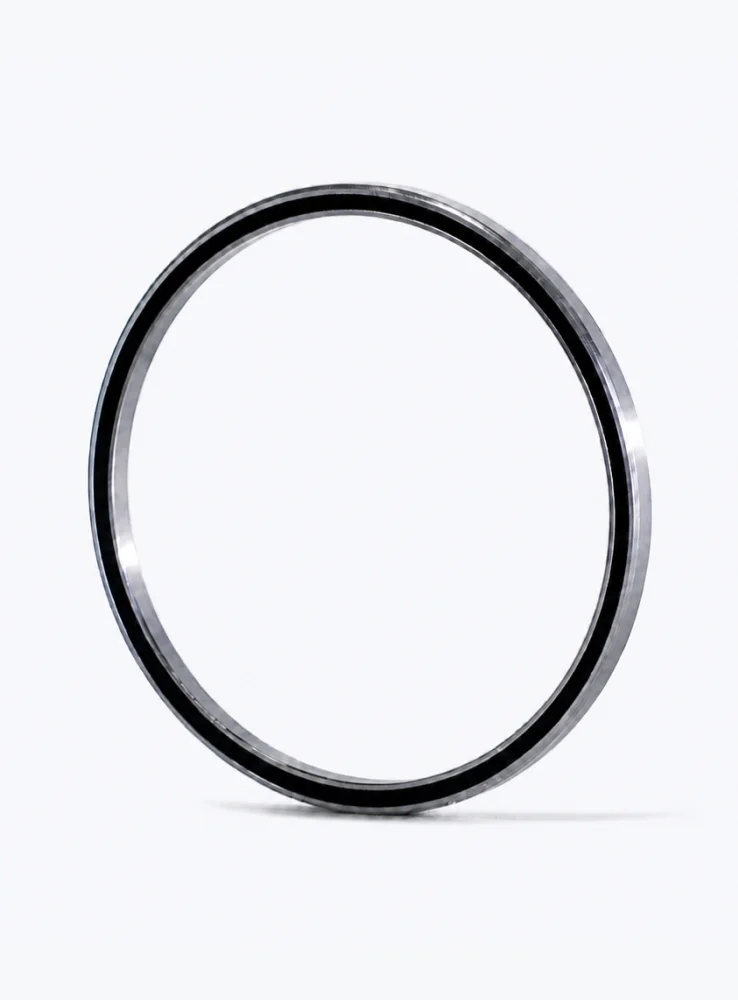
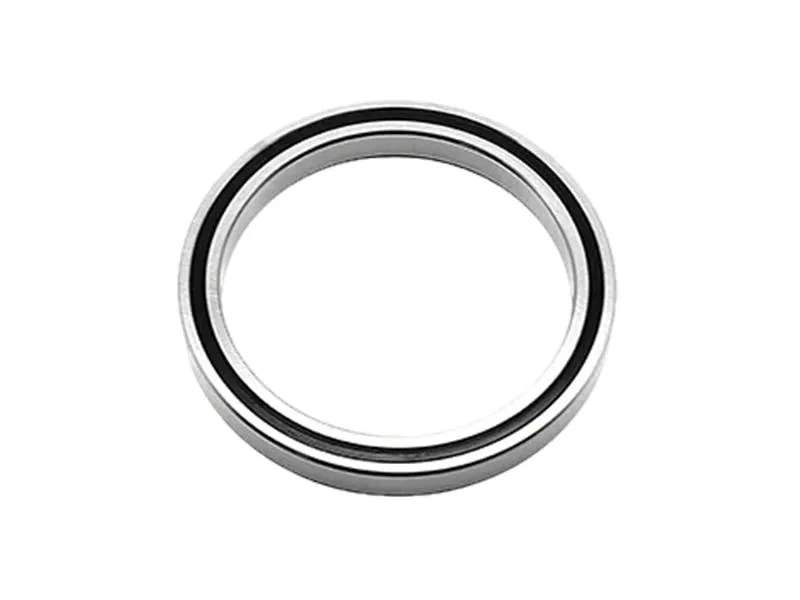
Backlash is the lost motion that occurs when the direction of motion reverses. It is a system-level property, not just a bearing property. In a crossed roller bearing assembly, backlash can come from internal clearance, elastic deformation of the rings, mounting fits, housing stiffness, drive couplings, gear reducers, and even the control loop of a servo system. For a rotary axis, backlash is often measured as angular error at a known radius. For a linear axis, it is measured as linear displacement. The key point is that zero clearance in the bearing does not automatically mean zero backlash in the machine.
…
For more detailed information regarding the backlash and clearance of crossed roller bearings, пожалуйста, нажмите здесь: https://www.bobibearing.com/a/bearing-knowledge/backlash-clearance.html
