
En equipos industriales modernos., La clasificación de carga estática básica y la clasificación de carga estática básica del rodamiento se refieren a la carga máxima que el rodamiento puede soportar cuando está estático o rotando. Son componentes centrales para lograr el movimiento giratorio., widely used in cranes, turbinas de viento, mesas giratorias de estructura de acero, y tuneladoras. Pueden soportar no sólo grandes cargas radiales sino también fuerzas axiales y momentos de vuelco., afectando directamente la seguridad y eficiencia del equipo. Este artículo analizará sistemáticamente los puntos de clasificación y selección de los rodamientos giratorios para ayudar en la práctica de la ingeniería..
Clasificaciones principales de rodamientos giratorios
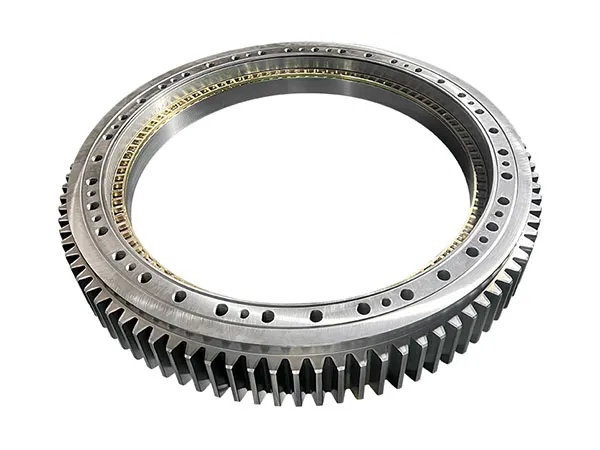
Los rodamientos giratorios se pueden clasificar según el tipo de elementos rodantes., forma estructural, y método de instalación. Diferentes tipos de rodamientos son adecuados para diferentes necesidades de ingeniería y condiciones de carga..
1. Clasificación por tipo de elemento rodante
Rodamientos giratorios esféricos: Utilice bolas de acero como elementos rodantes., lo que resulta en una baja resistencia a la fricción y un funcionamiento flexible, adecuado para escenarios de carga ligera a media.
Aplicaciones típicas: robots industriales, maquinaria de elevación ligera, etc.
Rodamientos giratorios de rodillos: Utilice rodillos cilíndricos, rodillos cónicos, o rodillos cruzados, ofreciendo una alta capacidad de carga, especialmente adecuado para soportar fuerzas radiales y momentos de vuelco.
Aplicaciones típicas: Grúas torre, máquinas perforadoras de túneles, mesas giratorias de estructura de acero.
2. Clasificación por forma estructural
Rodamientos giratorios de una hilera: Estructura compacta, capacidad de carga moderada, Adecuado para maquinaria pequeña y mediana..
Rodamientos giratorios de dos hileras: Los elementos rodantes están dispuestos en dos filas., aumento de la capacidad de carga, Adecuado para maquinaria de tamaño mediano y grande..
Rodamientos giratorios con cuatro puntos de contacto: Una sola fila de bolas de acero puede soportar cargas axiales y fuerzas radiales tanto positivas como negativas., ampliamente utilizado en maquinaria de ingeniería.
3. Clasificación por método de instalación
Cojinetes de giro de engranajes internos: El anillo de engranaje está en el anillo interior., comúnmente utilizado en tocadiscos, mesas de trabajo rotativas, etc.
Cojinetes de giro de engranajes externos: El anillo de engranaje está en el anillo exterior., adecuado para equipos accionados por engranajes.
Rodamientos giratorios sin engranajes: La rotación se logra mediante accionamiento hidráulico o directo., utilizado principalmente en maquinaria de alta precisión.
Guía de selección de rodamientos giratorios
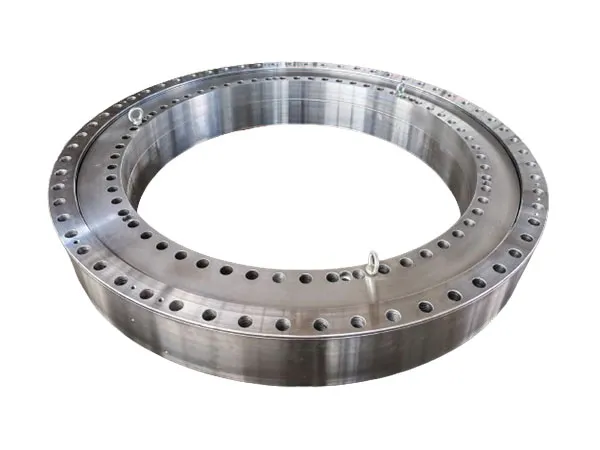
Elegir el rodamiento giratorio adecuado no solo garantiza un funcionamiento estable del equipo, sino que también reduce los costes de mantenimiento y prolonga la vida útil.. Se deben considerar los siguientes factores al seleccionar rodamientos giratorios:
Tipo y tamaño de carga
Pequeño, Los equipos de carga ligera pueden utilizar rodamientos de bolas..
Los equipos de tamaño mediano a grande con altos requisitos de carga deben usar rodamientos de rodillos o rodamientos de rodillos cruzados..
…
Para obtener información más detallada sobre las clasificaciones de los rodamientos giratorios, por favor haga clic para visitar: https://www.mcslewingbearings.com/a/news/slewing-bearing-classification.html

