
Reducir el ruido en rodamientos de sección delgada implica abordar fuentes potenciales en varias etapas: selección de rodamiento, instalación, lubricación, y operación. Los cojinetes de sección delgados son particularmente sensibles debido a su alta relación diámetro a cruz, haciéndolos más flexibles y susceptibles a la distorsión.
Cómo reducir el ruido de los rodamientos de sección delgada
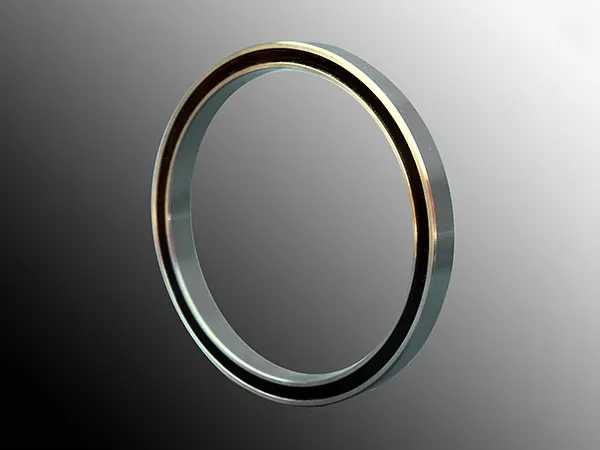
Selección de rodamientos & cuando la precisión de funcionamiento del rodamiento no cumple los requisitos:
Grado de mayor precisión: Elija rodamientos con mayor ABEC (Ingenieros de rodamientos anulares’ Comité) o ISO (Organización Internacional de Normalización) clases de precisión. Una mayor precisión significa tolerancias más estrictas en la geometría de la pista de rodadura, esfericidad de la bola, y acabado superficial, lo que lleva a un funcionamiento más fluido.
Liquidación interna: Seleccione el juego interno apropiado (C2, C0, C3, etc.). Demasiado espacio libre puede provocar que la bola patine y haga ruido., aunque muy poco (o precarga excesiva) puede aumentar la fricción, calor, y ruido. La holgura correcta depende de la aplicación., adaptar, y temperatura de funcionamiento.
Jaula (Anticipo) Material & cuando la precisión de funcionamiento del rodamiento no cumple los requisitos:
Jaulas de polímero: Nylon (poliamida) o las jaulas de PEEK pueden amortiguar las vibraciones y funcionar más silenciosamente que las jaulas de acero, especialmente a altas velocidades.
Jaulas tipo corona o a presión: A veces pueden ser más silenciosas que las jaulas tipo cinta..
Complemento completo (Sin jaula): Al tiempo que ofrece una mayor capacidad de carga, Generalmente son más ruidosos debido al contacto entre pelotas..
Material de la bola: bolas de ceramica (p.ej., Nitruro de Silicio, Si3N4) son más ligeros, más difícil, y más suave que las bolas de acero. Esto reduce las fuerzas centrífugas., tener puesto, fricción, y puede conducir a un funcionamiento más silencioso.
Sellos y escudos: Aunque principalmente para mantener los contaminantes fuera y el lubricante dentro, pueden ofrecer un ligero efecto amortiguador. Sin embargo, Los sellos que rozan también pueden ser una fuente de ruido si no se diseñan o lubrican adecuadamente..
Instalación adecuada & Montaje (CRÍTICO para secciones delgadas):
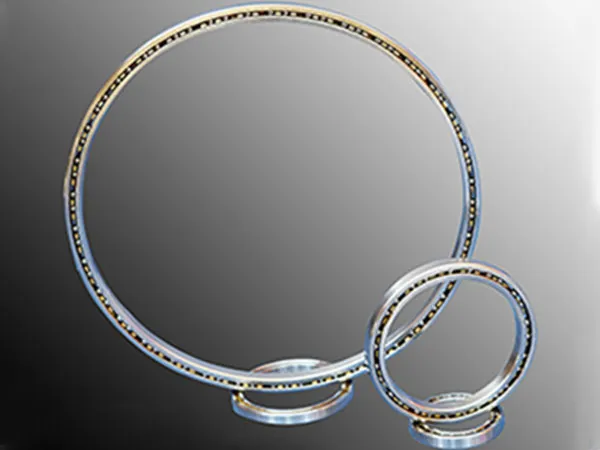
Geometría de carcasa y eje:
Redondez & Cilindricidad: Los rodamientos de sección delgada se ajustan a la forma del eje y la carcasa.. Cualquier falta de redondez o conicidad en los componentes acoplados distorsionará los anillos del rodamiento., lo que lleva a una distribución desigual de la carga, aumento del estrés, y ruido. Utilice mecanizado de alta precisión para superficies de contacto.
Concentricidad & Perpendicularidad: Asegúrese de que los orificios del eje y la carcasa sean concéntricos y que los hombros sean perpendiculares al eje.. La desalineación es un importante contribuyente al ruido..
…
Puede encontrar información más detallada sobre cómo reducir el ruido de los rodamientos de sección delgada haciendo clic en visitar: https://www.lynicebearings.com/a/blog/how-to-reduce-the-noise-of-thin-section-bearings.html
