forja libre is a processing method that uses impact force or pressure to deform the metal freely in all directions between the upper and lower anvil surfaces, and obtains the required shape and size and certain mechanical properties without any restriction, which is referred to as free forging. The tools and equipment used in free forging are simple, versatile and low in cost. Compared with casting blanks, free forging eliminates shrinkage holes, shrinkage porosity, pores and other defects, so that the blanks have higher mechanical properties. Forgings are simple in shape and flexible in operation. Por lo tanto, it has special significance in the manufacture of heavy machinery and important parts.

BASIC PROCESS OF FREE FORGING

Los procesos básicos de forja libre incluyen molesto, dibujo, puñetazos, flexión, torsión, offset, cutting and forging.

Upsetting

A forging process that reduces the height of the blank and increases the cross-sectional area. The upsetting process is mainly used for forging gear blanks and round cake forgings. The upsetting process can effectively improve the blank structure and reduce the anisotropy of mechanical properties. Repeated upsetting and drawing can improve the morphology and distribution of carbides in high-alloy tool steels.

Agricultural machinery bearing sleeve

Upsetting mainly has the following three forms:

1. Complete upsetting. Complete upsetting is to place the blank vertically on the anvil surface, and under the hammering of the upper anvil, the blank will be plastically deformed with a height reduction and an increase in the cross-sectional area.

2, the end upsetting. After the billet is heated, one end is placed in a drain or mold to limit the plastic deformation of this part, and then the other end of the billet is hammered to make it upsetting. The upsetting method of the leaking disc is mostly used for small batch production; the method of upsetting the tire mold is mostly used for mass production. Under the condition of single-piece production, the part that needs upsetting can be heated locally, or after all heating, the part that does not need upsetting can be chilled in water, and then upsetting is performed.

Para detalles, por favor visita:https://www.gold-emperor.com/the-basic-process-of-free-forging/

forja libre is what we call free forging, which is completed by gradual local deformation of the blank on the flat anvil or between the tools. Because the tool is in contact with the blank part, the stagnant grid work is much smaller than the die forging bar for the production of forgings of the same size, so free forging is suitable for forging large forgings. Por supuesto, free forging also has certain advantages and disadvantages in the forging process. Sí, averigüemos juntos!

Brazo de elevación para maquinaria agrícola

THE ADVANTAGES OF FREE FORGING :

(1) Free forging can improve the structure and properties of metal. The quality and mechanical properties of metal free forgings are higher than those of castings, and their strength is 50% -70% higher than that of castings, so they can withstand large impact loads. Forgings can reduce the weight of the parts themselves on the premise of ensuring the design strength of the parts, which is of great significance to aerospace and transportation.

(2) Free forging can save raw materials. Parts with shapes closer to the part can be produced using the free forging method.

(3) Free forging is suitable for single-piece small batch production, and the variety is more flexible.

(4) Since there is no lateral flow in the straight shaft or curved shaft parts and annular parts, the streamline distribution is generally more reasonable than that of die forgings. It is especially suitable for straight or curved shafts, discs or rings with simple shape, small cross-section change and gentle main axis.

(5) Some special quality torsion requirements can be met by the free forging process, such as reverse upsetting can improve the quality of raw materials.

Para detalles, por favor visita:https://www.gold-emperor.com/advantages-and-disadvantages-of-free-forging/

The die forging process has high production efficiency, intensidad de trabajo baja, accurate dimensions, small machining allowance, and can forge forgings with complex shapes; it is suitable for mass production. Sin embargo, the cost of the die is high, and special morir forja equipment is required, which is not suitable for single-piece or small batch production. Por lo tanto, the quality of die forgings is also more concerned by users. Correctly understand the main factors affecting the quality of die forgings. very important meaning.

THE MAIN FACTORS AFFECTING THE QUALITY OF DIE FORGINGS

Otras piezas forjadas para maquinaria agrícola

1. DEFECTS IN RAW MATERIALS

Por ejemplo, there are residual shrinkage holes, bubbles, porosidad, inclusiones, etc. in the ingot or steel, which may cause the forging to crack. Forging cracks caused by metallurgical reasons are often accompanied by a large number of oxides, sulfides, silicates and other inclusions. The raw materials of high carbon and high alloy steel are prone to serious segregation of second phases such as carbides. If they are not crushed and evenly distributed during forging, the mechanical properties of the forgings will be reduced, and the forgings may be cracked or evenly distributed during heat treatment. distortion. If there are scratches, scars, folds and cracks on the surface of the raw material, it will bring defects to the forgings. Por lo tanto, raw materials must be inspected in die forging production.

2. HEATING SPECIFICATION

When forging large die forgings and alloy steel die forgings, if the heating speed is too fast, the temperature difference between the inner and outer layers will be large, and the central part will be cracked due to temperature stress and structural stress.
Entonces, ¿sabes cómo?
When the heating temperature is too high and the holding time is too long to cause slight overheating, a lustrous, crystalline, and intergranular fracture will be produced. Coarse grains that are slightly overheated can be corrected by annealing or normalizing, followed by recrystallization. In severe overheating, fractures or stone fractures will occur. The characteristics of the fracture are fish-scale bright spots and transgranular fracture; the reason for the fracture is that the coarse austenite grains form an intragranular texture with extremely high stability. Texture characteristics are preserved.

Para detalles, por favor visita:https://www.gold-emperor.com/factors-affecting-the-quality-of-die-forgings/

los cojinete de giro la estructura incluye: anillo interior, anillo exterior, elementos rodantes y jaula guiada por elementos rodantes. Es un importante componente de transmisión en equipos mecánicos y se ha utilizado ampliamente en maquinaria de construcción., maquinaria industrial ligera, maquinaria metalúrgica, maquinaria medica, equipos marinos y otras industrias. Aplicación, luego, el fabricante del rodamiento giratorio para excavadora lo guiará para comprender el proceso de fabricación y los pasos detallados del rodamiento giratorio..

1. Corte de materias primas de acero para rodamientos de giro.

Las materias primas comúnmente utilizadas para los rodamientos de corona giratoria son acero para rodamientos de cromo-carbono que está endurecido en su conjunto., y la corona giratoria está hecha de acero templado en la superficie, generalmente hecho de acero 50Mn, como: S48C, 42CrMo, 5CrMnMo. Las palanquillas cilíndricas de materia prima transportadas desde la acería se cortan según el tamaño requerido para procesar el rodamiento.. En general, La hoja de sierra de carburo debe usarse para cortar acero para rodamientos., que tiene alta dureza, resistencia al desgaste, buena fuerza y ​​tenacidad, resistencia al calor, resistencia a la corrosión, etc. Una serie de excelentes propiedades.

2. Forja de palanquillas con rodamientos de giro

En un horno de calentamiento, el tocho se calienta y se forja en forma de pastel redondo. El eslabón forjado es un eslabón importante para garantizar la confiabilidad y vida útil del rodamiento.. Después de forjar la materia prima., se forma el anillo de rodamiento en bruto. Al mismo tiempo, la estructura organizativa de la materia prima se vuelve más densa y la línea de flujo se vuelve mejor, Lo que puede mejorar la confiabilidad y la vida útil del rodamiento.. Además, La calidad del proceso de forjado afectará directamente la tasa de utilización de las materias primas., afectando así el costo de producción.

3. Anillo de forja de rodamiento giratorio.

Las palanquillas se forjan en anillos de acero con forma de anillo mediante un molino de anillos.. La forja puede mejorar la estructura interna del acero y mejorar la resistencia., plasticidad, tenacidad al impacto y otras propiedades mecánicas del acero.

4. torneado brusco

El anillo de acero después de colocar el anillo en la máquina herramienta., Se realiza mecanizado de desbaste., Se giran varias pistas de rodadura, el anillo de acero se fija en la fresadora de engranajes, y se cortan los dientes. El objetivo principal es hacer que el casquillo terminado tenga la misma forma que el producto final., para crear condiciones para el mecanizado posterior al rectificado.

slewing bearing

5. Enfriamiento de rodamientos giratorios (tratamiento térmico)

Después del mecanizado, a través de la operación de enfriamiento, the strength and hardness of the steel are improved, and the wear resistance, fatigue strength and toughness of the metal are improved. The heat treatment process is to carry out high temperature treatment on the bearing ring after forging and turning, which directly affects the uniformity of carburization in the bearing ring, which can improve the wear resistance and hardness of the bearing, and also affects the reliability and life of the bearing important part.

6. Slewing bearing opening processing

Drill the mounting hole on the end face of the steel ring. When opening the slewing bearing, the center and cutting angle should be determined, and the drilling machine, hand-held electric drill and hand drill should be selected for operation.

Para detalles, por favor visita:https://www.excavatorbearing.com/a/bearing-knowledge/manufacturing-process-of-slewing-bearing.html

De echo, when it comes to the factors that affect the life of the cojinete de giro, there are many factors that work together to affect the life of the bearing. Many of these factors are difficult to express in a quantitative way and have a direct relationship with the bearing life, but in most cases, it also has a more or less impact on the bearing life from the side. For this problem, slewing bearing manufacturers start from the production and use of bearings. A detailed analysis of the factors affecting the life of the slewing bearing.

Production

slewing bearing

1. Diseño estructural

The design structure of the slewing bearing includes rolling elements, inner and outer rings, y jaulas. In the design, el diámetro de los elementos rodantes, el número de elementos rodantes, the wall thickness of the ring, the effective length of the rolling contact, the tightness and the convexity of the contact surface of the raceway should be considered. shape and size. Al mismo tiempo, the chemical composition of bearing production materials, oxides, impurities, gases and other factors have an impact on bearing performance and life.

2. Processing technology

The impact of bearing processing technology on bearing performance and life is a more critical part. In the process of bearing manufacturing and processing, the hardness, metallographic structure, burn, bump and surface roughness of the working surface of the bearing, the shape of the surface busbar, the thickness of the ring wall, the poor grouping of parts, the accuracy of the roller guide surface, the bearing clearance, the parts Cracks, residual magnetism and residual stress on the surface of the parts will also affect the life of the bearing.

Para detalles, por favor visita:https://www.excavatorbearing.com/a/bearing-knowledge/factors-affecting-the-life-of-slewing-bearing.html

La grúa montada en camión es un vehículo de transporte con funciones de elevación y transporte de carga.. El cojinete de giro juega un papel muy crítico en el medio como accesorio de la grúa montada en camión.. El accesorio de rodamiento giratorio no solo se usa en grúas montadas en camiones, but also used on construction machinery models such as flatbed trucks. próximo, the following detailed introduction is given to the maintenance methods of truck-mounted slewing bearings and the precautions for use. Let’s understand together. Just a moment.

Maintenance method of slewing bearing of truck mounted crane

slewing bearing of the truck-mounted crane

1. Regularly add grease

When the product is put into use, it should be filled with new grease according to different working conditions. El cojinete de giro debe llenarse con grasa regularmente.. Según los diferentes tipos de cojinetes de giro, el tiempo específico de llenado de grasa es el siguiente:

(1) Tipo de bola: agregue grasa cada 100 horas de operación;

(2) Tipo de rodillo: agregue grasa cada 50 horas de operación;

Si es en un entorno de trabajo especial, como: tropical, alta temperatura, polvoriento, alta temperatura, y trabajo continuo, el ciclo de llenado de grasa debe acortarse, y se debe asegurar que se llene cada 50 horas; Aplique detergente una vez cada 150 horas. Cuando se trabaja enérgicamente, aplicar detergente cada 75 horas. Tenga en cuenta que los dientes deben limpiarse antes de aplicar el detergente..

La máquina debe llenarse con grasa nueva antes y después de que la máquina haya estado parada durante mucho tiempo.. Cada vez que se agrega la grasa, la pista de rodadura debe llenarse hasta que rebose del dispositivo de sellado. Al agregar grasa, el rodamiento giratorio debe transferirse lentamente. Llene la pista con grasa uniformemente.

Para detalles, por favor visita:https://www.excavatorbearing.com/a/bearing-knowledge/truck-mounted-crane-slewing-bearing-maintenance.html

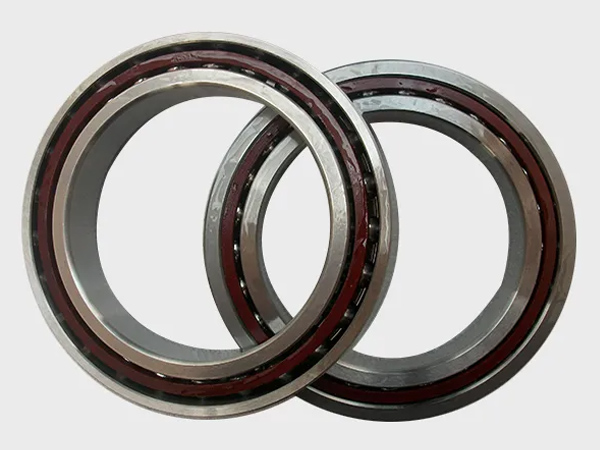
Cojinete de robot is an important part of mechanical equipment. Si desea mejorar la vida útil del rodamiento del robot, es necesario seleccionar el tamaño y la precisión de acuerdo con la ubicación de uso, condiciones de uso y condiciones ambientales. Hacer coincidir los rodamientos adecuados es la premisa para garantizar la vida útil y la viabilidad de los rodamientos de los robots..

1. partes de uso: Los rodamientos de robot son adecuados para soportar cargas radiales y axiales combinadas, principalmente basadas en cargas radiales. Suelen utilizarse en parejas con dos juegos de rodamientos, principalmente para cubos de ruedas delanteras y traseras, engranajes cónicos de conducción, diferenciales, etc. de automóviles. Piezas de transmisión como reductor..

2. Velocidad de rotación permitida: En el entorno de una instalación correcta y una buena lubricación., se permite ser 0.3-0.5 veces la velocidad de rotación limitada del rodamiento del robot. Bajo circunstancias normales, 0.2 veces que el límite de velocidad es apropiado.

Robot-bearing

3. Ángulo de inclinación permitido: Los rodamientos de los robots generalmente no permiten que el eje se incline en relación con el orificio de la carcasa.. Si hay una inclinación, no debe exceder los 2′.

4. Temperatura permitida: Bajo carga normal, y el lubricante tiene resistencia a altas temperaturas y suficiente lubricación, el rodamiento general puede trabajar a una temperatura ambiente de -30°C a 150°C.

Para detalles, por favor visita:https://www.prsbearings.com/a/news/improve-the-service-life-of-robot-bearings.html

Rodamientos de rodillos cruzados Son un tipo de rodamientos que se utilizan más en maquinaria., especialmente en máquinas industriales. Por supuesto, cuando los usamos, queremos tener un mejor rendimiento de los rodamientos de rodillos cruzados y asegurarnos de que los rodamientos de rodillos cruzados tengan un mejor rendimiento. Varias propiedades, entonces necesitamos un tratamiento térmico de sus materiales de procesamiento, por qué tratamiento térmico, y cuál es el efecto del tratamiento térmico en los materiales de los rodamientos de rodillos cruzados? En esta era de la inteligencia!

1. Tensión residual superficial

La distribución de la tensión residual en la superficie del acero para cojinetes después del enfriamiento rápido se ve afectada en gran medida por la velocidad de enfriamiento y el medio de enfriamiento rápido.. Para el material utilizado en rodamientos de rodillos cruzados, después de calentar a 840 °C y temple en aceite, el esfuerzo axial y el esfuerzo cortante Las características de distribución del esfuerzo a lo largo de la sección son aproximadamente las mismas, y las magnitudes son similares. Hay tensión de tracción cerca de las superficies interior y exterior., y tensión de compresión en el centro de la sección. Si el material y el proceso de enfriamiento son diferentes, la ley de distribución de tensiones superficiales es diferente, o incluso al revés.

2. Apagando grietas

(1) Aparecerán dos tipos de grietas de enfriamiento después de que se apaga el rodamiento: grietas profundas y grietas superficiales. Las grietas profundas son causadas por tensiones relacionadas con gradientes de temperatura.; las grietas superficiales están relacionadas con la descarburación superficial. Otra razón para las grietas se debe principalmente a la reducción de la resistencia a la fractura frágil de la martensita formada debido a la temperatura de enfriamiento más alta.. El aumento de la temperatura de enfriamiento reducirá el número de grietas de enfriamiento.; ℃, puede hacerlo más estable.

(2) Si se saca del aceite caliente y se limpia inmediatamente, inducirá grietas, e incluso la mezcla de una pequeña cantidad de agua en el aceite de enfriamiento aumentará significativamente el riesgo de grietas; si el recocido intermedio es insuficiente, o no se elimina la descarburación. La capa se somete a un enfriamiento secundario., lo que también aumenta la posibilidad de grietas. Las grietas de enfriamiento rápido de la superficie causadas por la descarburación están relacionadas en gran medida con la profundidad de las marcas de la herramienta en la superficie después del mecanizado., lo que provoca la concentración de tensiones. Cuanto mayor sea la profundidad de las marcas de la herramienta antes de apagar, cuanto más largas sean las grietas después de apagar.

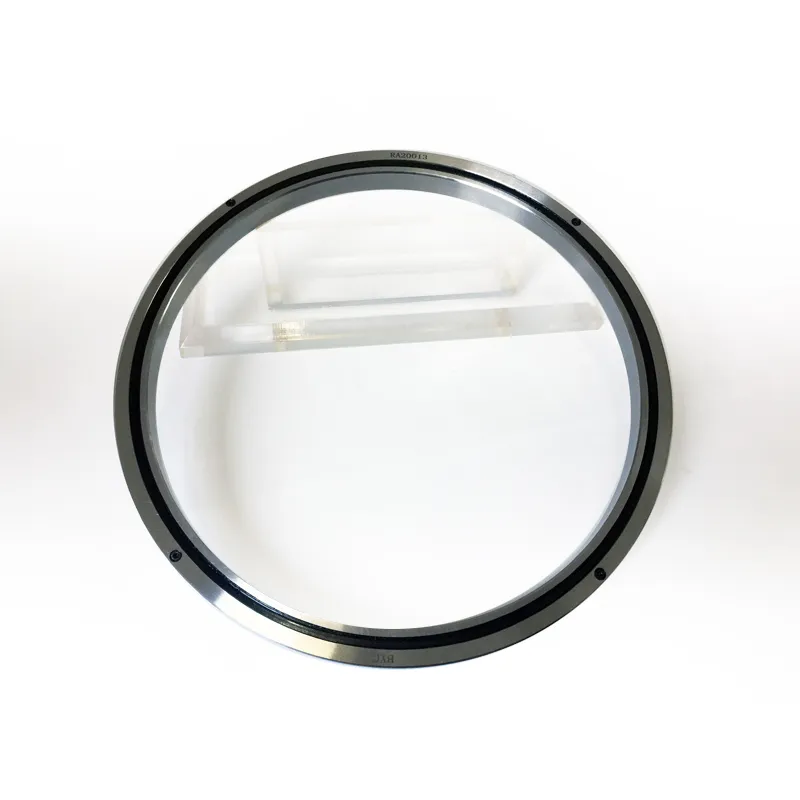
Crossed Roller Bearings

3. Oxidación superficial y descarburación

Durante el tratamiento térmico, la oxidación y la descarburación en la superficie de la férula son inevitables, y el espesor de estas capas de oxidación y descarburación se denomina capa metamórfica de tratamiento térmico. Sin embargo, utilizando el método de tratamiento térmico de atmósfera protectora, el espesor de la capa metamórfica se puede minimizar, reduciendo así el desperdicio de metal y el consumo de molienda.

Para detalles, por favor visita:https://www.prsbearings.com/a/news/effect-of-heat-treatment-on-crossed-roller-bearing-materials.html

UNA rodamiento de rodillos cruzados is a special type of bearing in which the inner ring is divided and the outer ring rotates. Compared with conventional models, the rigidity of crossed roller bearings is increased by 3 a 4 veces. Al mismo tiempo, since the inner ring or outer ring of the crossed roller bearing is divided into two structures, the bearing clearance can be adjusted, and even if a preload is applied, high-precision rotational motion can be obtained.

En nuestra vida diaria, the bearing will encounter the problem of abnormal bearing noise after three or two years of normal use. The following are several methods for detecting abnormal noise of bearings summarized by crossed roller bearing manufacturers. Vamos a ver.

Cause of abnormal noise

There are many kinds of abnormal sounds during the operation of crossed roller bearings, the formation mechanism is relatively complex, and the factors are multi-faceted, and various abnormal sounds are often superimposed together, which is difficult to distinguish. The main reasons are as follows:

(1) There are periodic vibration pulses caused by bumps, arañazos o defectos graves en las pistas de rodadura interior y exterior del rodamiento.

(2) Pulsos de vibración no periódicos causados ​​por defectos tales como golpes y rasguños en la superficie del elemento rodante.

(3) Pulsos de vibración periódicos o aperiódicos causados ​​por la presencia de polvo de hierro residual adsorbido magnéticamente en caminos de rodadura o elementos rodantes.

(4) El pulso de vibración aperiódica causado por las impurezas o el polvo que ingresa al área de funcionamiento de la pista de rodadura del rodamiento..

Para detalles, por favor visita:https://www.prsbearings.com/a/news/causes-and-detection-methods-of-abnormal-noise-of-crossed-roller-bearings.html

Discos de fricción del embrague del tractor are divided into inner friction discs and outer friction discs, que normalmente se instalan dentro del embrague del tractor. El embrague del tractor se compone principalmente de pistón de embrague, placa final, tambor, tambor de disco, placa de fricción exterior, placa de fricción interna, placa de presión y resorte, etc. Hay tres embragues de cambio húmedos en total (dos para cambiar, uno para la marcha atrás), que se acoplan hidráulicamente.

Disco de fricción del embrague del tractor

1. Transmisión del par rotacional. El volante del motor del tractor es la parte impulsora del embrague., y el disco impulsado y el cubo impulsado con discos de fricción están conectados con el eje impulsado (es decir, el eje impulsor de la transmisión) por ranuras deslizantes. El resorte de compresión presiona el disco impulsado contra la cara frontal del volante.

2. El par del motor del tractor se transmite al disco conducido por la fricción entre el volante y la superficie de contacto del disco conducido, y luego se transmite a la rueda motriz a través del eje impulsado y una serie de componentes en el tren de transmisión. Cuanto mayor sea la fuerza de compresión del resorte de compresión, mayor es el par que el embrague puede transmitir.

Precauciones para la sustitución de los discos de fricción del embrague del tractor

1. El conjunto del disco impulsado debe mantenerse limpio., y la placa de fricción del embrague del tractor debe ser a prueba de polvo, antiincrustante y a prueba de aceite. Antes de montar en el motor, la superficie de la placa de presión y el volante deben limpiarse para eliminar las manchas de aceite y evitar que el embrague patine.

2. El embrague del tractor se ha ajustado antes de salir de fábrica en circunstancias normales., y no necesita ser ajustado durante la instalación.

3. Para asegurar el buen funcionamiento del embrague, el conjunto del plato de presión del embrague y el conjunto del plato impulsado han sido equilibrados antes de salir de fábrica. No reemplace las piezas de repuesto a voluntad durante el uso.. Cuando el embrague del tractor debe desmontarse para su reparación, márcalo primero, luego ensamble y vuelva a equilibrar de acuerdo con la marca original después de la reparación.

Para detalles, por favor visita:https://www.syclutch.com/news/precautions-for-replacement-of-clutch-friction-discs.html