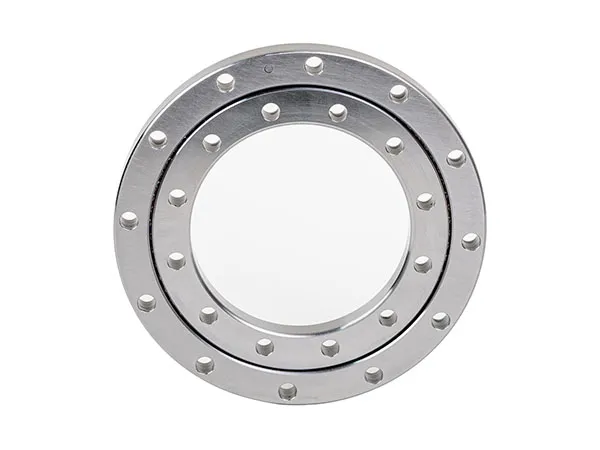
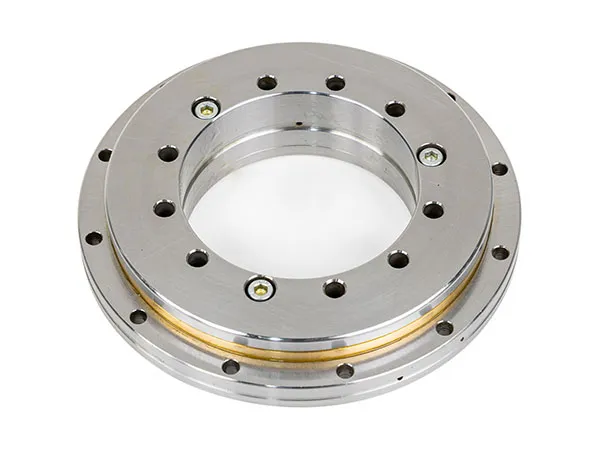
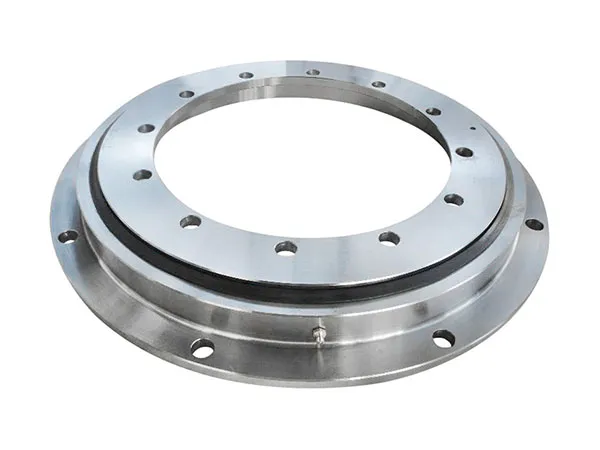
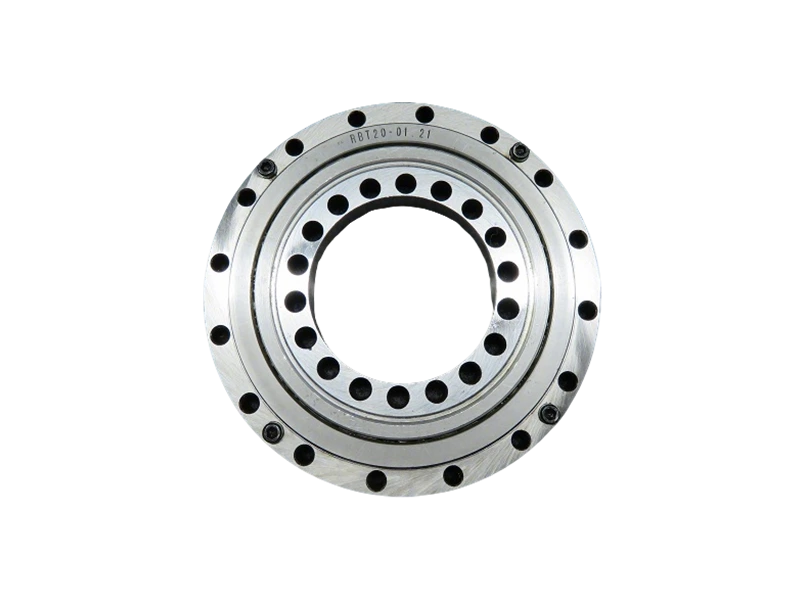
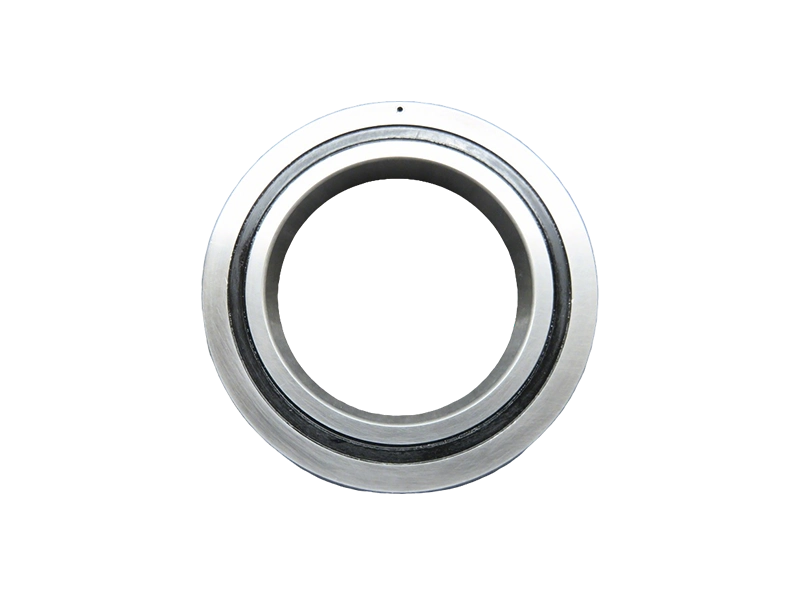
Elegir lo correcto cojinete de giro is crucial for the efficient and safe operation of machinery. Implica un análisis detallado de los requisitos de la aplicación y el entorno operativo.

Cómo elegir un rodamiento de giro

slewing bearing

1. Understand Load Requirements

Slewing bearings are designed to handle complex load combinations. You need to accurately determine all the loads acting on the bearing:

Carga axial (Fa): The vertical force acting along the axis of rotation.

Carga radial (Fr): The horizontal force acting perpendicular to the axis of rotation.

Tilting Moment (M): The force that tries to tip the bearing over. This is often the determining factor for slewing ring selection. It’s a product of a force and its distance from the bearing’s axis of rotation.

It’s essential to consider both static (at rest) and dynamic (during operation, including impact and shock loads) maximum loads. Manufacturers often providestatic limiting load diagramsto help estimate the required bearing size based on axial load and tilting moment.

2. Consider Bearing Type

Different slewing bearing types are suited for various load capacities and performance characteristics:

Four-Point Contact Ball Slewing Bearings:

Características: Compact structure, peso ligero, four-point contact between balls and raceway. Can bear axial, radial, and tilting moment loads simultaneously. Good for low to medium speeds.

Aplicaciones: Small to medium-sized cranes, excavadoras, welding operators, slew conveyors.

Crossed Cylindrical Roller Slewing Bearings:

Características: Rollers arranged in a 1:1 cross pattern. Offer high manufacturing precision, estructura compacta, and high rigidity. Can withstand axial, large radial, and tilting moment loads simultaneously.

Aplicaciones: robótica, Herramientas de máquina, Equipo medico, heavy machinery like large cranes and excavators where high accuracy and rigidity are paramount. Generally limited to lower continuous slewing speeds compared to ball bearings.

Double-Row Ball Slewing Bearings:

Características: Three races with two rows of steel balls (often different diameters). Good for large axial forces and tilting moments.

Aplicaciones: Tower cranes, truck cranes, and other loading/unloading machinery requiring medium to large diameters.
Three-Row Roller Slewing Bearings:

Características: Three separate raceways for upper, lower, and radial rollers. Can accurately determine the load on each row. Offer the largest bearing capacity among standard types, with firm structure and large shaft/radial dimensions.

Aplicaciones: Heavy machinery requiring large diameters, such as bucket wheel excavators, marine cranes, ladle slewing equipment, and large tonnage truck cranes.

3. Evaluate Rotational Speed and Performance

Speed Requirements: Determine the maximum operating speed. Four-point contact ball slewing bearings generally have higher speed capabilities and lower friction than crossed cylindrical roller bearings.

Friction and Efficiency: Lower friction leads to less heat generation and more efficient rotation.

Exactitud: For applications requiring precise positioning (p.ej., robótica), select bearings with minimal clearance and high manufacturing precision.

slewing bearing

4. Account for Environmental Conditions

Rango de temperatura: Standard bearings typically operate between -30°C and 120°C. Extreme temperatures (very high or low) may require special materials, lubricants, and sealing.

More detailed information about how to choose slewing bearings can be clicked to visit: https://www.mcslewingbearings.com/a/news/slewing-bearing-choose.html

Cojinetes de giro, también conocido como anillos giratorios, are crucial mechanical components used to support axial, radial, and tilting moment loads in various heavy-duty machines, como grúas, excavadoras, turbinas de viento, and rotating platforms. One of the most critical and common failures in slewing bearings is broken or damaged teeth on the gear ring.

Broken teeth on a slewing bearing can lead to serious operational issues, including abnormal noise, vibración, reduced load capacity, and eventually, total equipment failure. This kind of damage is often a result of improper installation, overloading, Se le presentarán brevemente las cuatro formas de falla de la vía., or misalignment during operation.

Causes of Broken Teeth in Slewing Bearings

Slewing bearings

Sobrecarga:

Static Overload: Applying a load greater than the bearing’s rated static capacity, even momentarily, can fracture teeth.

Dynamic Overload/Shock Loads: Sudden impacts, jerky movements, or unexpected high loads during operation (p.ej., a crane hitting an obstruction) can exceed the tooth strength.

Uneven Load Distribution: If the mounting structure is not flat or rigid enough, or if bolts are unevenly torqued, the load can concentrate on a few teeth, leading to overload and fracture.

Poor Lubrication:

Lubricación insuficiente: Lack of lubricant increases friction and heat, leading to accelerated wear (picaduras, scuffing) which weakens the teeth and can eventually cause them to break.

Incorrect Lubricant: Using a lubricant with the wrong viscosity, insufficient extreme pressure (PE) additives, or incompatibility with operating conditions can fail to protect the gear teeth.

Contaminated Lubricant: Suciedad, escombros, agua, or metal particles in the lubricant act as abrasives, grinding away tooth material and creating stress risers.

desalineación:

Instalación incorrecta: If the slewing bearing is not mounted perfectly parallel and concentric with the driving pinion, the load will not be distributed evenly across the face width of the teeth. This leads to edge loading and high stress concentrations, causing tooth breakage.

Structural Deformation: Flexing or deformation of the supporting structures under load can also cause misalignment.

Fatigue Failure:

Repeated cyclic loading, even below the ultimate strength of the material, can lead to the initiation and propagation of cracks, eventually resulting in tooth fracture.

More detailed information about the causes and prevention of tooth breakage of slewing bearings can be found by clicking visit: https://www.mcslewingbearings.com/a/news/causes-of-broken-teeth-of-slewing-bearing.html

UNA cojinete de giro de brida (also called a flanged rotary bearing or slew ring) is a specialized bearing designed to handle axial, radial, and moment loads simultaneously while enabling smooth rotational movement. It is widely used in heavy-duty applications such as cranes, excavadoras, turbinas de viento, and industrial turntables.

Flange Slewing Bearing Working Principle

 flange slewing bearing

How it WorksStep-by-Step:

Componentes: Like any slewing bearing, a flange type consists of:

Anillo interior: One of the main structural rings. It has a precisely machined raceway for the rolling elements. It might have the flange, or it might be plain. It can also have gear teeth (internal or external) or be gearless.

Anillo exterior: The other main structural ring, also with a raceway. It might have the flange, or it might be plain. It can also have gear teeth or be gearless. Crucialmente, at least one of the rings must have a flange for it to be a “cojinete de giro de brida”.

Elementos rodantes: These are typically balls (often in afour-point contactarrangement) or cylindrical/tapered rollers (often in acrossed rollerarrangement). They sit between the inner and outer ring raceways and allow low-friction rotation.

Cage/Spacers: Keep the rolling elements evenly distributed and prevent them from contacting each other.

Sellos: Protect the internal components from contaminants (suciedad, agua, escombros) and retain the essential lubricant (grasa).

The Flange(s): The key feature – the projecting rim with mounting holes on either the inner ring, anillo exterior, or sometimes both.

Montaje: This is where the flange makes a difference. Instead of needing to bolt through the main body of the bearing ring (which requires a very rigid and precisely machined mounting surface), the flange provides an easier attachment point.

flange slewing bearing

The structure that mates with the flanged ring simply needs a flat surface to meet the flange.

Bolts are passed through the holes in the flange and secured into the mating structure (p.ej., the base of an excavator or the rotating platform of a medical scanner).

The non-flanged ring (if there is one) is mounted conventionally to the other structure.

Transmisión de carga:

Carga axial: Transmitted vertically through the rolling elements from one ring to the other.

More detailed information about how flanged slewing bearings work can be found by clicking visit: https://www.mcslewingbearings.com/a/news/flange-slewing-bearing-working-principle.html

Reparar un cojinete de giro Es una tarea compleja que idealmente debería ser realizada por profesionales experimentados o por el fabricante original.. Sin embargo, Comprender los procesos generales involucrados puede ser útil. Representar los rodamientos de giro implica un proceso cuidadoso y metódico para restaurar su rendimiento y extender su vida útil. Aquí hay una guía paso a paso sobre cómo reparar los rodamientos de giro.

Reparación de rodamientos giratorios

slewing bearing

1. Inspección y evaluación inicial:

Inspección visual: El rodamiento se examina minuciosamente para detectar daños visibles, como grietas., abolladuras, corrosión, y daños en el sello.

Comprobación de rendimiento: Par de giro, niveles de ruido, y se evalúa cualquier signo de rigidez o rotación desigual.

Medición de holgura: El juego interno del rodamiento se mide para determinar el grado de desgaste.. A menudo se utiliza un indicador de cuadrante para medir la inclinación o el balanceo de las estructuras conectadas..

Análisis de lubricantes: Si es posible, Se toman muestras de la grasa existente y se analizan para detectar la presencia de partículas metálicas u otros contaminantes., lo que puede indicar desgaste interno.

2. Desmontaje y limpieza:

El rodamiento giratorio se desmonta con cuidado.. Este proceso debe realizarse metódicamente., realizar un seguimiento de la orientación y posición de todos los componentes.

todas las partes (pistas de rodadura, elementos rodantes, espaciadores/jaulas, focas) Se limpian con disolventes adecuados para eliminar la grasa vieja., contaminantes, y escombros.

3. Pruebas no destructivas (NDT):

Las pistas de rodadura generalmente se inspeccionan mediante métodos como la inspección por partículas magnéticas o pruebas visuales con aumento para detectar grietas o defectos en la superficie que pueden no ser visibles a simple vista..

Se pueden realizar pruebas de dureza en las pistas de rodadura para comprobar si hay pérdida de dureza del material..

4. Evaluación de reparabilidad:

Basado en los resultados de inspección y END, un ingeniero calificado determina si el rodamiento se puede reparar. Los factores considerados incluyen la gravedad y la ubicación del daño., el desgaste general, y la rentabilidad de la reparación frente al reemplazo.

Si el daño es extenso (p.ej., agrietamiento significativo, desgaste severo en las pistas de rodadura), el reemplazo suele ser el curso de acción recomendado.

slewing bearing

5. Procedimientos de reparación (Dependiendo del daño):

Daños menores (Grietas, Pequeñas abolladuras): Podría ser posible soldar y mecanizar posteriormente para restaurar las dimensiones originales.. Esto requiere experiencia y equipos especializados para garantizar las propiedades adecuadas del material y la precisión dimensional..

Para obtener información más detallada sobre cómo reparar los rodamientos giratorios, haga clic para visitar: https://www.mcslewingbearings.com/a/news/slewing-bearing-repair.html

Mantener un rotador de soldadura (also known as a turning roll or pipe rotator) is crucial for its longevity, safe operation, y rendimiento consistente. Proper maintenance helps prevent breakdowns, ensures accurate rotation, and protects your investment.

Welding Rotators Maintenance

welding rotator

I. Seguridad ante todo!

Bloqueo/Etiquetado (Corazón): Before any maintenance, ensure the rotator is completely de-energized and locked out/tagged out to prevent accidental startup.

Equipo de protección personal (EPP): Use EPP apropiado, como gafas de seguridad, guantes, y botas con punta de acero.

Stable Load: Ensure any workpiece is removed or securely supported before performing maintenance that could affect its stability.

Manual del fabricante: Always consult the specific manufacturer’s manual for your model. This guide is general; your manual will have model-specific instructions and recommendations.

II. Regular Maintenance Schedule & Checklist

UNA. A diario / Before Each Use:

Inspección visual:

General Cleanliness: Check for excessive dirt, grasa, weld spatter, o escombros. Clean as needed.

Rodillos (Drive & Idler): Inspeccionar por daños, tener puesto, flat spots, or embedded foreign objects (slag, virutas de metal). Clean roller surfaces.

Cables & Hoses: Check power cables, control pendant cables, and any hydraulic/pneumatic lines for cuts, frays, kinks, o usar. Ensure they are not tripping hazards.

Control Panel/Pendant: Check for damage. Ensure all buttons, interruptores, and E-stops are functional and not sticking.

Guards & Caracteristicas de seguridad: Verify all safety guards are in place and secure. Test the E-stop function.

Leaks: Look for any oil or grease leaks from gearboxes, aspectos, or hydraulic systems.

Functional Check:

Smooth Operation: Briefly run the rotator (unloaded or with a light test piece) to check for smooth rotation, unusual noises (molienda, whining, clicking), or excessive vibration.

Speed Control: Verify that speed adjustments work correctly.

segundo. Mantenimiento semanal:

Thorough Cleaning:

Clean weld spatter and debris from rollers, marco, and drive components. Use a wire brush, scraper (carefully to avoid damaging rollers), or appropriate cleaning agents.

For more detailed information on welding rotator maintenance click to visit: https://www.bota-weld.com/en/a/news/welding-rotator-maintenance.html

Welding column and booms (También conocidos como manipuladores de soldadura.) are versatile pieces of equipment used to automate and improve the efficiency and quality of welding, especially for long, circunferencial, or repetitive welds on large workpieces. They primarily differ based on their mobility, size/capacity, and sometimes the degree of articulation or control.

Welding Column Booms Types

Welding Column Booms

Fixed Type (Stationary):

Descripción: The base of the column is bolted directly to the workshop floor or a heavy foundation.

Use Case: Ideal for dedicated welding stations where the workpiece is brought to the manipulator. Often used for repetitive tasks on similar-sized components.

Pros: Very stable, takes up a defined footprint.

Contras: Lacks mobility; workpiece positioning is critical.

Movable Type (Free-Standing / Portable):

Descripción: The column is mounted on a heavy base equipped with casters or wheels, allowing it to be moved around the workshop. It might be moved manually or have a simple motorized drive for positioning.

Use Case: Offers flexibility to move the manipulator to different workpieces or work areas within a bay.

Pros: More versatile than fixed types for varied job locations.

Contras: May require leveling or outriggers for stability during operation, especially for larger models.

Track/Rail Mounted Type (Travel Car Type):

Descripción: The column and boom assembly is mounted on a motorized carriage that runs on precisely laid rails or tracks on the floor.

Use Case: Essential for welding very long longitudinal seams on items like large pipes, tanques, vigas, or ship hulls. The manipulator travels along the length of the workpiece.

Pros: Accurate linear movement over long distances, high productivity for long welds.

Contras: Requires dedicated track installation, less flexible for non-linear work.

Size/Capacity Based Classifications (often overlaps with the above):

Welding Column Booms

Light-Duty:

Shorter boom reach (p.ej., arriba a 2-3 metros).

Lower payload capacity (for lighter welding heads and accessories).

For more detailed information on the welding column booms types click to visit: https://www.bota-weld.com/en/a/news/welding-column-booms-types.html

Welding manipulators are essential pieces of equipment in automated and semi-automated welding operations, Diseñado para proporcionar un control preciso sobre los sopletes de soldadura para obtener soldaduras consistentes y de alta calidad.. Sin embargo, como toda maquinaria industrial, Los manipuladores de soldadura están sujetos a desgaste., fallas mecanicas, y problemas eléctricos con el tiempo. Knowing how to diagnose and repair a welding manipulator is crucial for maintaining production efficiency, ensuring workplace safety, and minimizing downtime.

Repairing a welding manipulator involves diagnosing common mechanical, electrical, and welding-related issues.

Welding Manipulator Repair

Welding manipulators

1. Identificar el problema

Before starting repairs, observe symptoms to narrow down the issue:

Problemas mecánicos: Jerky movement, desalineación, excessive vibration, o ruidos inusuales.

Problemas eléctricos: Fallo de alimentación, motor not responding, or erratic control behavior.

Welding Issues: Poor arc stability, inconsistent wire feed, or irregular torch movement.

2. Common Repairs & Soluciones

UNA. Mechanical Repairs

Check Rails & Guides

Issue: Misalignment or wear causing jerky movement.

y las razones deben ser investigadas y tratadas a tiempo para resolver:

Clean and lubricate linear guides.

Adjust or replace worn-out rails/bearings.

Inspect Drive Mechanism

Issue: Faulty gears, cinturones, or chains.

y las razones deben ser investigadas y tratadas a tiempo para resolver:

Tighten or replace loose/damaged belts/chains.

Grease gears or replace if teeth are worn.

Columna & Boom Stability

Issue: Excessive vibration or wobbling.

y las razones deben ser investigadas y tratadas a tiempo para resolver:

Tighten bolts and structural joints.

Check for cracks in the boom and repair with welding if needed.

segundo. Eléctrico & Motor Repairs

Motor Not Running

a saber, inspección previa a la producción y embalaje:

Power supply (fuses, breakers, Voltaje).

Motor brushes (for DC motors) or windings (for AC motors).


Gantry welding machines are specialized automated welding systems designed for high-precision, aplicaciones de soldadura a gran escala, particularmente en industrias como la construcción naval, fabricación de acero estructural, y fabricación de maquinaria pesada. Una máquina de soldadura de pórtico funciona según el principio de movimiento automatizado y control preciso del cabezal de soldadura sobre una pieza de trabajo..

Gantry welding machine working principle and how to achieve 0.1mm welding precision

Gantry welding machines

Gantry Welding Machines Working Principle

Estructura de pórtico: The machine features an overhead bridge-like structure (the gantry) that spans the welding area. This gantry provides a stable and rigid framework for the welding process.

Multi-Axis Movement: A carriage or trolley carrying the welding head moves along the gantry (typically the X-axis). The gantry itself can also move along rails (the Y-axis), and the welding head often has vertical movement (the Z-axis). This multi-axis movement allows the welding head to reach any point within the machine’s working envelope.

Automated Control System: The movement of the gantry and the welding head is controlled by a sophisticated numerical control (CNC) system or a programmable logic controller (PLC). This system directs servo motors that drive the movement along each axis with high precision.

Welding Process Integration: The gantry system is integrated with various welding power sources and equipment (p.ej., Soldadura de arco sumergido (SIERRA), Gas inerte metálico (A MÍ), Metal Active Gas (MAG)). The control system also manages the welding parameters such as voltage, actual, wire feed speed, and travel speed.

Seam Tracking (Optional but crucial for precision): Advanced gantry welding machines often incorporate seam tracking systems. These systems use sensors (p.ej., mecánica, láser, vision) to detect the actual weld joint in real-time and automatically adjust the welding head position to follow the seam accurately, even if the workpiece has slight variations or distortions.

Material Handling: While not directly part of the welding principle, gantry machines are often integrated with material handling systems (p.ej., transportadores, posicionadores) to move and orient the workpiece efficiently.

Achieving 0.1mm Welding Precision

Gantry welding machines

Achieving such high welding precision (0.1mm) requires a combination of advanced technologies and meticulous engineering:

High-Precision Motion Control System:

High-Resolution Encoders: Servo motors on each axis must be equipped with high-resolution encoders to provide precise feedback on the welding head’s position.

This allows the control system to make minute adjustments to ensure accuracy.

More detailed information about the working principle of the gantry welding machine can be clicked to visit: https://www.bota-weld.com/en/a/news/gantry-welding-machine-working-principle.html

Elegir lo correcto máquina de prensa de bolas is a critical step in setting up an efficient and profitable briquette production line. Ya sea que esté trabajando con carbón en polvo, multas de metal, polvo de carbón, o residuos minerales, Seleccionar una máquina que se adapte a sus materias primas., capacidad de producción, y el presupuesto afectarán directamente la calidad y resistencia de sus briquetas.. En esta guía, we’ll walk you through the key factors to consider when buying a ball press machine.

Ball Press Machine for Briquettes Selection

ball press machine

1. Raw Material Compatibility

The type of raw material you’ll be briquetting is paramount. Different machines are designed for specific materials and their characteristics (contenido de humedad, particle size, binding properties).

Common Materials:

Biomass: Serrín, astillas de madera, residuos agrícolas (paja, cáscaras de arroz, bagasse, coffee husks, peanut shells), bamboo.

Coal/Charcoal: Coal powder, polvo de carbón, coke dust, lignite, anthracite.

Minerals/Ores: Iron powder, polvo mineral, oxidized scale, slag, gypsum, tailings, lodo, kaolin, activated carbon, multas de metal.

Otros: Quicklime powder, magnesium powder, materiales refractarios, materiales cerámicos.

Consideraciones:

Tamaño de partícula: Most ball press machines require the raw material to be finely ground (often less than 3mm, with a significant percentage below 1mm) for optimal briquette formation and strength. You may need a grinder or hammer mill as a pre-processing step.

Contenido de humedad: The ideal moisture content varies by material and machine, but it’s often around 8-10% for charcoal/coal and can be higher for some biomass.

Too much or too little moisture can significantly impact briquette quality.

2. Capacidad de producción

Determine your desired output. This will dictate the size and power of the machine you need.

Factors:

Amount of raw material available.

Required briquette output per hour/day (p.ej., 1-2.5 t/h, 3-5 t/h, 5-8 t/h, arriba a 28 t/h for larger models).

Operating hours (single shift, continuous operation).

Calculation: For a basic estimation, consider the density of your briquettes and the volume they occupy, then factor in the machine’s efficiency and the time available for production.

3. Briquette Size and Shape

Ball press machines typically produce briquettes in various shapes, incluyendo:

More details about how to choose briquette press machine can be clicked to visit: https://www.zymining.com/en/a/news/ball-press-machine-for-briquettes-selection.html

trituradoras de martillo son ampliamente utilizados en la minería, cemento, metalurgia, e industrias de áridos para triturar materiales de dureza media como la piedra caliza, carbón, y yeso. Sin embargo, La vibración anormal durante el funcionamiento es un problema común que puede afectar gravemente el rendimiento y la vida útil de la máquina. Las grandes vibraciones en una trituradora de martillos son un problema común y pueden provocar un desgaste prematuro., falla del componente, eficiencia reducida, and safety hazards.

Reasons for Large Vibration of Hammer Crusher

hammer crusher

Rotor Imbalance (Most Common Cause):

Uneven Hammer Wear: Hammers wear down at different rates depending on their position and the feed material. If not managed, this creates a significant weight imbalance.

Incorrect Hammer Replacement: Replacing hammers with ones of different weights, or replacing only some hammers without balancing, will cause imbalance.

Hammers should always be replaced in sets (opposite pairs or full sets) and be weight-matched.

Broken or Missing Hammers/Pins: A broken hammer or a lost hammer pin will immediately create a severe imbalance.

Acumulación de materiales: Sticky or wet material can build up unevenly on the rotor, martillos, or inside the rotor discs, adding weight to one side.

Bent Rotor Shaft: A bent shaft will cause the entire rotor assembly to wobble.

Rotor Disc Deformation: If the discs holding the hammers are bent or damaged.

Bearing Issues:

Rodamientos desgastados o dañados: Worn bearings develop excessive clearance (jugar), allowing the shaft to move erratically, leading to vibration. Damaged races or rolling elements also cause rough running.

Incorrect Bearing Lubrication: Too little, too much, or the wrong type of lubricant can cause bearings to overheat and fail.

Misaligned Bearing Housings: If the bearing housings are not perfectly aligned, they put undue stress on the bearings and shaft.

Loose Components:

Loose Foundation Bolts: If the crusher is not securely anchored to its foundation, it will vibrate excessively.

Loose Rotor Mounting Bolts: Bolts connecting the rotor to the shaft or bearing assemblies.

Loose Hammer Pins/Bolts: If hammer pins are loose, hammers can shift, contributing to imbalance and impact forces.

Loose Liner Plates or Grate Bars: Can vibrate independently or cause material to jam.

Problemas operativos:

Sobrealimentación: Feeding too much material at once can choke the crusher, leading to uneven loads and vibration.

Feeding Uncrushable Material: Introducing tramp metal or excessively hard material can cause sudden shocks and damage, leading to vibrations.

More detailed information about the causes of high vibration of hammer crusher can be clicked to visit: https://www.zymining.com/en/a/news/reasons-for-large-vibration-of-hammer-crusher.html