
A Complete Analysis of the Cold Rolling Process: From Raw Materials to High-precision Finished Coils
Cold-rolled steel coils and cold-rolled aluminum coils are indispensable basic materials in modern manufacturing. With their high dimensional accuracy, excellent surface quality, and stable mechanical properties, cold-rolled coils are widely used in automotive manufacturing, home appliances, construction, machining, and high-end industrial fields.
For steel mills, aluminum plants, and equipment purchasers, a thorough understanding of the cold rolling process flow not only helps optimize production efficiency but also enables more informed decisions regarding equipment selection, quality control, and cost management.
This article will systematically analyze the complete process of a cold-rolling production line, from raw material preparation to finished coil delivery, helping readers fully understand the core logic and key control points of the cold rolling process.
Cold Rolling Process Flow
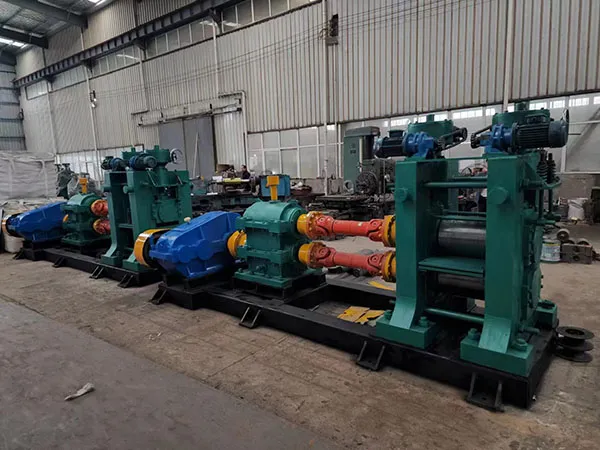
The cold rolling process is a complex, multi-step process that transforms hot-rolled steel coils (usually raw materials) into finished cold-rolled coils with superior dimensional accuracy, surface quality, and mechanical properties.
Process flow diagram: Pickling → Cold Rolling → Annealing → Skin Pass/Tension Leveling → Coiling
Each process directly affects the surface condition, thickness accuracy, and mechanical properties of the final cold-rolled coil. The core steps of the cold rolling process will be broken down below.
1. Raw Material: Hot Rolled Coil
State: Raw steel coil, typically produced by hot-rolled strip mills.
Characteristics: Relatively thick (e.g., 2.0 mm to 8.0 mm), with a surface covered by a hard, brittle substance called iron oxide scale (or rolling oxide). Iron oxide scale is formed by the reaction of iron with oxygen during high-temperature rolling.
Applications: Iron oxide scale must be removed, otherwise it will damage the cold-rolled roll surface and reduce the surface quality of the finished steel.
2. Pickling
Why is pickling crucial?
To remove scale and rust formed during hot rolling
To improve the material’s ductility during cold rolling
To provide clean and stable surface conditions for subsequent rolling
Pickled coils have a smooth and clean surface, which is fundamental to the production of high-quality cold-rolled coils.
Process Description:
For more detailed information about the entire cold rolling process, please click to visit: https://www.gyssljx.com/a/news/cold-rolling-process-guide.html
