
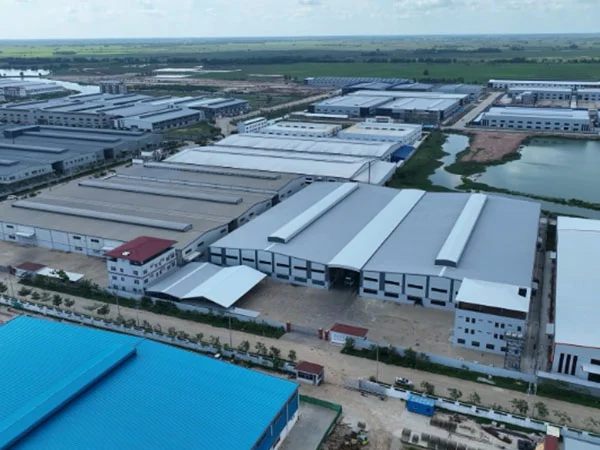
With the rapid development of industrialized construction, prefabricated steel structure projects is becoming increasingly popular in modern buildings. Compared with traditional reinforced concrete structures, prefabricated steel structures have advantages such as fast construction speed, environmental friendliness and energy saving, controllable quality, and reusability, making them particularly suitable for large industrial plants, commercial and residential buildings, and public facilities.
However, efficient construction relies on a rigorous quality management system. This article will provide a detailed analysis of the quality acceptance standards for prefabricated steel structure engineering from four core aspects: material quality, construction technology, structural safety, and appearance quality. Combined with practical construction case studies, it offers actionable guidance for construction companies and project managers.
Quality Acceptance Standards for Prefabricated Steel Structure Projects
Material Quality Acceptance Standards
Materials are the foundation of steel structure engineering quality; high-quality materials ensure the safety and durability of the project. These mainly include steel, bolts, welding materials, and connectors.
1. Steel Performance Acceptance
Material and Standards: The steel used must conform to national standards (GB/T 700, GB/T 1591, etc.) or industry standards. Material properties, yield strength, and tensile strength must meet design requirements.
Surface Treatment: The steel surface should be free of obvious cracks, rust, porosity, and peeling. Pickling or sandblasting treatment should be performed if necessary.
Thickness and Dimensions: The dimensions of steel plates and profiles must conform to the design drawings, and allowable deviations must be controlled within the specified range.
Case Study: In an industrial plant project, failure to strictly accept the steel thickness resulted in insufficient load-bearing capacity in some beams. Reinforcement was required after construction, delaying the project and increasing costs.
2. Bolt and Fastener Acceptance
Strength Grade: High-strength bolts typically use grade 8.8 or 10.9 bolts. Tensile strength and torque must meet design requirements.
Corrosion Resistance: Bolts and washers should be rust-proofed or galvanized to adapt to different environmental conditions.
Quantity and Proportion: The number of bolts used at each node should be consistent with the design to avoid localized stress concentration.
3. Welding Material Acceptance
Welding Electrode and Wire Qualification Certificates: Ensure materials are from legitimate sources and have reliable performance.
Welding Performance Testing: Conduct tensile, bending, and impact tests as necessary to ensure the welded nodes meet design requirements.
Metallurgical Quality: The weld seam must be free of porosity, slag inclusions, or cracks.
Strict material acceptance reduces structural safety risks and extends the project’s service life.
…
For more detailed information on quality acceptance standards for precast steel structure projects, please click to visit: https://www.hcggsteel.com/a/news/quality-acceptance-standards-for-prefabricated-steel-structure-projects.html

