
Crossed roller bearings are critical components in precision machinery, medical devices, robotics, and industrial automation systems. Their unique design, which features alternating rollers arranged perpendicularly, provides exceptional rigidity, high load capacity, smooth rotational motion, and compactness. However, despite their advanced engineering, crossed roller bearings are not immune to rust—a common issue that can compromise performance, accuracy, and service life. Understanding the causes of rust, adopting preventive measures, and knowing effective treatment methods are essential for maintaining the reliability and efficiency of these high-precision components.
Why Rust Forms in Crossed Roller Bearings
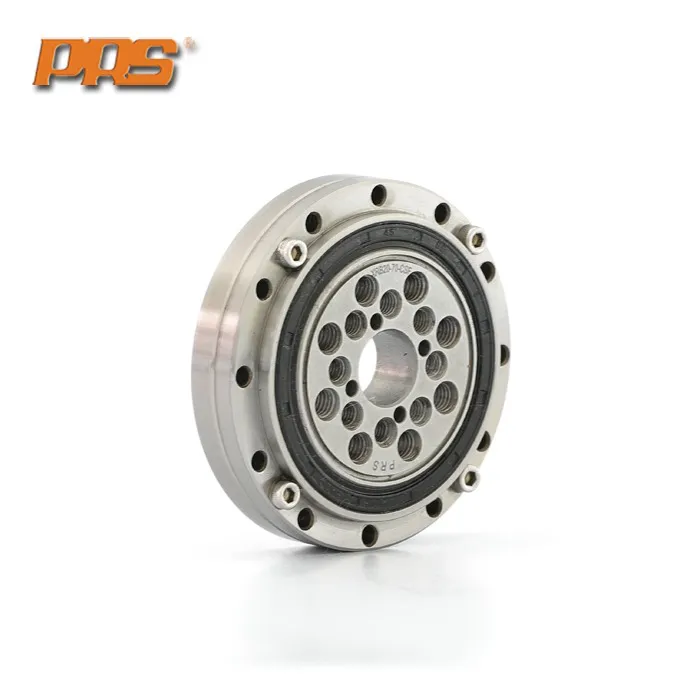
Rust is a type of corrosion that forms when iron or steel reacts with oxygen and moisture, creating iron oxide. In crossed roller bearings, rust can develop under various conditions, each of which poses a significant threat to bearing performance:
Moisture and Humidity
Even small amounts of water in the air can trigger corrosion. Bearings stored in damp warehouses, factories with high humidity, or environments with condensation are particularly vulnerable.
Contaminants and Particles
Dust, dirt, metal shavings, and acidic residues can settle on bearing surfaces, accelerating rust formation by creating microenvironments that retain moisture.
Lubrication Failure
Bearings rely on a consistent layer of lubricant to prevent direct metal-to-air contact. Insufficient lubrication or degraded grease exposes steel surfaces to oxidation, increasing the likelihood of corrosion.
Surface Damage
Scratches, dents, or pitting on rollers or raceways create localized areas where moisture and contaminants can accumulate, serving as breeding grounds for rust.
By identifying these risk factors, maintenance teams can proactively design strategies to reduce corrosion and maintain optimal bearing performance.
Effective Rust Prevention Strategies
Prevention is far more effective and cost-efficient than repairing rusted bearings. The following strategies provide a comprehensive approach to rust prevention:
1. Proper Storage
Climate Control: Store bearings in dry, temperature-regulated spaces to reduce moisture exposure.
Sealed Packaging: Use airtight containers or vacuum-sealed packaging, supplemented with desiccants, to absorb residual humidity.
…
For more detailed information on the prevention and treatment of rust in crossed roller bearings, please click to visit: https://www.prsbearings.com/a/news/prevention-and-treatment-of-rust-in-crossed-roller-bearings.html

