
In the cement industry, efficiency, reliability, and product quality are critical factors that directly impact profitability and operational success. One of the most significant processes in cement production is the crushing stage, where raw materials such as limestone, clay, and shale are broken down into manageable sizes for subsequent processing. Traditional crushing methods, while effective to a degree, often struggle to balance energy consumption, throughput, and particle size uniformity. This challenge has led many leading cement producers to explore impact crushing solutions for the cement industry, which offer advanced performance, higher efficiency, and greater adaptability.
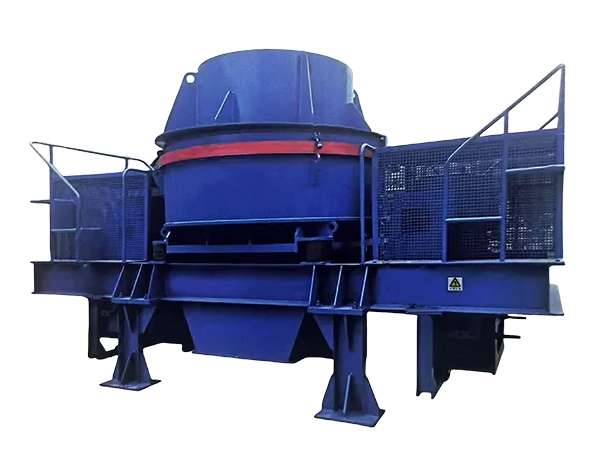
Understanding Impact Crushing Technology
Impact crushing involves the use of mechanical force to reduce large rocks and minerals into smaller, more uniform particles. Unlike compression crushers that rely on squeezing materials between two surfaces, impact crushers employ high-speed rotor arms to strike the material, causing it to shatter along natural fissures. This method not only improves particle shape but also enhances overall material liberation, which is particularly beneficial for cement production where particle consistency directly influences kiln efficiency.
Impact crushing solutions are designed with specialized rotor configurations, adjustable impact plates, and wear-resistant materials to withstand the harsh demands of the cement industry. By optimizing rotor speed, feed size, and impact force, these systems can achieve higher throughput while minimizing energy consumption. The precise control over particle size distribution ensures smoother operation in downstream milling and blending processes, ultimately improving cement quality and reducing operational costs.
Advantages of Impact Crushing in Cement Manufacturing
Enhanced Particle Shape and Uniformity
Cement production demands raw materials with consistent particle shapes to ensure efficient grinding and clinker formation. Impact crushers deliver superior particle uniformity compared to conventional jaw or cone crushers. Their ability to break materials along natural cleavage lines minimizes elongated or flaky particles, which can impede kiln performance and reduce overall product quality.
Increased Throughput and Efficiency
Modern impact crushing solutions are engineered to handle high-volume feed rates without compromising particle size control. The high-speed impact mechanism can process larger quantities of limestone and other raw materials, allowing cement plants to maintain continuous production even under fluctuating supply conditions. This increased throughput translates to higher operational efficiency and improved return on investment.
Reduced Energy Consumption
Energy costs are a significant portion of cement production expenses. Impact crushers are often more energy-efficient than compression-based crushers because they break materials along natural fracture lines, requiring less input force. Additionally, adjustable rotor speeds and impact configurations allow operators to optimize crushing parameters for different feed compositions, further reducing unnecessary energy usage.
Adaptability to Various Raw Materials
Cement plants often process a wide range of raw materials with varying hardness and moisture content. Impact crushing solutions provide remarkable versatility, accommodating limestone, clay, marl, shale, and even harder materials like basalt. The modular design of modern impact crushers enables quick adjustments and wear part replacements, minimizing downtime and maintenance costs.
Environmental Benefits and Dust Control
Dust generation during crushing can pose health hazards and environmental compliance challenges. Impact crushers can be equipped with integrated dust suppression systems, including water sprays and enclosures, to minimize airborne particles. Moreover, their efficient crushing mechanism reduces the need for secondary crushing and reprocessing, further lowering the environmental footprint of cement operations.
Integrating Impact Crushing Solutions into Cement Plants
Implementing impact crushing solutions in a cement plant requires careful consideration of equipment layout, feed characteristics, and operational objectives. Engineers typically evaluate feed size, moisture content, and material hardness to select the appropriate rotor configuration and impact plate design. Automation and control systems play a crucial role in maintaining optimal crushing conditions. Sensors and real-time monitoring enable operators to adjust rotor speed and feed rates to achieve consistent output and prevent excessive wear.
Integration with downstream equipment, such as ball mills and vertical roller mills, is also critical. By providing a uniform and well-liberated feed, impact crushers facilitate more efficient grinding, reduce energy consumption, and enhance the overall cement production process. Maintenance practices, including routine inspections of wear parts and rotor assemblies, ensure long-term reliability and minimize unplanned downtime.
…
For more detailed information on the impact crushing solutions for the cement industry, please click to visit:https://www.yd-crusher.com/a/news/impact-crushing-solutions-for-the-cement-industry.html

