
The accumulation of wood waste from sawmills, furniture manufacturing, and forestry operations presents both an environmental challenge and an untapped energy opportunity. Transforming this low-value residue into high-density briquettes for fuel offers a sustainable alternative to fossil fuels while reducing landfill burden. This article provides a detailed, professional overview of the conversion process, focusing on the mechanical and thermal principles that yield dense, energy-efficient fuel. ZYmining has extensive experience in designing briquetting systems that handle raw wood waste reliably.
Why Convert Wood Waste into High-Density Briquettes?
Wood waste in its raw form—sawdust, chips, shavings—has low bulk density, high moisture content, and inconsistent particle size, making it inefficient for direct combustion. Briquetting addresses these issues by compressing the material under high pressure, often combined with heat, to produce uniform, dense fuel logs or pellets. The resulting briquettes offer:
- Higher energy density – up to 4–5 times that of loose wood waste.
- Lower moisture content – typically below 10%, improving combustion efficiency.
- Consistent burning characteristics – steady flame, reduced smoke, and minimal ash.
- Easier handling and storage – standardized shapes stack efficiently, reducing transport costs.
For industries generating significant wood residue, briquetting turns a disposal cost into a revenue stream, especially when used as an alternative fuel for boilers, kilns, or heating systems. ZYmining has helped multiple facilities achieve payback periods under two years through optimized briquetting lines.
Core Steps in the Briquetting Process
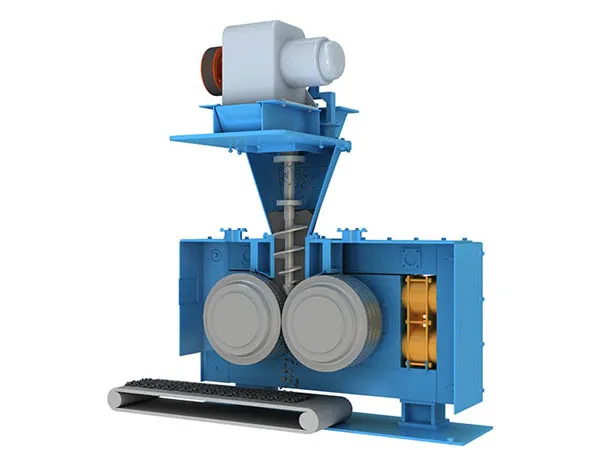
While specific configurations vary by raw material quality and desired output, the conversion of wood waste into high-density briquettes follows three essential stages.
1. Pre-treatment: Size Reduction and Drying
Raw wood waste must first be reduced to a uniform particle size, typically 3–6 mm. A hammer mill or chipper achieves this. Simultaneously, moisture content must be lowered to 8–12% for optimal briquetting. Drying can be accomplished via rotary drum dryers, belt dryers, or even solar drying for small-scale operations. Overly wet material prevents proper binding inside the briquette press, leading to low density or crumbling output. Drying also improves calorific value by eliminating the energy loss from evaporating moisture during combustion.
2. Compaction: The Briquetting Press
The heart of the process is the briquetting machine. Most industrial systems use a mechanical or hydraulic press that forces the dried, sized material through a tapered die under pressures of 100–300 MPa. The high pressure generates frictional heat that softens the lignin naturally present in wood, which acts as a binder. No additional adhesives are required, resulting in 100% natural fuel.
Two common press designs exist:
- Piston press (punch-and-die): Produces cylindrical or hexagonal briquettes with high density (1.0–1.4 g/cm³). Suitable for low‑moisture materials. ZYmining offers robust piston presses with wear-resistant dies.
- Screw press (extrusion): Produces hollow-centered briquettes with a charred surface, also high density. Ideal for materials needing extra binding. Often used for charcoal briquettes.
Each technology has different capital and operating costs. Choosing the correct press depends on production volume, moisture variability, and final product requirements.
…
For more detailed information on how to convert wood waste into high-density fuel briquettes, please click here: https://www.zymining.com/en/a/news/wood-waste-briquette.html

