
In modern industrial supply chains, steel logistics warehouses have become the backbone of high-volume storage, handling, and distribution operations. As global trade expands and warehouse throughput continues to rise, the loading dock is no longer a secondary architectural detail. Instead, it has become a critical operational interface that directly influences efficiency, safety, energy consumption, and overall logistics performance.
A well-designed loading dock for heavy-duty steel logistics warehouses must be engineered to withstand continuous impact loads, accommodate diverse vehicle types, and support fast-paced material handling processes without compromising structural integrity. This article explores the essential design principles, technical considerations, and long-term operational strategies that define an efficient loading dock system.
1. The Strategic Role of Loading Docks in Steel Logistics Warehouses
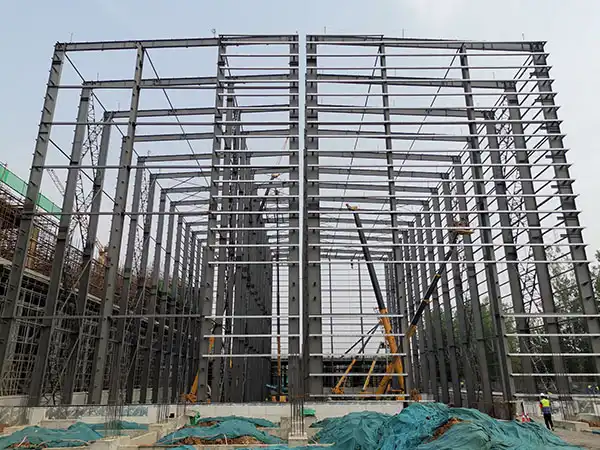
A loading dock serves as the transition point between transportation systems and internal warehouse operations. In steel logistics environments, where goods often include heavy coils, structural components, machinery parts, or bulk metal products, this interface must be designed for durability and precision.
A properly engineered loading dock does more than facilitate loading and unloading. It directly impacts:
Turnaround time for trucks and trailers
Safety of workers and equipment
Energy efficiency inside temperature-controlled warehouses
Protection of stored goods from environmental exposure
Structural lifespan of the building envelope
When warehouse operators underestimate dock design, they often face bottlenecks, equipment damage, and rising maintenance costs over time. Therefore, integrating loading dock planning at the earliest stage of warehouse design is essential.
2. Structural Design Considerations for Heavy-Duty Applications
Steel logistics warehouses typically handle high axle loads and frequent truck traffic. As a result, loading dock structures must be reinforced to absorb repeated impact stress.
Reinforced Dock Platform Design
The dock platform must be constructed with high-strength reinforced concrete or steel framing systems capable of supporting dynamic loads. Engineers typically calculate load-bearing capacity based on the heaviest expected forklift operations, fully loaded trucks, and occasional impact forces during docking.
…
For more detailed information on the design of loading and unloading platforms for heavy-duty steel structure logistics warehouses, please click to visit: https://www.hcggsteel.com/a/news/loading-dock-design-for-heavy-duty-steel-logistics-warehouses.html

