
As steel production demands grow, factory floor space often becomes a critical bottleneck. Many facility managers face a dilemma: expand operations or maintain existing structures intact. Traditional demolition and rebuild projects are costly, time-consuming, and force prolonged downtime. Fortunately, advanced steel construction techniques now allow factories to add significant space without removing a single wall. This approach leverages vertical expansion, modular attachments, and precision engineering to maximize every square foot. For steel manufacturers ready to scale efficiently, understanding non-demolition expansion methods is the first step toward a smarter, faster growth strategy.
Understanding the Need for Non-Demolition Expansion
Factory expansions without demolition are not merely a convenience—they are a strategic necessity. The reasons go beyond cost savings.
Why Avoid Demolition?
- Operational Continuity: Demolition halts production for weeks or months. Non-demolition methods allow partial or full ongoing operations during construction.
- Cost Efficiency: Removing existing structures adds immense expense (debris removal, permits, new foundation work). A no-demolition approach reduces those costs by 30–50%.
- Faster Time-to-Market: Modular steel components can be prefabricated off-site and assembled quickly, slashing project timelines from months to weeks.
- Structural Integrity: Retaining existing steel superstructures avoids unnecessary wear on adjacent supports and foundations.
HCGG has observed that facility owners who avoid demolition typically achieve a 40% reduction in overall project duration while maintaining full inventory access.
Key Methods for Factory Expansion Without Demolition
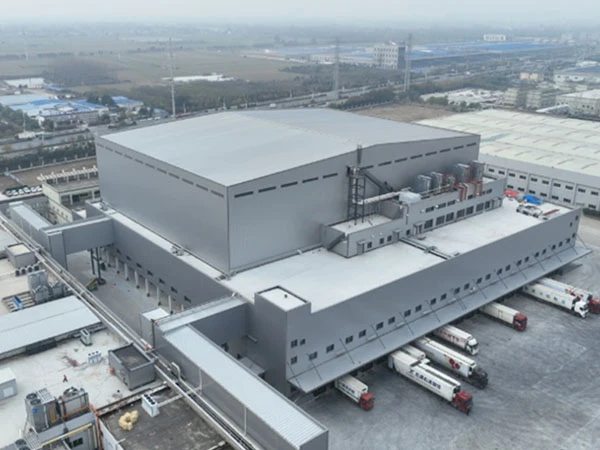
Three primary methods dominate the non-demolition expansion landscape, each suited to different site constraints and operational goals.
Steel Mezzanine Floors
When horizontal space is exhausted, the logical answer is vertical. Steel mezzanines are freestanding or semi-integrated platforms that double usable floor area within the same footprint. HCGG designs mezzanines with heavy-duty grating capable of supporting 250–1,000 psf loads, ideal for secondary assembly lines, storage of raw materials, or office spaces. Column placement is optimized to avoid interfering with existing equipment.
Structural Additions and Attachments
For factories with adjacent land, steel-framed lean-to structures or cantilevered bays can be attached directly to the existing building envelope. These additions share the original roof and wall bracing system, lowering material costs by 15–25% compared to standalone builds. The key is precise load-path analysis to ensure the existing frame can handle new lateral forces. HCGG engineers conduct full 3D finite element analysis before any attachment is designed.
…
For more information on steel plant expansion: increasing space without demolition, please click to visit: https://www.hcggsteel.com/a/news/factory-expansion.html

