
In the metal forming industry, energy consumption accounts for a significant portion of operational costs—often exceeding 30% of total production expenses. Rolling mills, as core equipment, are major energy consumers. However, a new generation of energy-efficient designs now offers a compelling solution: reducing power usage by up to 20% while maintaining or even improving product quality. This article examines the technologies driving these savings, presents a comparative analysis of conventional versus modern systems, and explains why retrofitting or investing in advanced mills is a strategic decision for long-term competitiveness.
The Hidden Cost of Conventional Rolling Mills
Traditional rolling mills operate with fixed-speed motors, inefficient transmission systems, and minimal energy recovery. Common inefficiencies include:
- Motor oversizing – Many mills are powered by motors 15–25% larger than needed, leading to poor power factor and higher losses.
- Mechanical friction – Outdated bearing designs and improper lubrication increase torque requirements by up to 12%.
- No regenerative braking – Kinetic energy from deceleration is dissipated as heat rather than recovered.
Studies from the International Energy Agency indicate that typical hot rolling mills waste 18–22% of input energy due to these factors. For a mid-sized mill producing 500,000 tons per year, that translates to over $1.2 million in unnecessary electricity costs annually.
How Modern Energy-Efficient Designs Achieve 20% Savings
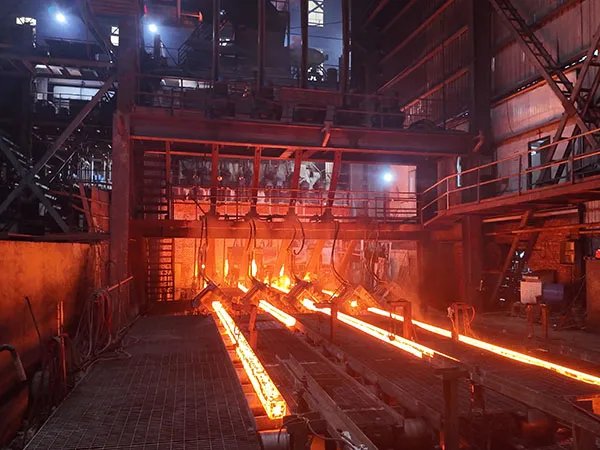
Leading manufacturers, including gyssljx, have integrated multiple breakthrough technologies to cut power consumption without sacrificing throughput or metallurgical properties:
High-Efficiency Drive Systems
Replacing induction motors with synchronous reluctance or permanent magnet motors reduces internal losses by 30–40%. Coupled with variable frequency drives (VFDs), these systems match motor speed exactly to load requirements, eliminating part-load inefficiency. Independent testing shows that a gyssljx mill with VFDs consumes 18–22% less energy compared to a fixed-speed counterpart at the same production rate.
Optimized Roll Design & Pass Scheduling
Advanced finite element analysis (FEA) tools enable custom roll profiles that minimize redundant deformation. By reducing the number of passes and redistributing reduction ratios, the total mechanical work required decreases. gyssljx engineers have documented a 15% reduction in rolling force on their latest four-high stands, directly translating to lower motor current draw.
…
For more information about energy-saving rolling mills: 20% energy savings without compromising quality, please click to visit: https://www.gyssljx.com/a/news/energy-efficient-mills.html
