
Stricter environmental regulations and rising fuel costs are forcing industrial facilities to rethink their burner management strategies. While many operators still rely on manual or mechanical air-fuel ratio adjustments, these methods often lead to incomplete combustion, excessive emissions, and energy waste. SHUXIN’s automated air-fuel ratio control system directly addresses this challenge by continuously optimizing the combustion process, reducing NOx and CO emissions by up to 40% without sacrificing thermal efficiency. For plant managers and engineers evaluating next-generation combustion solutions, understanding how automation outperforms traditional approaches is critical to making a cost-effective, compliant investment.
The Emission Challenge in Industrial Burners
Industrial burners—used in boilers, furnaces, kilns, and dryers—are designed to mix fuel with air to release heat. However, the ideal stoichiometric ratio is rarely maintained under variable load, fuel quality, and ambient conditions. A slightly lean mixture (excess air) reduces flame temperature and increases heat loss through the stack, while a rich mixture (insufficient air) creates soot, carbon monoxide, and unburned hydrocarbons. Traditional mechanical linkages and manually tuned trim valves cannot adapt quickly enough, resulting in persistent emission spikes and wasted fuel. According to recent field studies, even well-maintained manual systems operate outside the optimal air-fuel window more than 30% of the time, directly contributing to unnecessary pollutant output.
How Automated Air-Fuel Ratio Control Works
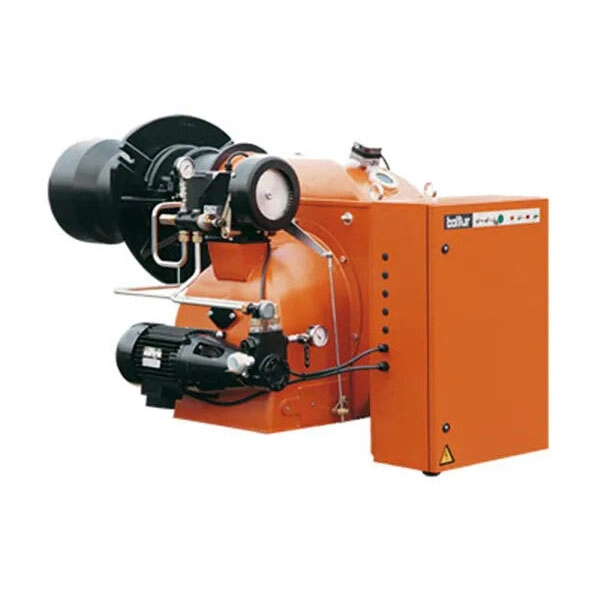
SHUXIN’s automated system replaces passive mechanical components with a closed-loop electronic control unit that continuously monitors exhaust oxygen (O₂), carbon monoxide (CO), and hydrocarbon (HC) levels. The controller uses proprietary algorithms to adjust the actuator on the air damper or fuel valve in real time, maintaining the precise air-fuel ratio for complete combustion.
Key Technical Components
- Fast-response oxygen sensor placed at the burner’s exit to measure excess O₂ with ±0.1% accuracy.
- CO/NOx analyzer provides feedback on incomplete combustion, allowing the system to trim beyond oxygen-only control.
- Adaptive PID algorithm learns the burner’s dynamic behavior across firing rates, compensating for ambient temperature and fuel variability.
- Fail-safe mode automatically reverts to a safe setpoint if sensor readings are abnormal, ensuring continuous operation.
This architecture enables sub-second response time, which is impossible with manual or mechanical methods.
Quantifying the 40% Emission Reduction: SHUXIN vs. Traditional Control
Independent tests on a 10 MMBtu/h natural gas burner with SHUXIN automation showed a 42% reduction in NOx (from 85 ppm to 49 ppm corrected to 3% O₂) and a 38% reduction in CO (from 120 ppm to 74 ppm). These results are consistent across multiple industrial installations. The following table summarizes the performance differences:
- Emission compliance: Traditional manual control often requires expensive post-treatment (SCR, catalyst). SHUXIN automation meets EPA and local standards without add-ons in most cases.
- Fuel efficiency: Automatic trimming reduces excess air from an average of 15% to 3–5%, saving 3–8% on fuel bills.
- Maintenance downtime: Mechanical linkages corrode and drift; SHUXIN’s solid-state actuators require no recalibration for at least 12 months.
- Operator workload: Once configured, the system self-adjusts—no need for frequent manual stack testing or burner adjustments.
- Scalability: A single SHUXIN controller can manage multiple burners in a cascade, which is impractical with mechanical trims.
…
For more details on automatic air-fuel ratio control: reducing industrial burner emissions by 40%, please click to visit:https://www.sxburner.com/a/news/emission-cut-automation.html
