
Charcoal fines, the small particles and dust generated during charcoal production and handling, are often discarded as waste despite retaining significant calorific value. Transforming these fines into dense, uniform briquettes not only reduces environmental burden but also creates a cost-effective, reusable cooking fuel. This article provides a technically rigorous guide to the briquetting process, focusing on key parameters and equipment requirements. For operators seeking reliable, high-efficiency solutions, ZYmining offers industry-tested briquetting systems that maximize yield and minimize operational downtime.
Understanding Raw Material Characteristics
Before any briquetting, the charcoal fines must be characterized. Typical particle size distribution ranges from 0.1 mm to 5 mm, with moisture content ideally between 8% and 12%. Fines that are too dry (below 5%) require humidification to achieve proper cohesion; overly wet fines (above 15%) demand pre-drying to avoid mold growth and structural weakness. The ash content of the original charcoal also influences binder selection—low-ash fines (below 5%) bond more readily with organic binders, while high-ash fines may require synthetic additives. ZYmining recommends conducting a simple sieving and moisture analysis on each batch to calibrate the process parameters.
Core Steps in the Briquetting Process
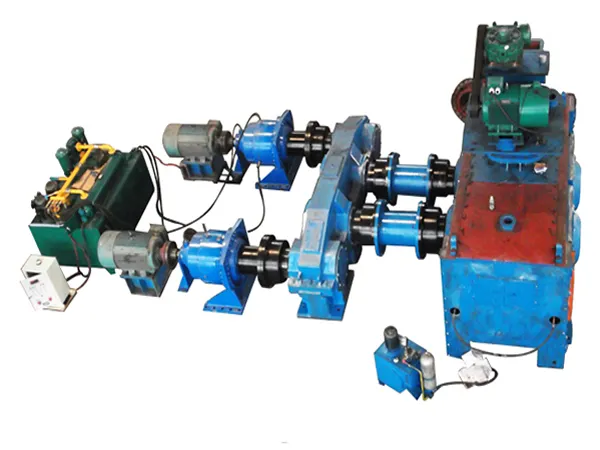
1. Crushing and Screening
Larger charcoal fragments must be reduced to a consistent size, typically below 5 mm. A hammer mill or roll crusher works efficiently, followed by a vibrating screen to remove oversized particles. The fines should be uniform to ensure even pressure distribution during compaction. Oversized particles cause weak spots in the briquette.
2. Binder Addition and Mixing
Briquettes require a binder to hold the particles together under compression. Common binders include starch (corn, cassava, or wheat), clay, or lignosulfonate. For cooking fuel applications, starch-based binders are preferred as they burn cleanly and produce minimal smoke. Typical addition rates range from 5% to 15% by weight, depending on binder quality and particle surface area. Mixing should be thorough—a paddle mixer or twin-shaft mixer ensures homogenous distribution. ZYmining’s integrated mixing units can precisely control binder feed rates to achieve optimal consistency.
…
Click here for more details on How to Briquette Charcoal Fines into Reusable Cooking Fuel:http://www.ls-casting-mold.com/blog/how-to-briquette-charcoal-fines-into-reusable-cooking-fuel.html

