
In hot rolling mills, achieving a fine and uniform grain structure in steel products is critical for ensuring superior mechanical properties such as strength, toughness, and ductility. Traditional pass scheduling methods often rely on fixed reduction sequences that may not fully exploit the metallurgical potential of each rolling pass. Incremental pass scheduling emerges as an advanced technique that dynamically adjusts reduction ratios, interpass times, and temperature controls to optimize recrystallization and grain refinement. This article delves into the principles of incremental pass scheduling, its impact on grain structure, and how adopting such technology can elevate product quality for manufacturers.
Understanding Grain Structure and Its Importance in Hot Rolled Products
Grain structure refers to the size, shape, and orientation of crystalline grains within a metal. In hot rolling, the final grain size directly influences yield strength, hardness, and fatigue resistance. A finer grain structure typically results in higher strength and better toughness according to the Hall-Petch relationship. Conversely, coarse or mixed grains can lead to anisotropic behavior and reduced formability. Controlling grain evolution involves managing three key stages: dynamic recrystallization during deformation, metadynamic recrystallization after deformation, and static grain growth during cooling. Traditional schedules often treat these stages separately, leading to suboptimal microstructure.
Limitations of Conventional Pass Scheduling
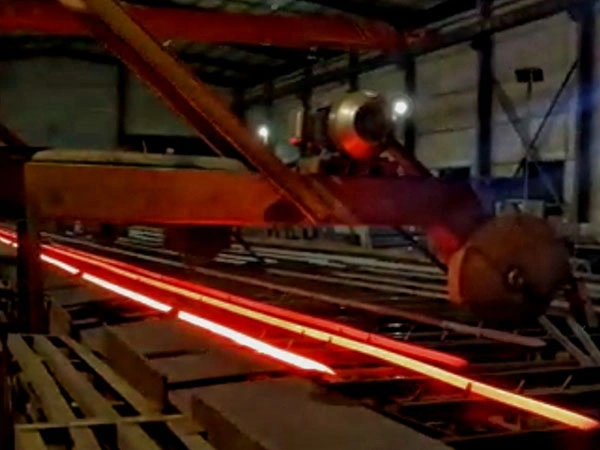
Conventional pass schedules are typically designed with fixed draft percentages and constant interpass intervals. While simple to implement, they fail to adapt to varying temperature profiles, material grades, and mill load conditions. Common drawbacks include:
- Incomplete recrystallization due to insufficient strain accumulation or excessive interpass times.
- Abnormal grain growth when the rolling temperature window is not precisely maintained.
- Higher risk of surface defects and internal cracks from non-optimized reduction sequences.
- Waste of energy and reduced mill productivity from unnecessary passes or overloads.
These limitations become especially pronounced when rolling advanced high-strength steels or alloys with narrow processing windows. A more intelligent scheduling approach is required to unlock the full metallurgical potential.
How Incremental Pass Scheduling Optimizes Grain Refinement
Dynamic strain distribution and recrystallization kinetics
Incremental pass scheduling divides the total reduction into smaller, progressively adjusted steps that maximize the driving force for recrystallization at each stage. By modulating the reduction per pass based on real-time temperature and strain rate, the schedule ensures that dynamic recrystallization initiates uniformly across the workpiece. This avoids the formation of partially recrystallized bands or mixed grain structures.
…
For more detailed information on incremental rolling scheduling for hot rolling mills—specifically regarding the improvement of grain structure—please click here: https://www.gyssljx.com/a/news/incremental-pass-scheduling.html
