
In modern industrial construction, the stability and durability of steel frame structures are paramount, particularly in regions prone to seismic activity. Industrial facilities often house heavy machinery, valuable inventories, and critical infrastructure, making their structural integrity a top priority. Consequently, anti-seismic design standards for industrial steel frames have become a fundamental aspect of engineering, ensuring both safety and operational continuity in the event of an earthquake.
Anti-seismic design, also known as seismic-resistant or earthquake-resistant design, refers to the systematic approach of engineering structures to withstand seismic forces while minimizing damage and potential hazards. For industrial steel frames, this involves integrating flexibility, energy dissipation mechanisms, and robust connection details into the structural system. Unlike conventional construction, which primarily focuses on vertical loads such as the weight of the building itself and its contents, anti-seismic design emphasizes lateral stability to counteract the dynamic forces generated by earthquakes.
Steel frames are particularly suitable for anti-seismic applications due to their high strength-to-weight ratio and ductility. These characteristics allow steel structures to absorb and dissipate seismic energy more effectively than many traditional materials, such as reinforced concrete. However, achieving seismic resilience requires careful attention to design standards, material selection, and construction practices.
Anti-seismic Design Standards for Industrial Steel Frames
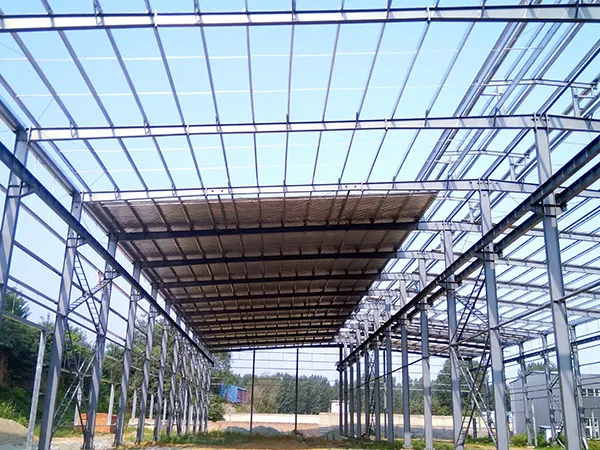
Several internationally recognized standards and codes govern the anti-seismic design of industrial steel frames. Among the most influential are the International Building Code (IBC), Eurocode 8, and local seismic codes in earthquake-prone regions. These standards provide comprehensive guidelines for assessing seismic risk, calculating seismic loads, and designing structural components to meet required safety margins.
Seismic Load Calculations: Standards stipulate methods to determine the magnitude and distribution of seismic forces acting on a structure. Factors such as ground acceleration, soil conditions, building height, and structural mass are critical in these calculations. Proper assessment ensures that the steel frame can withstand peak seismic forces without excessive deformation or failure.
Structural Ductility and Energy Dissipation: Steel structures are designed to flex and deform without collapsing. Engineers use connections, braces, and dampers that allow controlled movement during an earthquake, dissipating energy safely. Ductile detailing ensures that even if local yielding occurs, the overall frame maintains integrity.
…
For more detailed information on seismic design standards for industrial steel structures, please click to visit: https://www.meichensteel.com/a/news/anti-seismic-design-standards-for-industrial-steel-frames.html

