
In modern tunnel engineering, maintenance and rehabilitation projects have become just as critical as new construction. As infrastructure ages and traffic demand increases, contractors are expected to complete repairs faster, safer, and with minimal disruption. Under these conditions, the automatic hydraulic tunnel maintenance trolley with integrated formwork system has emerged as a highly efficient solution. This article provides a comprehensive and practical overview of its specifications, structural features, and real-world application considerations, helping engineers and procurement teams make informed decisions.
Understanding the Role of Hydraulic Maintenance Trolley Formwork
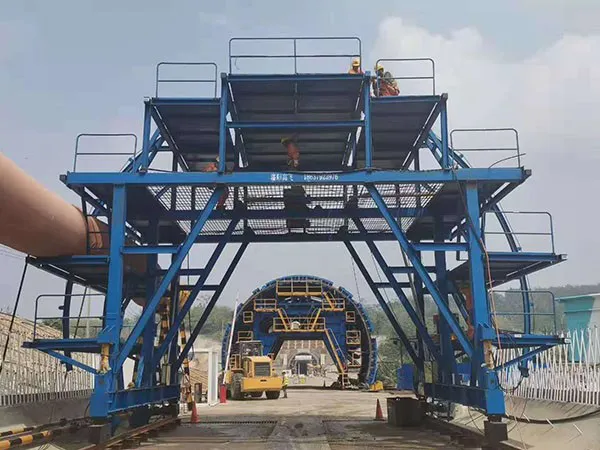
An automatic hydraulic tunnel maintenance trolley is a mechanized platform system designed for lining repair, secondary lining reinforcement, crack treatment, and surface restoration in tunnels. Unlike traditional manual scaffolding or fixed formwork, this system integrates hydraulic lifting, positioning, and formwork adjustment into a single mobile unit.
The formwork component plays a central role. It directly determines the quality of the repaired lining surface, the dimensional accuracy, and the efficiency of the concrete pouring process. Therefore, understanding its specifications is essential for achieving both structural reliability and operational efficiency.
Core Specifications of Automatic Hydraulic Formwork Systems
1. Structural Dimensions and Customization
Manufacturers typically design tunnel maintenance trolley formwork based on project-specific tunnel geometry. Common specifications include:
Applicable tunnel span: 6m to 18m (customizable for larger cross-sections)
Formwork length: 6m, 9m, or 12m modular sections
Maximum working height: up to 12m
Adjustable curvature radius to match circular, horseshoe, or composite tunnel profiles
A well-designed system ensures tight fitting between the formwork and the existing lining surface, which reduces leakage during concrete pouring and improves final surface quality.
2. Hydraulic System Configuration
The hydraulic system is the backbone of automation. It controls lifting, positioning, and demolding operations.
Key parameters usually include:
Hydraulic pressure range: 16–25 MPa
Cylinder synchronization accuracy: ≤ ±2 mm
Lifting stroke: 300–800 mm depending on design
Control mode: manual + remote or PLC-based intelligent control
A stable hydraulic system ensures smooth operation and reduces the risk of misalignment, which is critical for maintaining consistent lining thickness.
3. Formwork Material and Surface Treatment
Formwork materials directly affect durability and concrete finish quality.
Typical configurations include:
Steel form panels (Q235 or Q345) for high strength and rigidity
Surface treatment: polishing, anti-rust coating, or stainless steel overlay
…
For more detailed information on the technical specifications of automated hydraulic tunnel maintenance trolley formwork, please click to visit: https://www.gf-bridge-tunnel.com/a/blog/automatic-hydraulic-tunnel-maintenance-trolley-formwork-specifications.html

