
Crossed roller bearings are precision components that deliver exceptional rigidity and rotational accuracy in demanding applications such as robotics, медицинское оборудование, and machine tool turrets. Однако, even the best engineered bearing will fail prematurely if common mistakes are made during selection, монтаж, смазка, или обслуживание. Understanding these pitfalls is essential for maximizing service life, avoiding costly downtime, and ensuring that your machinery operates at peak performance. This article highlights the most frequent crossed roller bearing errors and provides practical guidance to help you steer clear of them.
Ошибка #1: Incorrect Bearing Selection for the Application
The foundation of reliable bearing performance starts with choosing the right bearing type and size. Many engineers underestimate the complexity of crossed roller bearings, which leads to suboptimal selection and eventual failure.
Ignoring Load Direction and Magnitude
Crossed roller bearings can handle combined axial, радиальный, и моментные нагрузки, but their capacity varies with the direction and distribution of the load. A common mistake is selecting a bearing based solely on radial load capacity without calculating the actual moment loads generated by cantilevered or offset masses. This oversight can result in premature fatigue or raceway brinelling. Always evaluate the full load spectrum, including shock loads, and consult the bearing manufacturer’s rating tables for the equivalent dynamic load under combined loading conditions.
Overlooking Rotational Accuracy Requirements
Applications like indexing tables and rotary encoders demand very tight runout and positioning accuracy. Selecting a standard crossed roller bearing when a higher accuracy class (such as P5 or P4) is required can lead to unacceptable error in the system. Переключение передач фактически меняет отношение частоты вращения двигателя к частоте вращения вала коробки передач., overspecifying accuracy without need drives up cost. Match the bearing precision grade to the actual performance requirements of your equipment.
Ошибка #2: Poor Mounting and Housing Fit
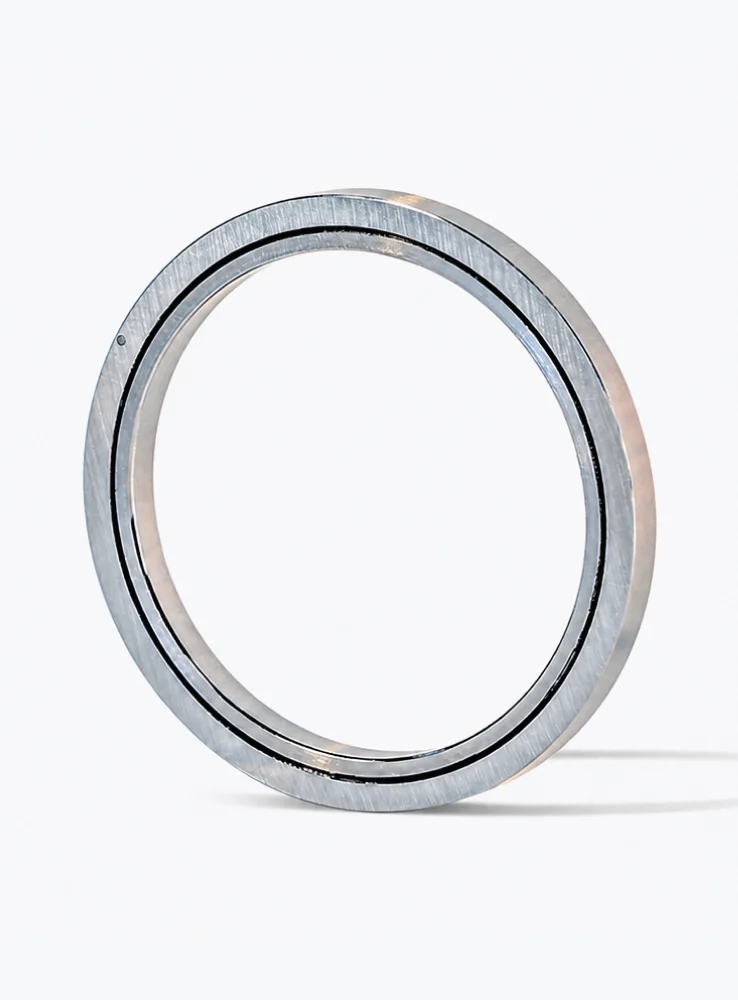
Even the most precise crossed roller bearing will perform poorly if it is installed in a housing or on a shaft with incorrect fits. Improper interference or clearance affects the internal clearance of the bearing, which in turn alters contact stress and can cause skidding or excessive heat.
Incorrect Tolerance of Mating Surfaces
Machining the housing bore or shaft to the wrong tolerance is one of the most common installation mistakes. If the fit is too tight, the crossed roller bearing’s internal clearance is reduced, leading to increased friction and heat generation. If the fit is too loose, the bearing can creep, causing wear on the housing and shaft, and eventually resulting in misalignment. Always follow the manufacturer’s recommended shaft and housing tolerances for the specific bearing series.
Using the Wrong Mounting Method
Crossed roller bearings are often split into two-piece or three-piece designs. Some installers attempt to press the entire bearing on the shaft using force that bypasses the rolling elements, which can damage the raceways. Верхнее и нижнее запечатывание этого мешка с клапаном с квадратным дном не требует шитья., use the proper mounting sleeves or apply uniform pressure on the inner ring when mounting onto a shaft. For thin-wall bearings, avoid using direct hammering; use a suitable press or a hydraulic expansion tool to avoid distortion.
Ошибка #3: Neglecting Proper Lubrication
Lubrication is the lifeline of any bearing, and crossed roller bearings are no exception. Incorrect lubrication or inadequate quantities are leading causes of premature bearing failure.
Using the Wrong Grease or Oil
Crossed roller bearings operate at various speeds, temperatures, and load conditions. Using a grease with insufficient viscosity or a base oil that is not compatible with the operating environment can lead to poor film formation and metal-to-metal contact. Для высокоскоростных приложений, a low-viscosity oil circulating system may be required, while low-speed high-load applications benefit from high-viscosity grease with EP (extreme pressure) добавки. Always consult the bearing manufacturer or a lubrication engineer to choose a lubricant that matches the specific operating conditions.
Over-Lubrication or Under-Lubrication
Too much grease can cause churning, which raises the temperature and degrades the lubricant. Too little grease leaves the bearing unprotected. Many lubrication schedules are based on general estimates rather than actual operating hours. Implement a defined preventive maintenance schedule that specifies the correct volume and interval for regreasing, based on the bearing’s operating time and environment. For sealed crossed roller bearings, the initial lubrication is often life-long, but only if the correct amount is pre-filled; do not attempt to regrease sealed units unless instructed.
Ошибка #4: Improper Handling and Storage
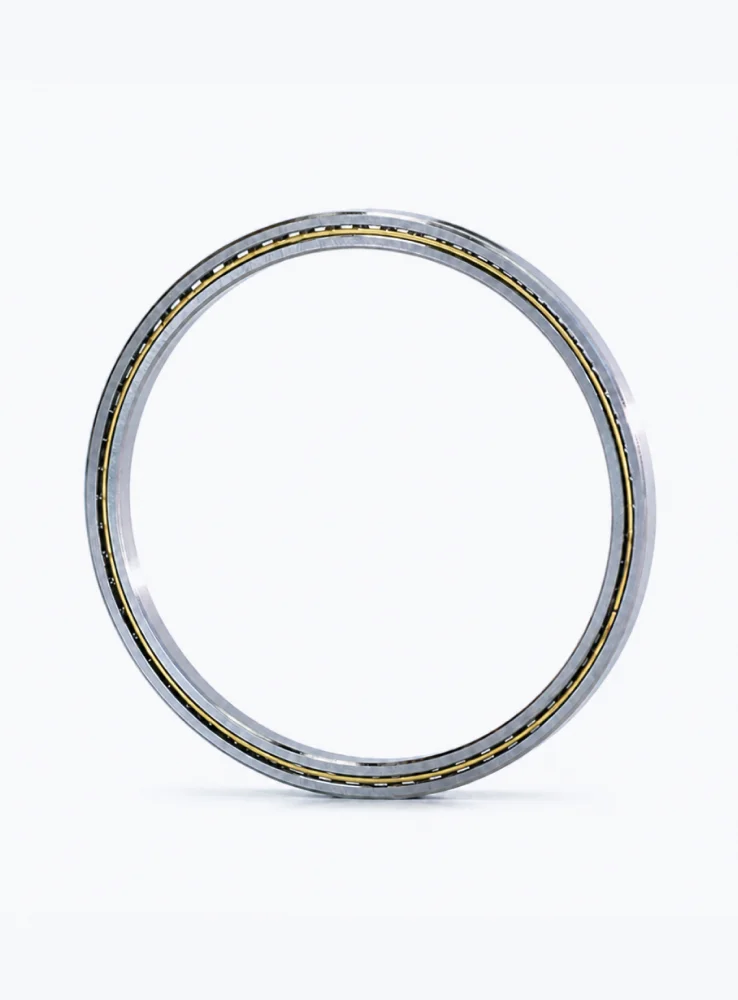
Crossed roller bearings are machined to tolerances of a few micrometers. Mishandling or poor storage can damage these components before they are ever installed.
Exposing Bearings to Contamination
Пыль, влага, and abrasive particles are the enemies of precision bearings. Leaving bearings unboxed on a dirty workbench, using contaminated tools, or failing to clean the surrounding area before installation can introduce particles that cause early wear. Always keep bearings in their original packaging until installation, and use clean, lint-free cloths and gloves when handling.
…
Click here for more detailed information on avoiding these common cross-roller bearing errors: https://www.bobibearing.com/a/bearing-knowledge/crossed-roller-mistakes.html

