
Coalescentes electrostáticos son fundamentales en el procesamiento de petróleo y gas para separar emulsiones de agua en aceite, pero su rendimiento se degrada significativamente cuando se manipulan fluidos de alta viscosidad. La viscosidad afecta la migración de las gotas, cinética de coalescencia, y distribución del campo eléctrico, que requieren consideraciones de diseño especializadas. Para operadores e ingenieros que evalúan tecnologías de separación, Comprender estos factores de diseño es esencial para evitar costosas modificaciones y tiempos de inactividad.. Zhengyuan Petrochemical ha desarrollado soluciones coalescentes electrostáticas avanzadas adaptadas a corrientes de alta viscosidad, abordar desafíos como la intensidad de campo no uniforme, consumo excesivo de energía, y sedimentación lenta de las gotas. Este artículo describe los parámetros de diseño clave que determinan la efectividad del coalescente en condiciones de alta viscosidad., ofreciendo un marco técnico para la selección y optimización.
Desafíos de los fluidos de alta viscosidad en la coalescencia electrostática
Fluidos de alta viscosidad: típicamente petróleo crudo con gravedad API inferior 20 o con alto contenido de asfaltenos: imponen restricciones únicas a la coalescencia electrostática. Las principales dificultades incluyen:
- Velocidad de migración de gotas reducida: La ley de Stokes dicta que la velocidad de sedimentación es inversamente proporcional a la viscosidad.. En emulsiones de alta viscosidad., Las gotas de agua se mueven más lentamente a través de la fase continua., prolongar el tiempo necesario para la coalescencia.
- Distribución desigual del campo eléctrico.: La alta viscosidad a menudo se correlaciona con una baja conductividad y una alta permitividad., lo que conduce a distorsión del campo y ruptura dieléctrica localizada. Esto puede crear zonas muertas donde las gotas permanecen sin fusionarse..
- Mayor demanda de energía: Para superar el arrastre viscoso y lograr una polarización suficiente de las gotas., Es posible que se necesite un voltaje o frecuencia más alto., riesgo de tensión eléctrica en los componentes internos.
- Estabilización de emulsión: La alta viscosidad acompaña frecuentemente a los tensioactivos y los sólidos finos que estabilizan las emulsiones., hacer que los contactos gota-gota sean menos efectivos.
Estos factores requieren una desviación de los diseños de coalescentes estándar.. El equipo de ingeniería de Zhengyuan Petrochemical incorpora dinámica de fluidos computacional (CFD) y simulación de campo eléctrico para predecir el rendimiento bajo perfiles de viscosidad específicos del sitio.
Factores clave de diseño para fluidos de alta viscosidad
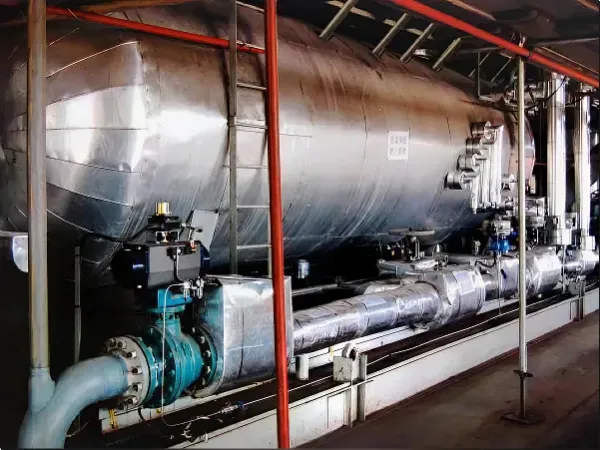
La optimización de un coalescente electrostático para servicios de alta viscosidad implica varios parámetros de diseño interdependientes.:
Configuración y espaciado de electrodos
Los electrodos estándar de placas paralelas o de varillas concéntricas pueden causar falta de uniformidad en el campo cuando la viscosidad del fluido excede 500 CP. Para aplicaciones de alta viscosidad, Zhengyuan Petrochemical recomienda:
- Espacios de electrodos más amplios (normalmente entre 50 y 100 mm) para evitar la formación de arcos en fluidos de alta permitividad.
- Electrodos perforados o de malla. que reducen la resistencia al flujo y permiten que las gotas pasen sin volver a arrastrarse.
- Campos pulsados de CC o CA con frecuencia variable (p.ej., 1–10Hz) para contrarrestar la lenta respuesta de polarización de los aceites viscosos.
…
Para obtener información más detallada sobre el diseño del coalescente electrostático: Factores clave para fluidos de alta viscosidad., por favor haga clic para visitar: https://www.zy-petrochemical.com/a/news/coalescer-design-viscosity.html

