
Seleccionar el grado de material óptimo para un rodamiento giratorio es una decisión de ingeniería crítica que impacta directamente en la longevidad del equipo., capacidad de carga, y costos de mantenimiento. Si bien los diseños básicos de rodamientos comparten geometrías similares, La elección del grado de acero, que va desde aceros al carbono totalmente templados hasta aceros aleados cementados y variantes de acero inoxidable, determina el rendimiento del rodamiento en condiciones operativas específicas.. Este artículo proporciona una comparación estructurada de los grados de materiales más comunes utilizados en rodamientos giratorios duraderos., con orientación práctica sobre cómo adaptar los grados a las demandas de la aplicación. Como fabricante líder con décadas de experiencia., LYMC enfatiza que la selección de materiales debe guiarse no solo por los números de dureza sino también por la interacción de la tenacidad., resistencia al desgaste, y protección contra la corrosión.
Indicadores clave de rendimiento para materiales de rodamientos de giro
Antes de comparar calificaciones específicas, Es esencial comprender las propiedades mecánicas que definen la durabilidad de los rodamientos.:
- Dureza – Resistencia a las indentaciones superficiales y a la deformación plástica., típicamente medido en la escala Rockwell C (CDH). Una mayor dureza mejora la resistencia al desgaste pero reduce la tenacidad.
- Tenacidad – Capacidad para absorber energía y resistir fracturas bajo impacto o cargas de choque.. La dureza a menudo se correlaciona inversamente con la dureza..
- Resistencia a la fatiga – Resistencia a la iniciación y propagación de grietas bajo carga cíclica., vital para rodamientos sujetos a oscilación o rotación.
- Resistencia a la corrosión – Capacidad para resistir el ataque ambiental de la humedad., quimicos, o agua salada, especialmente en aplicaciones marinas o de procesamiento de alimentos.
Grados de materiales comunes para rodamientos giratorios
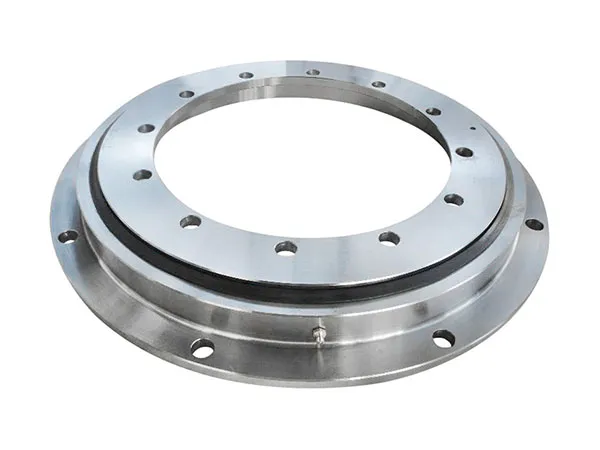
La industria estandariza alrededor de unas pocas familias de materiales.. A continuación se muestra una comparación de las tres categorías más utilizadas..
Aceros al carbono totalmente endurecidos (p.ej., AISI 52100, 100Cr6)
Estos aceros son tratados térmicamente para lograr una dureza uniforme en toda la sección transversal., normalmente 58-62 HRC. Ofrecen una excelente resistencia al desgaste y alta resistencia a la compresión.. Sin embargo, Su dureza limitada los hace inadecuados para aplicaciones con fuertes impactos o cargas de choque.. Los cojinetes totalmente endurecidos son rentables y se utilizan ampliamente en excavadoras de servicio moderado y plataformas giratorias de grúas donde las cargas son relativamente predecibles..
Cementado (Carburizado) Aceros aleados (p.ej., 20MnCr5, SAE 8620)
El endurecimiento por cementación produce una capa superficial dura (58–62 HRC) con un duro, núcleo dúctil (30–40 HRC). Esta combinación proporciona una resistencia superior al desgaste de la superficie y al mismo tiempo permite que el núcleo absorba cargas de impacto sin fallas catastróficas.. Los grados carburados son la primera opción para trabajos pesados., Aplicaciones de alto impacto, como turbinas eólicas marinas., palas mineras, y equipamiento portuario. La compensación es un ciclo de fabricación más largo y un costo más alto..
…
Para obtener información más detallada sobre la comparación de calidades de materiales para rodamientos giratorios duraderos, por favor haga clic para visitar: https://www.mcslewingbearings.com/a/news/material-grade-comparison.html
