
Choosing the right structural system for a new factory is a decision that impacts budget, cronograma de construcción, eficiencia operativa, y mantenimiento a largo plazo. Two dominant options in industrial construction are steel structures and precast concrete systems. Each offers distinct advantages depending on the factory’s size, requisitos de carga, expansion plans, y condiciones ambientales. Este artículo proporciona un objetivo, data-driven comparison of steel structure versus precast concrete for factories, helping facility owners and project managers make an informed choice. HCGG draws on extensive experience in both systems to guide clients toward the optimal solution.
1. Structural Strength and Design Flexibility
Steel structure advantages
Steel frames provide excellent strength-to-weight ratios, permitiendo large clear spans of 30–50 meters without intermediate columns. This is ideal for manufacturing floors that require unobstructed space for machinery, Líneas de montaje, or storage racking. Steel components can be prefabricated off-site to tight tolerances, and the modular nature allows easy future expansion – a critical factor for growing operations. Además, steel supports mezzanine levels, puentes grúa, and heavy equipment attachments with simpler connection details.
Precast concrete advantages
Precast concrete offers inherent compressive strength y resistencia al fuego. Factory buildings with heavy floor loads – such as those storing raw materials or finished products on multiple levels – benefit from concrete’s load-bearing capacity. Precast components are cast in controlled environments, ensuring consistent quality and durability. Sin embargo, column spacing is typically limited to 6–12 meters due to the weight of pre-stressed beams, which can restrict layout flexibility for certain production lines.
- Acero: maximum clear spans, flexibility for future reconfiguration, easier to add openings or extensions.
- Precast Concrete: superior for heavy vertical loads, better vibration damping for sensitive equipment, inherent fire rating without additional coating.
2. Construction Speed and Site Impact
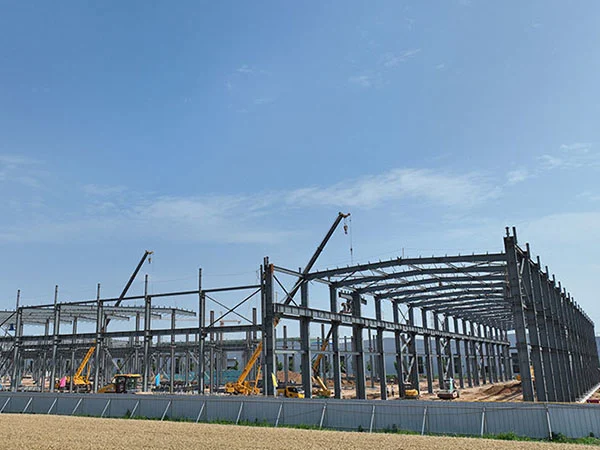
Time-to-production is often the primary driver for factory owners. Steel structures typically erect faster than precast concrete because steel members are lighter, connections use bolting or welding, and erection can proceed in parallel with foundation work. A steel-framed factory can be enclosed within 4–6 weeks after foundation completion, depending on size. Precast concrete requires longer curing time for connections and often needs heavy cranes for panel placement, extending the erection schedule to 8–12 weeks or more. Sin embargo, precast eliminates the need for additional fireproofing or cladding in many cases, potentially offsetting some time.
HCGG recommends a detailed schedule analysis based on local labor availability, crane capacity, and permit requirements. For projects with aggressive timelines, steel often wins; for those where noise or dust on-site must be minimized, precast’s off-site fabrication reduces site disturbance.
3. Comparación de costos: Inversión inicial vs.. Lifecycle Cost
Initial construction cost
Steel structures generally have lower initial costs than precast concrete for single-story factories with moderate loads. The price difference ranges from 5–15% in favor of steel, depending on steel market prices. Precast concrete requires more expensive formwork and heavier foundations due to the dead load of concrete elements. Sin embargo, for facilities requiring high fire resistance or located in high seismic zones, precast may require less additional bracing or fireproofing, narrowing the gap.
…
For more detailed information comparing factory steel structures and precast concrete structures, por favor haga clic aquí: https://www.hcggsteel.com/a/news/steel-vs-precast-factory.html

