
When developing materials that must withstand elevated temperatures, engineers and quality managers rely on high temperature test chambers to simulate extreme thermal environments. These chambers, also known as thermal test ovens or environmental test chambers, are critical for evaluating the structural integrity, estabilidad dimensional, and performance degradation of metals, polymers, cerámica, compuestos, and coatings under controlled heat stress. Selecting the right equipment directly impacts the accuracy of test results and product reliability. This guide explores the working principles, essential performance parameters, and practical selection criteria for material heat resistance tests, with a focus on the high-quality solutions offered by Instrumento más caliente.
Understanding High Temperature Test Chambers for Material Heat Resistance
A high temperature test chamber creates a precisely controlled hot environment to assess how materials behave when exposed to sustained or cyclic heat. The chamber’s heating system—typically using resistance heaters or infrared lamps—raises the internal air temperature to a set point, while a PID controller maintains stability within tight tolerances. A fan circulates hot air to ensure uniform temperature distribution across the test samples. For material heat resistance tests, the chamber must reach temperatures commonly ranging from 200°C to over 1200°C, depending on the material type and industry standard (p.ej., YO ASI 188, ASTM D573, MIL-STD-810).
Key Applications in Material Testing
- Thermal aging tests for polymers and elastomers to predict service life
- Heat deflection temperature (HDT) measurement for thermoplastics
- Thermal cycling for electronic components and solder joints
- Fire resistance screening for building materials and insulation
- Oxidation resistance evaluation for metals and alloys at high temperatures
Critical Performance Parameters to Evaluate
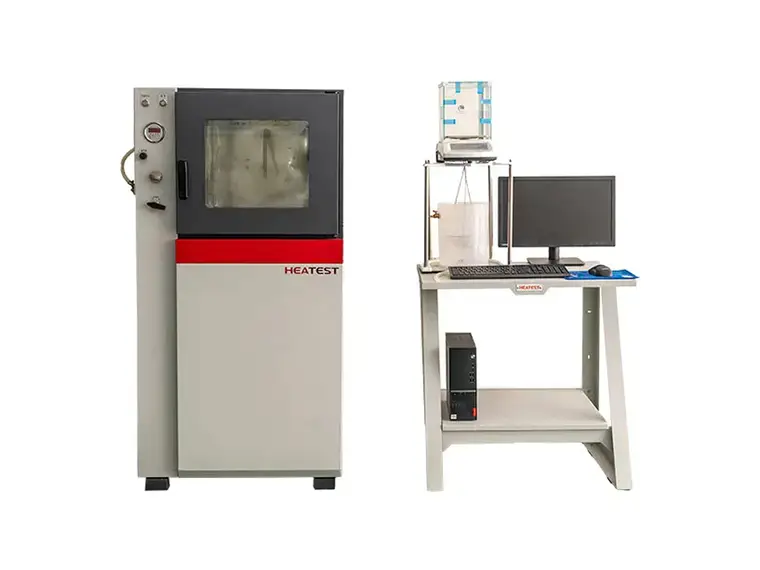
Not all high temperature chambers deliver the same performance. When specifying equipment for material heat resistance tests, consider these parameters:
Temperature Range and Accuracy
The chamber must cover the required test temperatures with a margin of safety. Por ejemplo, a chamber rated for 300°C is insufficient if your material needs testing at 350°C. Exactitud (typically ±0.5°C to ±2°C) and stability over time affect the repeatability of results.
…
Click here for more details on high-temperature test chambers used for material heat resistance testing: https://www.lyheatest.com/tester-knowledge/heat-resistance-chamber/

