
Achieving zero-defect tunnel linings is the gold standard in underground construction, yet many projects fall short due to inconsistencies in concrete placement, formwork stability, or curing conditions. Every void, crack, or honeycomb not only compromises structural integrity but also leads to costly rework and schedule delays. This article provides a systematic approach to eliminating defects, covering mix design, formwork technology, placement methods, and quality control protocols. By integrating proven techniques and leveraging advanced equipment such as Gaofei‘s tunnel formwork systems, contractors can consistently produce linings that meet the highest standards of durability and appearance.
Understanding the Core Requirements for Zero-Defect Tunnel Linings
Zero-defect tunnel lining demands a holistic approach that begins long before concrete is poured. The three pillars are uniform concrete quality, precise formwork geometry, and controlled placement. Without mastering these fundamentals, even the best equipment will not guarantee defect-free results.
Concrete Quality and Mix Design
The concrete mix must be optimized for workability, low shrinkage, and adequate strength gain. Key parameters include a well-graded aggregate, suitable water-cement ratio, and the use of superplasticizers to achieve high flowability without segregation. For tunnel linings, a slump flow of 600–700 mm is often recommended to ensure complete filling of the formwork cavity, especially around reinforcement and complex sections. Additionally, low-heat cement or supplementary cementitious materials like fly ash can reduce thermal cracking in thick sections.
Formwork and Pouring Techniques
Formwork must be rigid, accurately aligned, and leak-proof. Steel tunnel formwork systems, such as those provided by Gaofei, offer the necessary stiffness and dimensional repeatability to maintain lining thickness and surface finish. During pouring, concrete should be introduced from multiple points using a tremie or concrete pump to avoid cold joints. The placement rate must be controlled to prevent excessive hydrostatic pressure that could displace the formwork.
Curing and Quality Control
Immediate and continuous curing is critical. For tunnel linings, wet curing with water sprays or curing compounds should start as soon as the formwork is stripped (typically after 12–16 hours). Temperature monitoring inside the concrete can help manage thermal gradients. Non-destructive testing methods, such as ultrasonic tomography or ground-penetrating radar, can be used to verify internal density and detect hidden voids.
Common Defects in Tunnel Linings and Their Root Causes
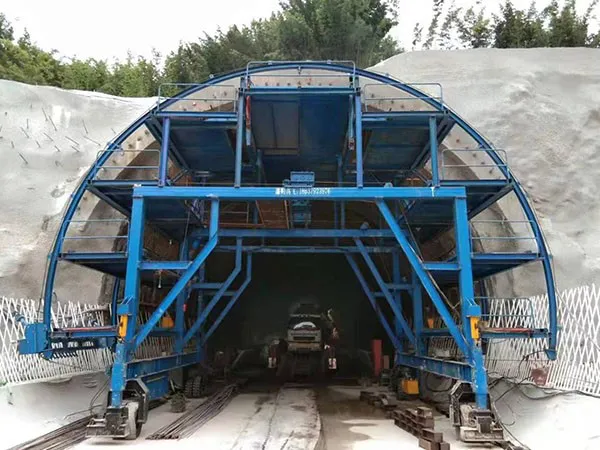
Understanding why defects occur is the first step toward prevention. The most frequent issues include surface voids (bug holes), honeycombing, cracking, and delamination. Each has specific causes that can be addressed through proper technique and equipment.
…
Click here for more details on how to achieve zero-defect tunnel lining with every pour: https://www.gf-bridge-tunnel.com/a/blog/zero-defect-tunnel-pour.html

