
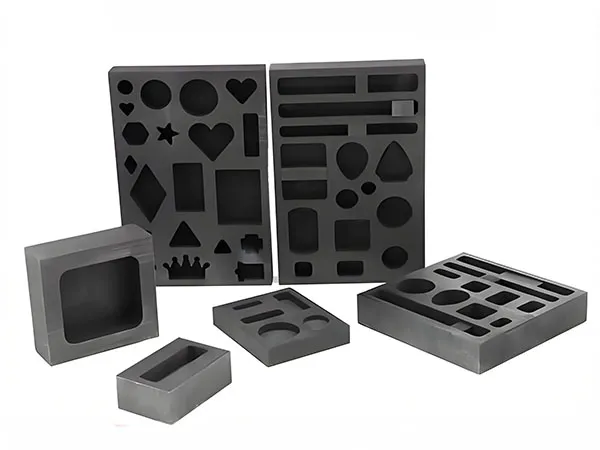
Moldes de colada continua de grafito desempeñan un papel decisivo en la producción metalúrgica moderna, especialmente en industrias como la siderúrgica, procesamiento de aluminio, y fabricación de metales no ferrosos. Como componente crítico expuesto directamente al metal fundido., El molde no sólo determina la precisión dimensional de palanquillas y lingotes, sino que también afecta significativamente la calidad de la superficie., debe pasar a través de la pantalla en el, y costos operativos generales.
Los fabricantes eligen materiales de grafito por su excelente conductividad térmica., excelente resistencia al choque térmico, y rendimiento estable a temperaturas elevadas. Sin embargo, a pesar de estas ventajas, Los moldes de grafito son inherentemente vulnerables a dos mecanismos principales de degradación.: oxidación y erosión. Si estos problemas no se controlan eficazmente, pueden provocar un rápido desgaste del molde, calidad de fundición inconsistente, y tiempo de inactividad no planificado.
Este artículo proporciona una guía completa y práctica para comprender las causas fundamentales de la oxidación y la erosión en moldes de grafito., junto con estrategias comprobadas que ayudan a extender la vida útil y mejorar la eficiencia de la fundición..
Por qué la oxidación y la erosión son desafíos críticos
En entornos de colada continua, Los moldes de grafito funcionan en condiciones extremadamente duras que implican altas temperaturas., flujo de metal fundido, y exposición a gases reactivos. La oxidación y la erosión no ocurren de forma independiente.; en la mayoría de los casos, interactúan y se aceleran entre sí, lo que lleva a un daño agravado.
Cuando la oxidación debilita la estructura del grafito., el material se vuelve más susceptible al desgaste mecánico. Al mismo tiempo, la erosión expone superficies frescas de grafito, haciéndolos más vulnerables a una mayor oxidación. Este ciclo puede acortar significativamente la vida útil del molde si no se gestiona adecuadamente.
Comprensión de la oxidación en moldes de grafito
La oxidación es una reacción química en la que los átomos de carbono del grafito se combinan con el oxígeno a altas temperaturas., formando monóxido de carbono (CO) o dióxido de carbono (CO₂). Esta reacción generalmente se vuelve significativa cuando las temperaturas exceden los 400 a 500 °C y se acelera rápidamente a las temperaturas de fundición..
Factores clave que promueven la oxidación
Varias condiciones operativas y ambientales contribuyen a la oxidación.:
Las altas temperaturas de fundición aumentan la velocidad de reacción entre el grafito y el oxígeno.
Tiempo de exposición extendido durante ciclos de producción continuos.
Ambientes ricos en oxígeno causados por un sellado deficiente o una protección de gas inadecuada
Flujo de aire y humedad alrededor del área de fundición., que introducen oxígeno adicional
A medida que avanza la oxidación, La superficie del molde pierde material gradualmente., lo que resulta en desviaciones dimensionales, superficies rugosas, y conductividad térmica reducida. En casos severos, La integridad estructural puede verse comprometida., lo que lleva a una falla prematura del molde.
…
Para obtener información más detallada sobre cómo prevenir la oxidación y corrosión de los moldes de colada continua de grafito, por favor haga clic para visitar: https://www.czgraphite.com/a/news/how-to-prevent-oxidation-of-continuous-casting-graphite-molds.html

