
In modern casting environments where consistency, efficiency, and cost control are under constant pressure, material selection is no longer a routine decision—it is a strategic one. Graphite, widely recognized for its high thermal conductivity, resistance to chemical attack, and ability to maintain structural integrity at extreme temperatures, continues to play a critical role in metal casting processes.
However, many procurement teams and engineers still underestimate a key point: graphite is not a uniform material. Its performance varies significantly depending on how it is manufactured. Choosing between isostatic graphite, molded graphite, and extruded graphite can directly impact mold life, casting accuracy, defect rates, and overall production cost.
How to Select Graphite Continuous Casting Molds
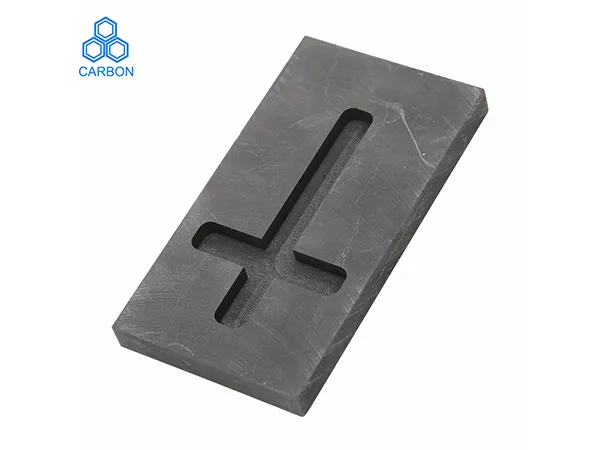
This guide provides a deeper, experience-based perspective to help decision-makers select the most suitable graphite type based on real production conditions rather than generic specifications.
Why Graphite Selection Matters More Than Ever
In high-temperature casting processes—whether for aluminum, copper alloys, or special metals—graphite components such as molds, dies, crucibles, and fixtures are exposed to repeated thermal cycling, oxidation risks, and mechanical loads.
A mismatch between graphite type and application often leads to:
Premature cracking or deformation
Uneven heat distribution and casting defects
Increased downtime and maintenance costs
Reduced product consistency
From a practical standpoint, the right graphite choice is not just about performance—it’s about long-term operational stability and cost predictability.
A Closer Look at the Three Main Graphite Types
1. Isostatic Graphite: Precision and Reliability Under Extreme Conditions
Isostatic graphite is manufactured using uniform pressure applied in all directions, resulting in a highly homogeneous internal structure. From an engineering perspective, this uniformity is what sets it apart.
In real-world applications, this translates to:
Consistent behavior in all directions
Unlike other graphite types, its properties do not vary based on orientation. This is critical in molds where uneven expansion can lead to dimensional inaccuracies.
…
For more detailed information on how to choose graphite continuous casting molds, please click to visit: https://www.czgraphite.com/a/news/how-to-select-graphite-continuous-casting-molds.html
