
A muffle furnace is only as useful as the temperature range it can hold, and that range decides whether a sample melts, sinters, ashes, or simply sits unchanged. Buyers scanning a specification sheet often fixate on one number — the maximum temperature — without asking what that number means in daily operation. In practice, the usable range depends on heating elements, insulation quality, thermocouple type, atmosphere, and how long the furnace must hold at setpoint. This guide explains how muffle furnace temperature ranges are defined, what the common ranges from 1000 °C to 1800 °C and beyond actually deliver, and how to match a range to your real process rather than a marketing figure.
What “Temperature Range” Really Means on a Spec Sheet
Two furnaces can both be advertised as 1200 °C units and behave nothing alike. The difference lies in how the range is measured and under what conditions it can be sustained.
Continuous Working Temperature vs. Maximum Temperature
The maximum temperature is the ceiling the chamber can reach for a short period, usually 30 minutes or less, without immediate damage. The continuous working temperature is the level the furnace can hold indefinitely without excessive element wear or insulation degradation. As a practical rule, continuous operation should stay 100 °C to 200 °C below the rated maximum. A furnace rated at 1200 °C is comfortable at 1000–1100 °C for long holds; pushing it to 1200 °C for eight hours will shorten element life noticeably.
Heating Elements Set the Hard Limit
Elements are the single biggest constraint on range:
- Nickel-chromium (nichrome) wire — economical, works up to roughly 1000 °C in a muffle chamber.
- Iron-chromium-aluminium (FeCrAl) wire — the workhorse for 1200 °C and 1400 °C class furnaces, with good oxidation resistance.
- Silicon carbide (SiC) rods — used from about 1200 °C to 1600 °C; resistance rises with age, so power control matters.
- Molybdenum disilicide (MoSi2) — covers 1600 °C to 1800 °C and behaves well in air at high temperature.
- Graphite or tungsten — required above 1800 °C, but only in vacuum or inert atmosphere because they oxidise rapidly in air.
Thermocouples Must Match the Range
Control accuracy collapses if the sensor cannot survive the setpoint. Type K covers up to about 1260 °C, Type N reaches roughly 1300 °C, Type S and R handle 1600 °C, and Type B extends to 1800 °C. A furnace with MoSi2 elements but a Type K thermocouple will not hold a genuine 1700 °C profile. Platinum-rhodium sensors and, in some designs, optical pyrometers take over at the top of the range.
Standard Muffle Furnace Temperature Ranges
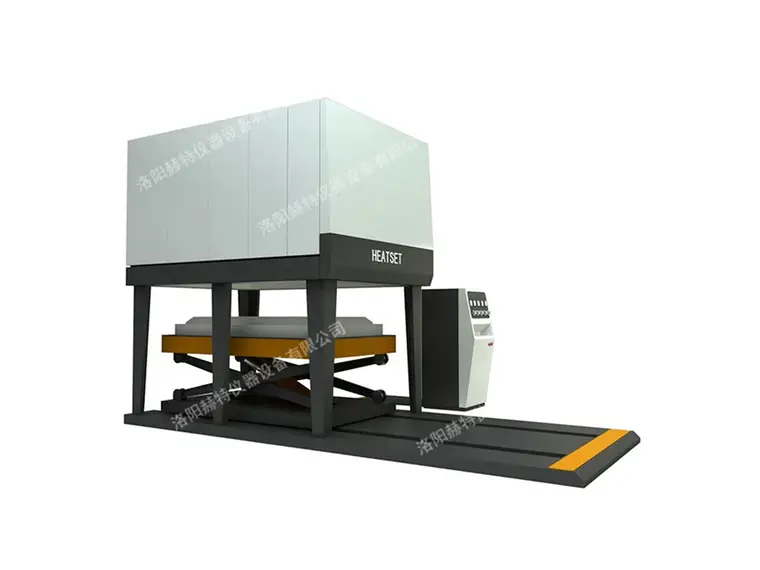
The market clusters around a handful of practical bands. Each has a typical element type, chamber construction, and application profile.
…
For more detailed information regarding the temperature ranges of muffle furnaces, please click here: https://www.lyheatest.com/electric-furnace-knowledge/muffle-temp-range/
