
In the realm of modern mechanical engineering, thin section bearings have emerged as indispensable components for high-speed, precision-driven applications. From aerospace actuators and robotic joints to industrial automation systems, these bearings offer a compact yet robust solution where conventional bearings would be too bulky or heavy. Characterized by their reduced cross-sectional thickness while maintaining substantial load-carrying capacity, thin section bearings excel in scenarios with stringent space and weight limitations. However, despite their advantages, engineers frequently encounter challenges in accurately determining the torque requirements under high-speed conditions—a critical factor that, if mismanaged, can trigger excessive friction, accelerated wear, vibration issues, and ultimately, operational inefficiencies that compromise performance and reliability.
Understanding the Role of Thin Section Bearings in High-Speed Systems
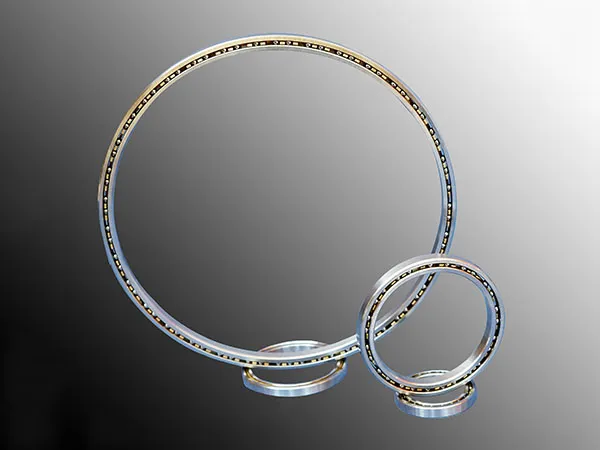
Thin section bearings differ from traditional bearings primarily in their slender profile, which allows for integration into compact mechanical assemblies without sacrificing rigidity or load capacity. Their lightweight construction makes them especially suitable for high-speed rotations, precision alignment, and applications where the bearing envelope directly impacts the overall system design. Common use cases include satellite positioning systems, high-speed turntables in optical or semiconductor equipment, precision medical imaging devices, and automated manufacturing machinery, where every millimeter and gram counts.
Yet, the very design that makes thin section bearings advantageous also renders them more sensitive to torque-related issues. Reduced material volume can amplify heat generation, frictional forces, and mechanical stress under dynamic loads, meaning that even small miscalculations can have outsized consequences. High-speed operation introduces additional complexities, including centrifugal forces, fluctuating dynamic loads, lubrication film instability, and thermal expansion. Therefore, a detailed, methodical approach to torque calculation is not merely advisable—it is essential for ensuring operational efficiency and longevity.
Critical Factors in Torque Estimation for High-Speed Bearings
Accurate torque calculation for thin section bearings in demanding applications requires consideration of multiple, interrelated factors:
Friction Torque: Friction is the primary resistance a bearing faces during rotation, influenced by bearing type, internal clearances, lubrication characteristics, and rotational speed. While manufacturers provide baseline friction coefficients, these figures often assume ideal conditions. In practice, temperature variations, contamination, and misalignment can dramatically alter frictional behavior, necessitating adjustments in torque estimation.
…
For more detailed information on optimizing the torque of thin-section bearings for high-speed applications, please click to visit: https://www.lynicebearings.com/a/blog/thin-section-bearing-torque-calculation-for-high-speed-applications.html

