
In modern manufacturing environments where precision, efficiency, and reliability define competitiveness, industrial welding positioners play an indispensable role. Whether used in welding automation, heavy assembly lines, or rotating work platforms, these systems are responsible for accurately positioning large and often complex workpieces. However, the long-term performance of an industrial positioner depends heavily on the condition of its core transmission components—gears and bearings.
Although wear-resistant gears and bearings are engineered to withstand extreme loads and harsh conditions, no component is immune to gradual degradation. Without timely inspection and replacement, minor wear can escalate into major mechanical failure, leading to costly downtime, safety risks, and reduced production efficiency. This article provides a comprehensive, practical guide to understanding, diagnosing, and replacing these critical components while offering actionable maintenance strategies to extend service life.
Why Gears and Bearings Are Critical to Positioner Performance
Every industrial positioner relies on a precisely coordinated mechanical system, in which gears and bearings serve as the backbone of motion control.
Gears are responsible for transmitting torque and controlling rotational speed. Their accuracy directly determines whether the positioner can maintain consistent angular positioning. High-quality gear systems are typically manufactured from hardened alloy steels or undergo surface treatments such as carburizing or nitriding to enhance wear resistance and fatigue strength.
Bearings, on the other hand, support rotational motion while minimizing friction between moving parts. They ensure smooth operation under both radial and axial loads. In high-performance positioners, bearings may incorporate advanced materials such as ceramic rolling elements or hybrid designs to improve durability under extreme temperatures and high-speed conditions.
When these components begin to wear, the impact is not isolated. Instead, it affects the entire system by introducing vibration, reducing alignment accuracy, and increasing energy consumption. Therefore, maintaining the integrity of gears and bearings is essential for ensuring both operational efficiency and workplace safety.
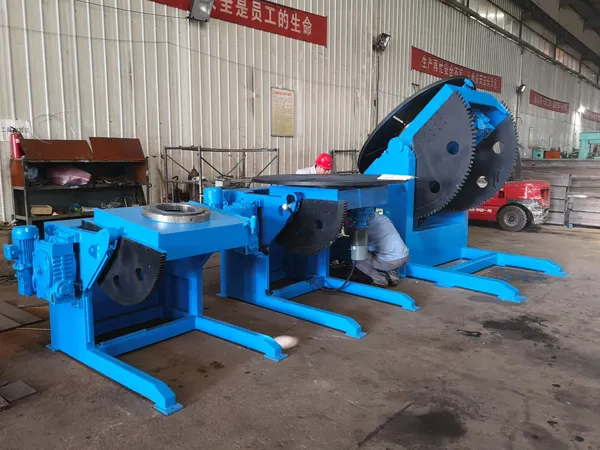
What Causes Wear in Industrial Gears and Bearings
Understanding the root causes of wear helps operators implement better preventive strategies. In real industrial applications, component degradation is rarely due to a single factor. Instead, it is typically the result of combined stresses over time.
Heavy and fluctuating loads place repeated stress on gear teeth and bearing surfaces, leading to fatigue and micro-cracks. In addition, harsh environmental conditions such as dust, metal particles, moisture, and chemical exposure accelerate surface damage and corrosion. Poor lubrication practices further exacerbate the problem by increasing friction and heat generation, which speeds up material degradation.
Another often overlooked factor is misalignment. Even slight deviations in shaft alignment can cause uneven load distribution, resulting in localized wear on gears and bearings. Over time, this imbalance significantly reduces the service life of the entire positioner system.
Key Warning Signs That Indicate Replacement Is Necessary
Proactive maintenance begins with early detection. Operators who understand the warning signs of component wear can prevent unexpected breakdowns and extend equipment lifespan.
One of the most common indicators is abnormal noise. Grinding, clicking, or knocking sounds often suggest that gear teeth are damaged or that bearings have developed internal defects. These sounds usually become more pronounced under load and should never be ignored.
…
For more detailed information on replacing welding positioner gears and bearings, please click to visit: https://www.bota-weld.com/en/a/news/replacing-wear-resistant-gears-and-bearings-in-welding-positioners.html

