
Cold start issues in large industrial burners present a persistent challenge for operators, often leading to delayed ignition, combustión incompleta, aumento de emisiones, and accelerated equipment wear. When a burner is started from ambient temperature, the fuel-air mixture may fail to reach autoignition conditions, resulting in misfires or hazardous accumulation of unburned fuel. Addressing these problems requires a systematic approach to preheating — a set of strategies designed to raise the temperature of combustion air, de combustible, and burner components before ignition. This article explores the root causes of cold start difficulties and presents proven preheating methods, with a focus on practical implementations that enhance reliability, seguridad, y eficiencia. As an experienced provider of combustion solutions, SHUXIN has developed integrated preheating systems that help industrial facilities overcome these challenges while maintaining operational flexibility.
Understanding the Root Causes of Cold Start Failure
Cold start problems stem from the fundamental thermodynamics of combustion. At low temperatures, fuel vaporization slows down, the air-fuel mixture becomes less homogeneous, and the flame propagation speed decreases. For large industrial burners, these effects are magnified due to the high thermal mass of the combustion chamber and the long fuel supply lines. Common failure modes include:
- Flame instability: The flame may extinguish shortly after ignition if the heat release rate is insufficient to sustain combustion.
- Smoking and soot formation: Incomplete combustion at low temperature produces carbon particles that foul heat exchanger surfaces.
- Choque térmico: Rapid introduction of hot flame into a cold burner body can cause differential expansion, cracking refractory linings.
Without proper preheating, operators often resort to prolonged purge cycles or multiple ignition attempts, which waste fuel and time. Por lo tanto, a structured preheating strategy is not merely an optimization — it is a prerequisite for safe and reliable burner operation.
Preheating Strategies: From Simple to Advanced
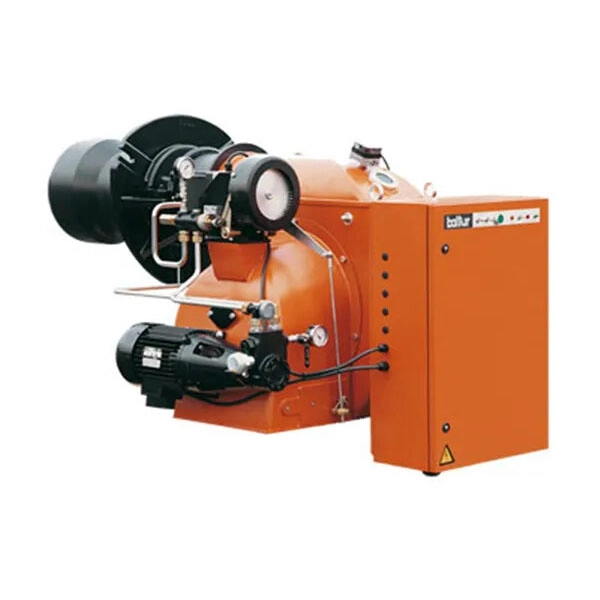
Depending on burner design, fuel type, and operating requirements, preheating can be implemented at various points in the system. The following sections describe the most effective approaches.
1. Combustion Air Preheating
Raising the temperature of the incoming combustion air is one of the most direct methods to improve cold start performance. By using a heat exchanger that recovers waste heat from the flue gas, or integrating an electric or steam air heater, the air temperature can be elevated to 150–300 °C before mixing with fuel. This significantly lowers the activation energy required for ignition. SHUXIN’s air preheaters are designed with high-efficiency finned tubes that minimize pressure drop while maximizing heat transfer, ensuring stable air temperatures even during variable load conditions.
…
Click here for more details on preheating strategies to address cold-start issues in large industrial burners: https://www.sxburner.com/a/news/cold-start-preheating.html
