
When rotating equipment must perform reliably in washdown, морской пехотинец, но не обязательно, or pharmaceutical environments, standard bearing steel quickly becomes a liability. Corrosion leads to pitting, lubricant degradation, и преждевременный выход из строя. Stainless steel thin section bearings offer a proven solution, combining a compact cross-section with the inherent corrosion resistance of martensitic or austenitic stainless steels. This article provides a technical yet practical overview for engineers and procurement specialists seeking to specify the right bearing for demanding corrosive applications.
Why Thin Section Bearings Are Critical in Corrosive Environments
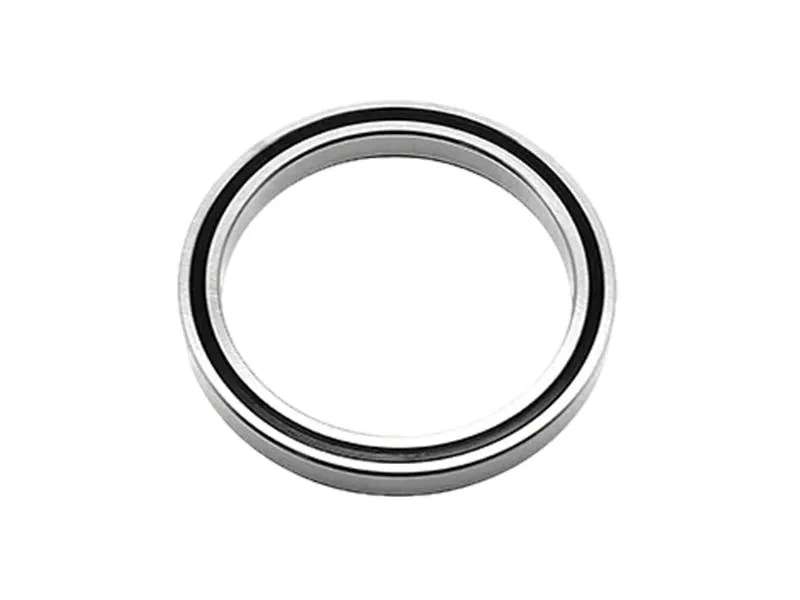
Thin section bearings are characterized by a relatively small radial cross-section compared to their bore diameter. This design saves weight, reduces housing space, and allows for larger shafts or smaller overall machine envelopes. В агрессивных средах, the stakes are higher. A bearing failure in a food processing line or offshore actuator can halt production and create safety hazards. Stainless steel thin section bearings maintain the same dimensional advantages while resisting rust and chemical attack.
Выбор материала: Not All Stainless Steel Is Equal
The phrase “stainless” is an umbrella term. Для подшипников тонкого сечения, the most common materials are AISI 440C, АИСИ 304, and precipitation-hardening grades like 17-4 PH. The choice dictates hardness, устойчивость к коррозии, и грузоподъемность.
- 440С is a high-carbon martensitic stainless steel that can be hardened to approximately 58–60 HRC. It offers good corrosion resistance in mild environments and is suitable for higher load capacities.
- 304 is an austenitic stainless steel with excellent corrosion resistance but low hardness. It is used for bearing rings in low-load, high-corrosion applications where hardness is secondary.
- 17-4 PH combines good corrosion resistance with high strength and hardness after precipitation hardening, making it a preferred choice for marine and chemical processing.
For rolling elements, 440C or ceramic (Силиконовый нитрид) balls are common. Hybrid bearings with stainless rings and ceramic balls offer both corrosion resistance and electrical insulation, which is an added advantage in motor applications.
…
Click here for more details on thin-section stainless steel bearings designed for corrosive environments: https://www.prsbearings.com/news/thin-section-bearings-1/

