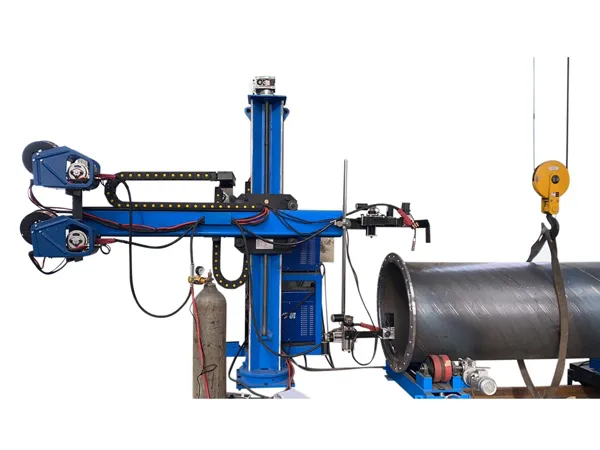
Improving the efficiency of a welding manipulator (often a robotic arm or a dedicated positioner used in automated or semi-automated welding) involves optimizing various aspects of the system and process.

How to improve the efficiency of welding manipulator

welding manipulator

Programming and Path Optimization:

Minimize Air Time: Reduce the time the manipulator spends moving between welds (“air cutting”). Optimize the path planning to take the shortest, fastest routes between weld points.

Optimize Motion Speeds: Use the highest safe and repeatable speeds for non-welding movements. Tune acceleration and deceleration parameters.

Weld Sequence Optimization: Plan the order of welds to minimize overall manipulator travel, reduce heat distortion (which can necessitate rework or slower welding later), and maintain optimal torch angles.

Offline Programming (OLP): Use OLP software to create, simulate, and optimize programs without stopping the production line. This maximizes manipulator uptime.

Use Appropriate Motion Types: Employ linear movements (L) for welding paths and joint movements (J) for faster transitions between distant points where path accuracy isn’t critical.

Welding Process Optimization:

Optimize Weld Parameters: Fine-tune voltage, wire feed speed (amperage), travel speed, and gas flow for maximum deposition rate and minimal spatter/defects, reducing post-weld cleaning and rework.

Select Efficient Welding Processes: Consider advanced processes like pulsed MIG/MAG, CMT (Cold Metal Transfer), or high-speed TIG variants if applicable, as they can offer higher speeds, lower heat input, or reduced spatter.

Improve Torch Angle and Stick-out: Ensure the torch angle and contact-tip-to-work distance (stick-out) are optimized and consistently maintained for stable arc and good penetration.

Fixturing and Part Presentation:

Design for Automation (DFA): If possible, influence part design to improve accessibility for the manipulator and simplify weld joints.

High-Quality, Repeatable Fixtures: Use fixtures that locate parts accurately and consistently every time. Poor fit-up is a major cause of inefficiency and weld defects.

Quick Changeovers: Design or utilize fixtures that allow for fast loading and unloading of parts. Consider indexing tables or dual fixture setups where one side can be loaded/unloaded while the other is being welded.

Optimize Fixture Access: Ensure the fixture provides clear access for the manipulator arm and welding torch without collisions.

welding manipulator

Sensing and Adaptive Control:

Touch Sensing: Use the welding wire or a probe to accurately locate the start of weld joints, compensating for minor part variations.

Through-Arc Seam Tracking (TAST): For suitable joints, use TAST to allow the robot to follow the weld seam automatically, compensating for variations during welding.

For more detailed information on how to improve the efficiency of welding operators, please click here: https://www.bota-weld.com/en/a/news/improvement-of-welding-manipulator-work-efficiency.html

Proper maintenance of a welding positioner is crucial for ensuring its longevity, accuracy, safety, and reliable performance. Neglecting maintenance can lead to breakdowns, inaccurate positioning, potential safety hazards, and costly repairs.

Welding positioner maintenance

welding positioner

1. Follow the Manufacturer’s Manual:

This is the most important tip. Always refer to the specific operation and maintenance manual provided by the positioner’s manufacturer. It will detail specific lubrication points, lubricant types, inspection schedules, and procedures tailored to your model.

2. Regular Cleaning:

Daily/Shiftly: Wipe down the positioner, especially the turntable/faceplate, control panel, and visible moving parts.

Remove Weld Spatter: Spatter can interfere with grounding, damage surfaces, clog T-slots, and hinder smooth operation. Use appropriate tools (spatter scrapers, wire brushes) carefully to avoid damaging surfaces.

Keep Electrical Cabinets Clean: Periodically (as recommended, and with power LOCKED OUT), check for dust buildup inside control cabinets, which can cause overheating or short circuits. Use compressed air or a vacuum carefully.

3. Lubrication:

Adhere to Schedule: Follow the manufacturer’s lubrication schedule religiously. This often includes lubricating gearbox(es), bearings, tilt mechanisms (like screw jacks or hydraulic cylinders), and rotation drives.

Use Correct Lubricants: Always use the type and grade of oil or grease specified by the manufacturer. Using the wrong lubricant can cause damage or premature wear.

Check Fluid Levels: Regularly check oil levels in gearboxes and hydraulic reservoirs (if applicable). Top up as needed.

Grease Fittings: Clean grease fittings (zerks) before applying grease to prevent injecting contaminants. Apply grease until fresh grease begins to emerge (or as specified). Wipe off excess grease.

welding positioner

4. Mechanical Inspections:

Fasteners: Regularly check critical bolts and fasteners for tightness, including:

Mounting bolts securing the positioner to the floor.

Bolts securing the turntable/faceplate.

Motor and gearbox mounting bolts.

Turntable/Faceplate: Inspect for flatness, damage, and wear. Ensure T-slots or chuck mounting points are clean and undamaged.

For more detailed information on welding positioner maintenance tips, please click here: https://www.bota-weld.com/en/a/news/welding-positioner-maintenance.html

Welding rotators, also known as turning rolls or tank rollers, are essential equipment in the automatic welding of cylindrical workpieces such as tanks, pipes, pressure vessels, and wind towers. Depending on the workpiece size, weight, material, and welding requirements, different types of welding rotators are available on the market. This guide introduces the most common types of welding rotators and their main features.Their primary purpose is to rotate cylindrical workpieces like pipes, tanks, and pressure vessels, allowing welders to maintain a consistent, often downhand, welding position for better quality, efficiency, and safety.

Welding Rotators Types

Welding rotators

Conventional (or Standard) Turning Rolls:

Description: These consist of a powered drive unit and one or more non-powered idler units. Each unit typically has two rollers. The distance between the rollers on each unit is manually adjustable (often via bolts in slots or a leadscrew) to accommodate different workpiece diameters.

How they work: You manually set the roller spacing on both the drive and idler units to match the diameter of the workpiece you intend to weld. The workpiece then rests on these rollers.

Pros: Generally simpler in design, often more cost-effective for a given capacity, robust.

Cons: Requires manual adjustment time when changing workpiece diameters, workpiece needs careful centering, the centerline height of the workpiece may change slightly depending on the diameter and roller setting.

Best Suited For: Shops that frequently work with similar-sized workpieces or where setup time for diameter changes is less critical.

Self-Aligning Rotators (SAR):

Description: These also consist of a drive unit and idler unit(s). However, the key difference is that the roller brackets are designed to pivot or adjust automatically.

As the workpiece is lowered onto the rotator, the rollers swing open or closed to conform to the workpiece’s diameter without manual adjustment of roller spacing.

How they work: The pivoting mechanism ensures that the rollers automatically cradle the workpiece, maintaining multiple contact points. This design often keeps the centerline height of the workpiece relatively constant across a wide range of diameters.

Pros: Significantly faster setup when changing between different workpiece diameters, automatically centers the workpiece to some extent, provides better support (especially for thin-walled vessels) by distributing the load over more contact points, reduces the risk of workpiece marking.

Cons: More complex mechanism, generally more expensive than conventional rotators of the same capacity.

Best Suited For: Fabrication shops dealing with a wide variety of workpiece diameters, applications where quick changeover is important, handling large or thin-walled vessels where good support is crucial.

Other Considerations & Variations (Features often found on both types):

Welding rotators

Drive Unit vs. Idler Unit: Rotator sets always include at least one powered “Drive Unit” that provides the rotation and one or more unpowered “Idler Units” that simply support the workpiece. You can add more idler units for longer vessels.

Capacity: Rotators are rated by their weight capacity (e.g., 1 ton, 5 tons, 50 tons, 100+ tons) and the diameter range they can handle.

More detailed information about welding rotator types can be found at: https://www.bota-weld.com/en/a/news/welding-rotators-types.html

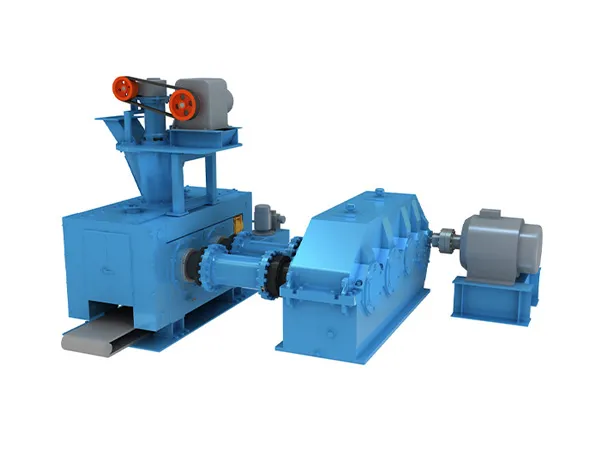
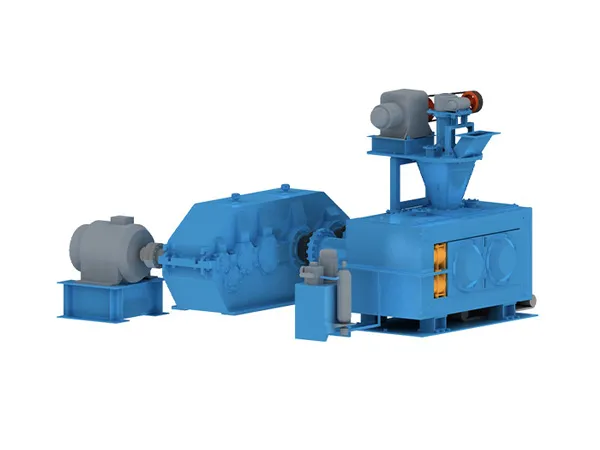
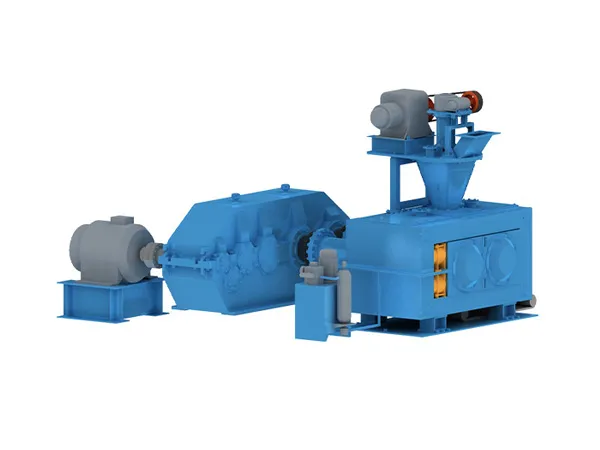
Calibrating the roll gap on a high-pressure grinding roll (HPGR) is a critical maintenance task for ensuring optimal performance, energy efficiency, and preventing damage. Here’s a comprehensive guide on how to do it.

Why Calibrate the Roll Gap?

high-pressure grinding roll

Performance: The gap directly influences the pressure applied to the material, affecting particle size reduction, throughput, and product quality.

Energy Efficiency: An incorrect gap (too wide or too narrow) leads to inefficient energy use.

Wear Management: Maintaining the correct gap and ensuring parallelism prevents uneven wear on the roll surfaces (tires/segments) and potential contact between the rolls, which can cause catastrophic damage.

Machine Protection: Ensures the hydraulic system operates within its design parameters and protects bearings and frame components from excessive stress.

Key Concepts:

Roll Gap (S): The minimum distance between the surfaces of the two counter-rotating rolls (one fixed, one floating/movable).

Operating Gap: The actual gap during operation under pressure, which might differ slightly from the static (no-load) gap due to system flex. Calibration typically refers to setting the static gap.

Parallelism: Ensuring the gap is consistent across the entire width of the rolls. Non-parallelism leads to uneven grinding, skewed wear, and potential machine stress.

Common Calibration Methods:

Feeler Gauges (Most Common for Static Gap): Using precise metal strips of known thickness.

Lead Wire / Soft Metal Slugs: Compressing a soft material between the rolls and measuring its deformed thickness.

Mechanical Jigs/Templates: Using specialized tools provided by the OEM.

Electronic Measurement (Control System Reference): Some systems use sensors or a “roll touch” procedure as a zero reference, then apply an offset. This still requires physical verification.

How to calibrate HPGR roll gap settings

high-pressure grinding roll

Step-by-Step Calibration Procedure (General Guide – ALWAYS Prioritize Your OEM Manual):

Phase 1: Preparation & Safety

SAFETY FIRST – Lockout/Tagout (LOTO): Absolutely critical. Isolate ALL energy sources (electrical, hydraulic, pneumatic) to the HPGR according to established site procedures before any work begins. Ensure the machine cannot be started accidentally.

Consult the OEM Manual: This is your primary resource. Procedures can vary significantly between manufacturers and models.

Gather Tools:

More detailed information on how to calibrate the HPGR roll gap setting can be found at: https://www.zymining.com/en/a/news/hpgr-roll-gap-calibration-setting.html

Operating a briquetting machine involves several key steps to ensure efficient and safe production of briquettes. Here’s a general step-by-step guide. Keep in mind that specific procedures might vary slightly depending on the type and model of your briquette machine, so always consult the manufacturer’s manual for detailed instructions.

How to Operate a Briquetting Machine

briquetting machine

1. Preparation and Checks

Raw Material Preparation: Ensure your raw material (e.g., sawdust, agricultural waste) is of the correct size and moisture content as specified by your machine’s requirements (often below 15%). You may need to use a crusher or a dryer to achieve this.

Machine Inspection: Before starting, thoroughly inspect the briquette machine for any loose bolts, worn parts, or obstructions. Pay close attention to the screw propeller, forming die, and heating elements.

Lubrication: Check and lubricate all necessary parts as indicated in the machine’s manual. Proper lubrication is crucial for smooth operation and longevity.

Cooling System (if applicable): If your machine has a cooling system (often water-based), ensure it is properly connected and filled.

Electrical Connections: Verify that the machine is correctly connected to a stable power supply with the correct voltage. Ensure all wiring is secure and the machine is properly grounded.

Safety Checks: Make sure all safety guards and emergency stop buttons are in place and functioning correctly. Ensure the work area is clear of any obstructions and that a fire extinguisher (powder, foam, or CO2) is readily accessible. Operators should wear appropriate personal protective equipment (PPE) such as respirator masks.

2. Machine Start-Up

Main Switch: Turn on the main power switch of the machine.

Heating System: If your machine uses heat to soften the lignin in the raw material, turn on the heating system and set the temperature to the required level (typically between 120-300°C depending on the material). Allow sufficient time for the machine to reach the set temperature.

No-Load Running: Once the machine reaches the operating temperature (if applicable), run it without any raw material for a few minutes (around 3-30 minutes as per some recommendations). Listen for any unusual noises or vibrations. If any abnormalities occur, stop the machine immediately and identify the issue.

3. Briquette Production

Material Feeding: Gradually start feeding the prepared raw material into the hopper. Begin with a small amount and slowly increase the feeding rate until briquettes are formed consistently and are of good quality. Avoid overfeeding, which can cause blockages.

Monitoring Briquette Quality: Continuously monitor the quality of the produced briquettes. Check for density, shape, cracks, and surface finish. Adjust the feeding rate, temperature (if applicable), and pressure as needed to maintain optimal quality.

Temperature Regulation: Maintain the set temperature of the heating elements to ensure proper briquetting. Fluctuations in temperature can affect the quality of the briquettes.

Discharge Area: Ensure the briquettes are discharged smoothly and there is adequate space for them to accumulate or be conveyed away. Some suggest directing the output towards a wall with a plank in front initially.

briquetting machine

4. Machine Shut-Down

Stop Feeding: Gradually stop feeding raw material into the hopper.

Empty the Machine: Allow the machine to continue running until all the material inside the forming chamber and screw conveyor is expelled.

More detailed information about how to operate the briquetting machine can be found at: https://www.zymining.com/en/a/news/briquetting-machine-operation.html

As HPGRs are required to handle extremely high pressures and abrasive materials, wear is a major operating cost and a factor in their efficiency and availability. Effective wear protection is essential. Let’s analyze wear protection solutions for high pressure grinding rolls (HPGR).

HPGR Wear Protection Solutions

HPGR

1. Roll Surface Materials & Design:

Base Material: The core roll body is typically made from high-strength forged steel or sometimes specialized cast iron alloys to withstand the immense operating pressures.

Wear Surface Design: The most common approaches for the actual wear surface are:

Solid Rolls (Less Common for Large Units): The entire roll body might be made of a wear-resistant alloy, but this is less common for large, modern HPGRs due to cost and manufacturing challenges.

Segmented Rolls: The roll surface is made of multiple cast or forged segments bolted or keyed onto the roll body. This allows for easier replacement of worn sections.

Tires/Sleeves: A replaceable outer wear layer (the “tire” or “sleeve”) is shrunk-fit or mechanically fastened onto a core roll shaft/body. This is a very common and practical design, allowing for easier replacement of the wear surface without replacing the entire roll body.

HPGR

2. Surface Protection Technologies (Applied to Tires/Sleeves or Segments):

This is where the most distinct wear protection strategies lie:

Welded Hardfacing Overlays:

Process: Applying layers of extremely hard, wear-resistant weld material onto the roll surface. Common methods include Submerged Arc Welding (SAW) or Open Arc Welding (Flux-Cored Arc Welding – FCAW).

Materials: Typically high-chromium carbide (CrC) alloys, complex carbides, or sometimes tungsten carbide (WC) composites within a matrix.

For more detailed information on HPGR wear protection solutions, please visit: https://www.zymining.com/en/a/news/hpgr-wear-protection-solutions.html

Choosing the right screw conveyor is critical for ensuring efficient and reliable material handling in various industries. Whether you’re moving fine powders, granular materials, or semi-solid waste, selecting a conveyor that matches your specific application can enhance productivity, reduce maintenance costs, and prolong equipment life. With numerous configurations, materials, and designs available, it can be overwhelming to find the perfect fit. This guide will walk you through the essential factors to consider when choosing a screw conveyor, including material type, capacity, angle of inclination, and operational environment, helping you make a well-informed decision tailored to your needs.

Screw Conveyor Choose

screw conveyor

1. Define the Material Being Conveyed (Most Critical Step):

Material Name: Be specific (e.g., “Portland Cement,” “Soybean Meal,” “Wet Sand”).

Bulk Density: Weight per unit volume (e.g., lbs/ft³ or kg/m ³). Essential for capacity calculations and power requirements.

Particle Size & Distribution: Is it fine powder, granular, pellets, lumpy, stringy? Give minimum, maximum, and average sizes if possible.

Flowability: How easily does it flow? (e.g., free-flowing, sluggish, sticky, fluidizable). Look up its Angle of Repose if possible.

Abrasiveness: Does it wear down equipment? (e.g., sand, alumina are highly abrasive). This dictates material choices for screw and trough.

Corrosiveness: Does it chemically attack materials? (e.g., acids, salts). Affects material choices (stainless steel grades, special coatings).

Temperature: Operating temperature of the material. Affects material selection, bearing/seal types, and potential expansion/contraction.

Moisture Content: Can significantly affect flowability, stickiness, and corrosiveness.

Friability: Is the material easily broken or degraded? May require slower speeds or specific flight designs.

Special Characteristics:

Hygroscopic: Absorbs moisture from the air.

Explosive/Flammable: Requires specific safety measures (explosion-proof motors, grounding, proper sealing).

Toxic/Hazardous: Requires containment (fully enclosed, specific seals).

Food Grade/Sanitary: Requires specific materials (stainless steel), finishes (polished), and design features (easy-clean, no crevices).

Sticky/Builds Up: May necessitate shaftless design, special coatings, or specific flight types.

2. Determine Required Capacity (Throughput):

Rate: How much material needs to be moved per unit of time? Specify units clearly (e.g., tons per hour (TPH), kg/min , cubic feet per hour (CFH), m³/hr).

Basis: Is the rate based on weight or volume? Be consistent. If based on weight, you need the bulk density to convert to volume for sizing.

screw conveyor

3. Define the Conveyor Configuration:

Conveying Distance: The horizontal (or inclined) length from the center of the inlet to the center of the outlet.

Inclination Angle: Is the conveyor horizontal (0°) or inclined? Inclines significantly reduce capacity and increase power requirements. Specify the angle accurately. Vertical conveyors (90°) are a special category.

For more detailed information on how to choose a suitable screw conveyor, please click here: https://www.zymining.com/en/a/news/screw-conveyor-choose.html

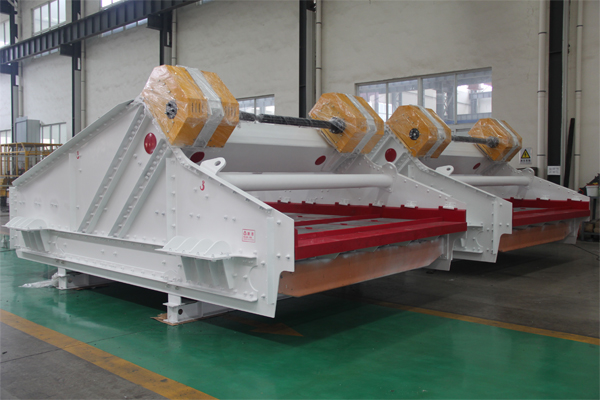
A vibrating screen plays a crucial role in wastewater treatment, primarily in the pre-treatment stage to remove solid materials from the incoming wastewater stream.

Vibrating screen in wastewater treatment role

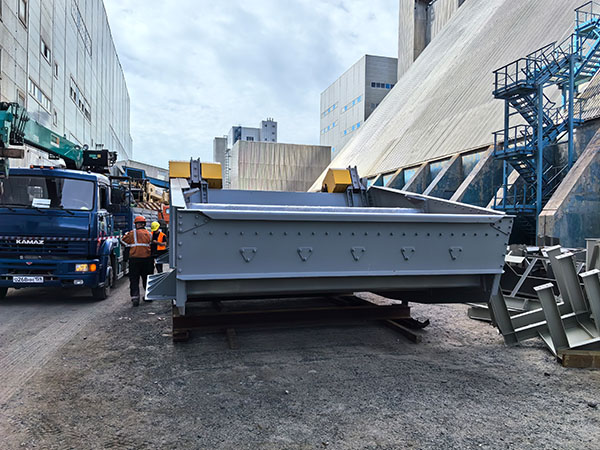
Single layer horizontal sieve

1. Removal of Large Solids and Debris:

Vibrating screens act as a physical barrier with specific mesh sizes. As wastewater flows over the vibrating screen, larger solids like rags, plastics, paper, wood, and grit are retained on the screen surface.

The vibrations help to agitate the wastewater, encouraging smaller particles and water to pass through the screen openings while preventing the screen from clogging.

2. Protection of Downstream Equipment:

By removing large and abrasive solids early in the treatment process, vibrating screens prevent damage, blockages, and excessive wear on pumps, pipes, valves, and other sensitive equipment in subsequent treatment stages. This reduces maintenance costs and downtime.

3. Improved Efficiency of Subsequent Processes:

The removal of gross solids reduces the organic and inorganic load on downstream treatment units like sedimentation tanks, biological reactors, and filters. This enhances their efficiency and overall performance.

For example, removing grit and sand prevents their accumulation in sedimentation tanks, maintaining the tank’s effective volume and reducing the frequency of sludge removal.

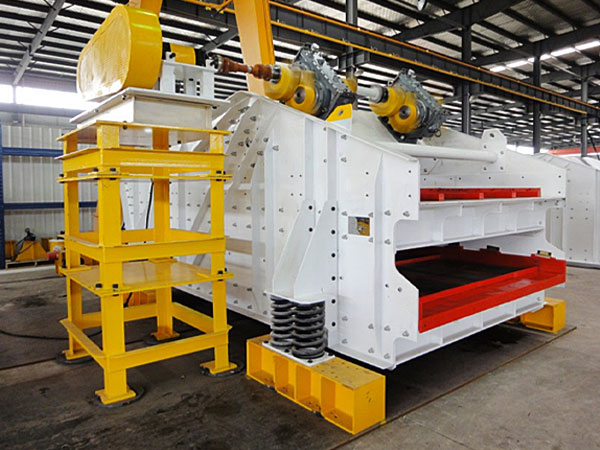
Double banana sieve

4. Sludge Dewatering:

Vibrating screens can also be used in sludge dewatering processes to separate excess water from the treated sludge, reducing its volume and making it easier and more cost-effective to handle and dispose of.

Types of Vibrating Screens Used in Wastewater Treatment:

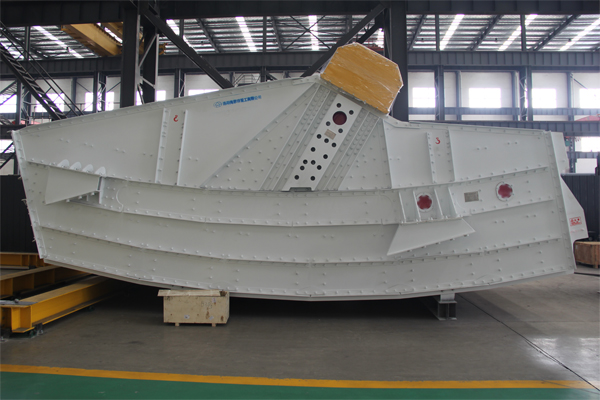
High Frequency Dehydration Vibrating Screen

Various types of vibrating screens are employed based on the specific requirements of the wastewater treatment plant, including:

Inclined Vibrating Screens: These are mounted at an angle, using gravity to aid material flow.

For more detailed information on the role of vibrating screens in wastewater treatment, please visit: https://www.hsd-industry.com/news/vibrating-screen-in-wastewater-treatment-role/

Vibrating screens play a crucial role in industries such as mining, aggregate processing, and material classification by efficiently separating materials of different sizes. However, screen blockage is a common issue that reduces screening efficiency, increases downtime, and raises maintenance costs.

Blockage occurs when materials such as wet, sticky, or irregularly shaped particles adhere to the screen mesh, clogging openings and restricting material flow. Factors such as moisture content, screen design, and improper vibration settings contribute to this problem.

Vibrating screen blockage prevention method

Cooperation Customer

Vibration screen blockage is a common issue that reduces efficiency and throughput. Here’s a breakdown of methods to prevent it, categorized by approach:

1. Material Preparation & Handling:

Screening Beforehand: If possible, pre-screen the material with a coarser screen to remove oversized particles or debris that might cause blockage in the main screen.

Proper Material Drying: Excessive moisture is a primary culprit for blockage, especially with fine materials. Dry the material thoroughly before screening. Methods include:

Air Drying: Spreading the material thinly and allowing air circulation.

Oven Drying: Controlled temperature drying in an oven.

Fluid Bed Drying: Efficient for particulate materials, using heated air to fluidize and dry the particles.

Infrared Drying: Uses infrared radiation to heat and dry the material.

Material Conditioning: Introduce additives to the material to improve its flow characteristics. Examples include:

Anti-caking agents: Prevent agglomeration of particles.

Flow enhancers: Reduce friction and improve material movement.

Consistent Material Feed Rate: Avoid surges of material onto the screen. A consistent, controlled feed rate allows the screen to process the material effectively. Use feeders like:

Vibratory Feeders: Provides even and adjustable material flow.

Screw Feeders: Good for controlled metering of powders and granules.

Belt Feeders: Suitable for handling a wide range of materials.

2. Screen Design & Selection:

Appropriate Mesh Size: Choose a mesh size that’s suitable for the particle size distribution of your material. Too small a mesh increases the risk of blinding (where particles get lodged in the openings).

For more detailed information on how to prevent vibrating screen blockage, please click here: https://www.hsd-industry.com/news/vibrating-screen-blockage-prevention-method/

Vibrating screens are essential equipment in various industries, including mining, construction, chemical processing, and agriculture, for separating materials based on size. However, they inherently generate significant vibration and noise, which can lead to:

Double banana sieve

Structural fatigue and failure of the screen and supporting structures.

Reduced screening efficiency and accuracy.

Operator discomfort and health hazards (hearing loss, musculoskeletal issues).

Environmental pollution (noise nuisance).

Therefore, effective vibration and noise reduction is crucial for improving the performance, reliability, and safety of vibrating screens. This involves a multi-faceted approach encompassing:

Single layer horizontal sieve

1. Vibrating Screen Dynamics Optimization:

Understanding and optimizing the dynamic behavior of the vibrating screen is the first step in minimizing unwanted vibration and noise. This includes:

Modal Analysis: Identifying the natural frequencies and mode shapes of the screen structure. Avoiding operation near resonant frequencies is critical. This involves both theoretical modeling (Finite Element Analysis – FEA) and experimental modal analysis.

Force Analysis: Accurately determining the exciting forces generated by the vibratory mechanism (e.g., eccentric weights, electromagnetic vibrators).

Kinematic Analysis: Studying the motion of the screen deck and material flow to optimize screening parameters (amplitude, frequency, stroke angle).

For more detailed information about vibration screen vibration reduction and noise reduction, please click here: https://www.hsd-industry.com/news/vibrating-screen-vibration-and-noise-reduction/