
In modern material handling systems, a vibrating feeder plays a critical role in ensuring consistent, controlled, and efficient material flow. However, many operators and plant managers overlook one key parameter that directly affects performance—amplitude. When amplitude is not properly adjusted for different materials, problems such as uneven feeding, equipment wear, material blockage, and reduced production efficiency quickly arise.
This article explains how to adjust vibrating feeder amplitude for different materials in a practical, experience-driven way. It focuses on real operational logic rather than theoretical descriptions, helping you improve throughput, reduce downtime, and extend equipment lifespan.
Understanding Vibrating Feeder Amplitude
Amplitude refers to the maximum displacement of the feeder tray during vibration. In simple terms, it determines how far the material is “thrown” forward with each vibration cycle.
A higher amplitude means:
Stronger material movement
Faster conveying speed
Higher throughput
A lower amplitude results in:
Gentle material handling
Reduced material degradation
More precise feeding control
However, amplitude is not a “higher is better” parameter. Each material requires a specific amplitude range based on its physical properties.
Why Amplitude Adjustment Matters for Different Materials
Different materials behave very differently under vibration. If operators use the same amplitude setting for all materials, inefficiencies and mechanical issues are inevitable.
Key material characteristics that affect amplitude selection:
Particle size (fine powder vs. large lumps)
Bulk density (light vs. heavy materials)
Moisture content
Flowability (free-flowing vs. sticky)
Abrasiveness
For example, fine dry sand flows easily, while wet clay tends to stick and requires stronger vibration to move consistently.
General Guidelines for Amplitude Adjustment by Material Type
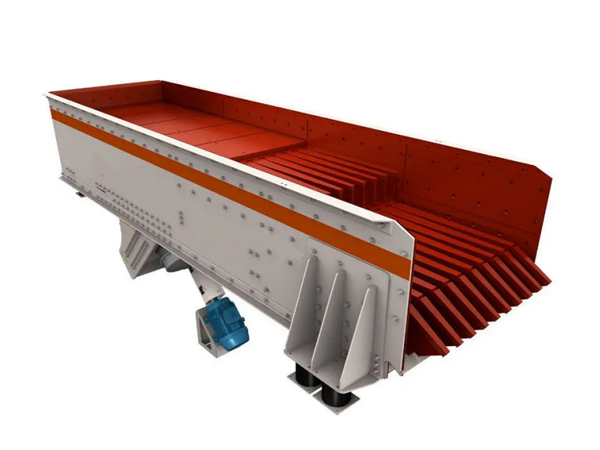
1. Fine and Light Materials (e.g., sand, powder, grain)
Fine materials require lower amplitude with higher frequency stability.
Recommended approach:
Use small amplitude to prevent dusting and segregation
Avoid excessive vibration, which can cause airborne particles
Maintain consistent feed to ensure downstream process stability
If amplitude is too high, operators will notice:
Dust pollution
Material scattering
Uneven feed rate
…
For more detailed information on how to adjust the amplitude of a vibrating feeder for different materials, please click to visit: https://www.hsd-industry.com/news/adjust-vibrating-feeder-amplitude-for-different-materials/
