
A first home rarely comes with a fully equipped kitchen. Between the down payment, moving costs, and the endless small purchases that follow, the appliance budget is usually the first thing that gets squeezed. That is why so many new homeowners end up searching for an affordable horizontal refrigerator instead of a tall, feature-heavy upright model. A horizontal unit — often called a chest or top-opening refrigerator — offers a straightforward trade-off: more usable storage per dollar, simpler mechanics, and lower running costs, in exchange for a footprint that spreads sideways rather than upward. This guide walks through what to check before you buy, so your first refrigerator lasts through your first decade of homeownership.
What a Horizontal Refrigerator Really Is
The term describes orientation, not a single product category. A horizontal refrigerator places the compressor and cooling coils so the cabinet stretches along the floor, with a lid or door that opens from the top or the front, depending on the design. In practice, most budget-friendly options in this shape are chest-style units, while some side-by-side and under-counter models also fall into the horizontal family because of how they are laid out in a kitchen.
How top-opening cooling differs from upright cooling
Cold air is heavy. In an upright refrigerator, every time you open the door, that cold air spills out and the compressor has to work to replace it. In a top-opening horizontal cabinet, the cold air simply settles and stays put, because it has nowhere to fall. This is the single biggest reason horizontal units tend to hold temperature more steadily and consume less electricity over a typical week of use.
There is a practical side to this too. Because the cold mass stays in the cabinet, food recovers temperature faster after a power interruption, which matters in areas with an unreliable grid or during storm season.
Where horizontal models fit in a first home
- Backup storage for bulk buys, freezer stock, and seasonal produce
- Primary refrigeration in small apartments and studios where vertical clearance is limited
- Secondary unit in a garage, utility room, or covered porch
- Under-counter placement beneath a prep surface, freeing wall cabinets
Matching Capacity and Layout to Your Space
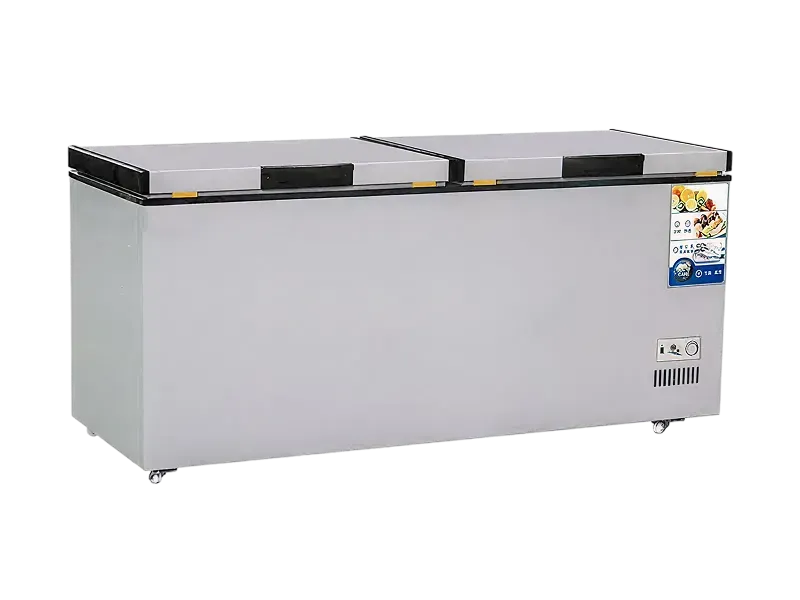
Most first-home buyers overestimate how much capacity they need and underestimate how much floor space they have. Measure twice: once for the footprint, and once for the clearance needed to fully open the lid or door. A lid that cannot swing past 90 degrees turns a convenient appliance into a daily annoyance.
Rough sizing landmarks
Compact horizontal units in the 3 to 5 cubic foot range suit one or two people and fit neatly against a kitchen wall or in a hallway nook. Mid-size models around 5 to 9 cubic feet cover a small household that cooks at home regularly and buys in bulk. Larger horizontal cabinets beyond that are usually bought for freezing capacity rather than everyday refrigeration, and they need a dedicated corner with ventilation on all sides.
…
For more details on affordable chest freezers suitable for first-time homebuyers, please click here: https://www.tzykitchenware.com/a/news/affordable-horizontal-refrigerator-for-first-homes.html

