
In the demanding world of forestry, harvester heads are exposed to some of the harshest operational conditions. These machines must cut, delimb, and process trees efficiently, often in environments that are uneven, wet, and filled with debris. While the mechanical design and power of modern harvesters have advanced considerably, one critical component often determines their reliability and longevity: the bearing.
Standard bearings, commonly used in many industrial applications, frequently fail when deployed in forestry machinery. Understanding why this happens is essential for forestry operators, equipment manufacturers, and maintenance teams looking to minimize downtime and reduce operational costs.
The Harsh Environment of Forestry Operations
Forestry operations impose unique stresses on machinery components. Unlike controlled industrial environments, forest terrain presents constant shock loads, vibration, and impact forces. Harvester heads, in particular, experience sudden impacts when cutting through dense logs or dealing with irregularly shaped tree trunks. Standard bearings, which are typically designed for uniform loads and moderate operational stress, often cannot withstand these conditions. Over time, this mismatch between bearing capacity and operational demand leads to premature failure.
Causes of Standard Bearing Failure in the Forestry Industry
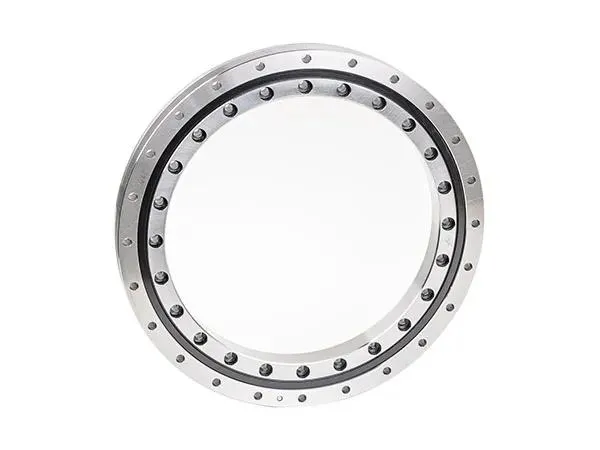
There are several mechanisms through which standard bearings fail in forestry applications:
Impact Damage: When a harvester head strikes a hard object, such as a knot in a log or a hidden rock, the sudden load can deform or crack the bearing raceways. Standard bearings lack the reinforced structures needed to absorb these instantaneous shocks.
Contamination: Forest environments are rife with dirt, sawdust, moisture, and small debris. Even with seals in place, particles can infiltrate standard bearings, causing abrasive wear and reducing the lifespan of the component.
Fatigue: Repeated cyclic loading from normal cutting and delimbing operations can initiate fatigue cracks in bearing materials. Bearings not engineered for heavy impact resistance accumulate micro-damage faster, ultimately leading to spalling or complete failure.
Misalignment and Vibration: Harvester heads are mounted on articulated arms, which move dynamically and are prone to misalignment. Standard bearings that do not accommodate angular misalignment are subjected to uneven stress, accelerating wear and deformation.
The Critical Role of Impact-Resistant Bearings
To address these challenges, forestry equipment manufacturers and operators increasingly turn to impact-resistant bearings specifically designed for harvester heads. These bearings offer several advantages:
…
For more detailed information on the causes of standard bearing failure in forestry, please click to visit:https://www.mcslewingbearings.com/a/news/causes-of-standard-bearing-failure-in-the-forestry-industry.html

