
In precision motion applications, the choice between steel and stainless steel crossed roller bearings can significantly impact performance, longevity, and total cost of ownership. Engineers and procurement professionals often face this material decision when designing rotary tables, robot joints, or medical equipment. While both options deliver the inherent benefits of crossed roller design—high rigidity, low friction, and compact axial/radial load capacity—their distinct material properties dictate suitability for different environments. This article provides an objective, data-driven comparison of steel and stainless crossed roller bearings, helping you select the optimal solution for your application. PRS, a trusted name in precision bearing manufacturing, offers both variants, and this guide draws on industry standards and real-world performance data to support your decision.
Understanding Crossed Roller Bearings: A Primer
Crossed roller bearings feature cylindrical rollers arranged in a raceway at 90-degree angles to each other, separated by spacers. This unique geometry allows a single bearing to handle radial, axial, and moment loads simultaneously. Compared to ball bearings, they offer higher stiffness and greater load capacity in a compact footprint. The material of the rings and rollers—typically through-hardened bearing steel or martensitic stainless steel—directly influences hardness, corrosion resistance, and operating temperature range. Whether your design prioritizes maximum load rating or resistance to washdown chemicals, understanding these material trade-offs is essential.
Material Breakdown: Steel vs Stainless Steel
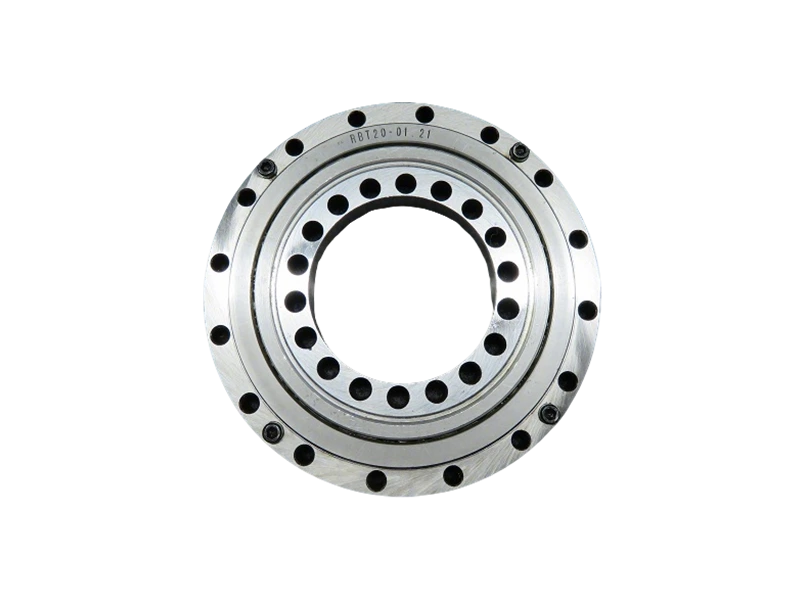
Standard Steel: Strength and Affordability
The most common material for crossed roller bearings is high-carbon chromium steel, such as SUJ2 or 52100. This steel undergoes through-hardening to achieve a Rockwell hardness of HRC 58-64, providing excellent wear resistance and fatigue life. Steel bearings deliver the highest load ratings for a given size, making them the economical choice for industrial robotics, machine tools, and automation equipment where corrosion is not a concern. However, standard steel offers only limited protection against moisture and requires proper sealing or lubrication to avoid rust.
Stainless Steel: Corrosion Resistance for Demanding Environments
Stainless steel crossed roller bearings are typically made from AISI 440C or equivalent martensitic stainless steel, hardened to HRC 56-60. While slightly softer than standard steel, 440C provides excellent corrosion resistance in humid, chemical-laden, or washdown environments. Applications in food processing, medical imaging, semiconductor fabrication, and marine equipment benefit from stainless steel’s ability to withstand periodic cleaning chemicals and ambient moisture. The trade-off is a moderate reduction in static and dynamic load capacity—typically 10–15% lower than steel for the same dimensions—and a higher material cost.
Side-by-Side Comparison: Steel vs Stainless Crossed Roller Bearings
- Hardness: Steel (HRC 58–64) > Stainless (HRC 56–60). Steel offers superior indentation resistance and longer wear life in clean environments.
- Corrosion Resistance: Stainless > Steel. Stainless withstands water, steam, and mild acids; steel requires protective coatings or seals for damp conditions.
- Load Capacity (Static & Dynamic): Steel typically 10–15% higher than stainless in the same size. For space-constrained applications, steel allows smaller bearing selection.
- Operating Temperature Range: Both materials perform from –40°C to +120°C; stainless may retain slightly better corrosion resistance at higher humidity.
…
For more detailed information on crossed roller bearings: steel vs. stainless steel materials, please click to visit: https://www.prsbearings.com/a/news/crossed-roller-comparison.html

