
In industries such as chemical processing, petrochemical refining, and pharmaceutical manufacturing, the relentless assault of corrosive agents—acids, alkalis, solvents, and high humidity—can dramatically shorten the lifespan of conventional steel buildings. Choosing a structure that can withstand these punishing conditions is not merely a matter of cost efficiency; it is a critical safety and operational requirement. This article delves into the engineering principles, material technologies, and design strategies that define true corrosion-proof steel buildings for harsh chemical environments. We will examine how leading solutions, including those from MeiChen Steel, address the unique challenges of corrosive atmospheres, helping facility managers make informed, long-term investments.
Understanding Corrosion Mechanisms in Chemical Environments
To appreciate what makes a steel building truly corrosion-proof, one must first recognize the aggressive mechanisms at play. Chemical exposures often accelerate galvanic corrosion, pitting, and stress corrosion cracking—far beyond ordinary atmospheric rusting. Chlorides present in many chemical processes can penetrate passive oxide layers on steel, while acidic vapors attack metallic surfaces at the molecular level. Even seemingly benign condensation cycles can trap reactive agents against structural members. Therefore, a generic painted steel frame is inadequate. The building must be engineered from the ground up to resist specific chemical attack profiles, considering both the ambient environment and potential spillage scenarios.
Key Factors Driving Deterioration
- Direct chemical contact: Splashes, spills, or airborne droplets of corrosive liquids.
- Atmospheric humidity and temperature cycling: Creates condensation that activates and concentrates corrosive agents.
- Abrasive particulates: In some processes, solid particles can wear away protective coatings, exposing bare metal.
- Biogenic corrosion: Microbial activity in certain organic chemical environments can generate sulfuric acid and other aggressive metabolites.
Core Technologies for Corrosion-Proof Steel Structures
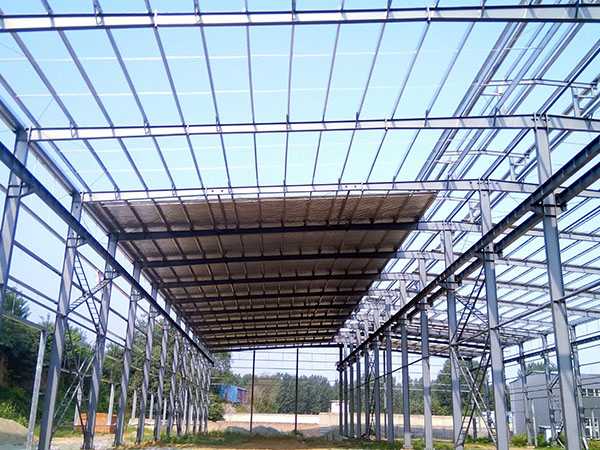
Modern corrosion-proof steel buildings integrate multiple layers of defense: base material selection, advanced coating systems, and structural design optimizations. Each element must be carefully matched to the specific chemical environment, operating temperature, and maintenance accessibility.
Material Selection: Beyond Ordinary Steel
While carbon steel with proper coatings can serve in moderate conditions, severe chemical environments often demand upgraded base metals. Weathering steel (Corten) forms a stable rust-like patina and is suitable for mild chemical atmospheres. Hot-dip galvanized steel provides a sacrificial zinc layer that offers excellent protection against many alkalis and neutral salts, though it may not withstand strong acids. For the harshest scenarios—such as concentrated hydrochloric or sulfuric acid vapors—stainless steel grades (e.g., 316L or duplex) are specified for critical structural elements, but cost constraints typically limit their use to framing connections or building components.
…
Click here for more details on corrosion-resistant steel structures suitable for harsh chemical environments: https://www.meichensteel.com/a/procurement-guides/corrosion-proof-steel.html

