
Selecting the right control system for a high temperature test chamber is a critical decision that directly impacts the accuracy, repeatability, and operational cost of your thermal testing. Engineers and quality managers often face the choice between closed loop (feedback) and open loop (feedforward) control architectures. While both can maintain elevated temperatures, their underlying principles diverge significantly in how they respond to disturbances, compensate for thermal inertia, and hold steady-state conditions. Understanding these differences is essential to avoid costly over-specification or, conversely, inadequate performance. This article provides a technical comparison of closed loop versus open loop control in high temp test chambers, with practical guidance for procurement decisions.
Fundamentals of Open Loop Control in High Temp Chambers
An open loop control system operates without feedback from the actual chamber temperature. It calculates the required heater power based on a setpoint and a predetermined model of the chamber’s thermal behavior. The controller applies a fixed output—often a proportion of full power—and assumes the chamber will reach the desired temperature. This approach is simple and inexpensive but inherently vulnerable to external perturbations such as changes in ambient temperature, voltage fluctuations, or variations in the thermal load of the test specimen.
Key Characteristics
- No temperature sensor feedback: The controller does not compare the actual temperature to the setpoint during operation.
- Susceptible to drift: Long-duration tests may experience temperature excursions because the system cannot self-correct.
- Lower hardware cost: Eliminates precision sensors and control electronics, reducing initial investment.
- Suitable for non-critical applications: Acceptable for pass/fail screening where exact temperature tolerance is not mandatory.
Closed Loop Control: Precision Through Feedback
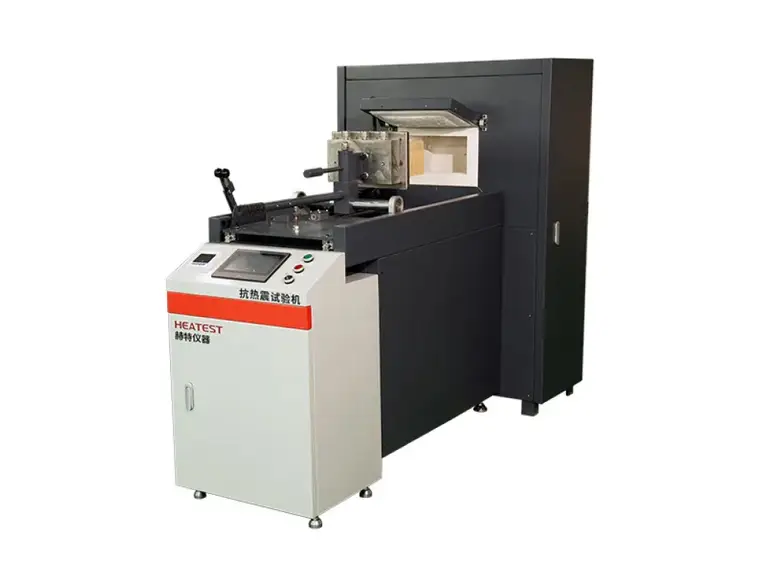
Closed loop systems, also known as feedback control, continuously measure the chamber’s internal temperature using thermocouples or RTDs and compare it to the setpoint. Any deviation generates an error signal that adjusts heater power according to a control algorithm—typically PID (proportional–integral–derivative). This real-time correction compensates for heat loss, load changes, and environmental disturbances, maintaining temperature within tight tolerances.
…
For more detailed information regarding closed-loop versus open-loop control in high-temperature test chambers, please click here: https://www.lyheatest.com/tester-knowledge/temp-chamber-control/
